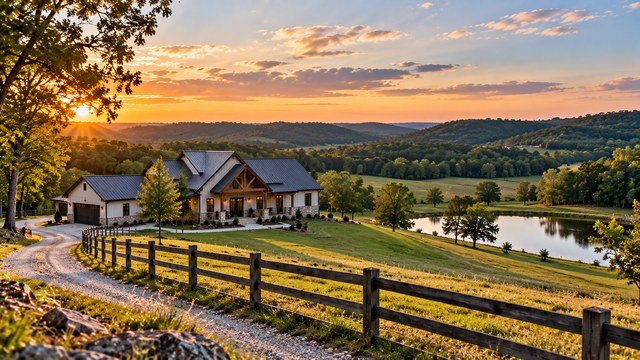
Missouri acreage can be affordable, but cheap land is not always build-ready
Missouri attracts buyers looking for homesteads, barndominiums, recreational tracts, small farms and larger rural properties. The purchase price, however, is only the first number to evaluate. A parcel that needs a long driveway, extensive clearing, a difficult well, engineered wastewater treatment and a major electric extension can cost far more to make usable than a higher-priced tract with infrastructure already nearby. Treat land price and development cost as two separate budgets.
Define the property you are actually trying to buy
Before comparing listings, write down the intended use: primary residence, barndominium, livestock, hunting, short-term recreation, workshop, family compound or a combination. Include future structures and uses as well. A tract that works for a cabin may not work for a full-time home, large shop, second dwelling or livestock operation once wastewater, water, access and local rules are considered.
Start with county and local land-use rules
Missouri rural land-use requirements can vary by location. Before assuming a parcel can support your plan, identify the county and any city, planning, zoning, building, road, sewer or special-district authority that applies to the exact property. Ask specifically about the proposed residence type, accessory buildings, setbacks, driveway access, livestock, business activity and additional dwellings. Written confirmation is more useful than relying on a listing description or a neighbor's experience.
Do not confuse unrestricted with unregulated
A listing described as unrestricted may mean there are no private subdivision restrictions, or it may simply be marketing language. It does not automatically eliminate public-health rules, road requirements, utility standards, floodplain rules, wastewater requirements, easements or recorded deed restrictions. Verify each layer independently before treating the property as unrestricted.
Legal access should be verified before closing
A visible road or worn path is not proof of permanent legal access. Confirm that the parcel touches a public road or has a recorded easement that provides the access you need. Review width, maintenance obligations, gates, shared-drive provisions and whether the easement is sufficient for construction traffic and utilities. A survey and title review can reveal access issues that are not obvious during a showing.
Road frontage does not guarantee an easy driveway
Even when a tract fronts a maintained road, the best homesite may be hundreds or thousands of feet away. Evaluate entrance approval, sight distance, culverts, drainage, grade, creek crossings, rock, clearing and the cost of building an all-weather driveway that concrete trucks, well rigs, septic equipment and emergency vehicles can actually use.
A boundary survey can prevent expensive assumptions
Do not rely solely on online parcel maps, fence lines or listing graphics to locate boundaries. If the exact lines matter to the purchase, obtain appropriate survey work and review recorded plats and deeds. This is especially important when the homesite, driveway, pond, outbuilding, fence or utility route is close to a suspected property line.
Review easements before choosing the homesite
Recorded utility, access, pipeline, drainage and other easements can limit where improvements can be placed. Map known easements against the proposed house, shop, septic area, well and driveway. An easement crossing an otherwise attractive building area may materially change the site plan even though the parcel still contains the advertised acreage.
Septic feasibility deserves early attention
Missouri's Department of Health and Senior Services administers minimum standards for onsite wastewater treatment systems serving qualifying domestic flows. Local governments may use the state standards or adopt more restrictive requirements, and the local administrative authority can vary by county or city. If public sewer is unavailable, identify the authority for the parcel and investigate wastewater feasibility before finalizing the homesite.
Missouri septic decisions depend heavily on the site and soil
DHSS explains that site and soil conditions are among the most important factors in selecting an onsite wastewater treatment system. Soil limitations, available space and the proposed system type can affect both feasibility and cost. A large parcel is not automatically an easy septic parcel if the usable homesite area is constrained by soil, slope, drainage, setbacks or other improvements.
A conventional septic system is not the only possible outcome
Missouri recognizes basic and advanced onsite wastewater systems. Where the site is suitable, a septic tank with a conventional soil absorption system or another basic option may work. More difficult sites can require advanced components and appropriately registered professionals. Do not price a parcel around a basic system until the site has been evaluated for the actual project.
Private wells are regulated through Missouri DNR
The Missouri Department of Natural Resources oversees well construction standards under Missouri's well program. DNR states that well construction requirements depend on geologic, hydrologic and environmental factors and that contractors performing regulated well and pump installation work must hold the appropriate permit. For an undeveloped parcel, research nearby well records and speak with qualified local drillers rather than assuming a standard depth or cost.
Nearby well records are useful, but they are not a guarantee
Missouri DNR provides well-record resources for wells installed in recent decades. Nearby records can help buyers understand local drilling history, casing and depth patterns, but groundwater conditions can vary between properties. Use records as due-diligence evidence and budgeting context, not as a promise that your well will match the neighbor's.
Protect enough room between the well and wastewater system
Missouri well requirements include protection from contamination sources, and DNR emphasizes maintaining required separation from septic systems and other potential contaminant sources. Plan the well, septic system, replacement area, house and driveway together so one infrastructure decision does not eliminate the best location for another.
Verify electric service for the exact parcel
Power lines visible along a road do not establish the cost or route of service to a proposed homesite. Identify the serving electric utility and request information for the parcel and expected load. Ask about line extensions, transformer needs, easements, overhead versus underground service, customer-owned work and the proposed meter location. Long setbacks from the road can materially change the development budget.
Internet and cellular service should be tested, not assumed
Coverage maps are a starting point for rural connectivity, not a substitute for parcel-level verification. Check available wired, fixed wireless and satellite options and test cellular service at the proposed homesite when possible. Terrain and tree cover can make service at the road very different from service deeper on the property.
Flood risk goes beyond whether the house pad looks dry
Review available flood mapping, drainage patterns, creek crossings and evidence of high water. Consider whether flooding can isolate the driveway even if the proposed house sits on higher ground. Walk low areas, look for debris and erosion, and investigate local history when water movement could affect access or infrastructure.
Missouri topography can change development cost quickly
Acreage can range from relatively open ground to steep wooded terrain. Slope affects driveway construction, building pads, drainage, septic layout, trenching and equipment access. A dramatic ridge or valley view can be attractive while also increasing excavation, retaining, foundation or utility costs. Compare usable acreage, not just total acreage.
Rock and geology matter to wells, excavation and septic work
Subsurface conditions influence well construction and can also affect trenching, foundations, roads and wastewater installation. Ask local contractors what they commonly encounter near the parcel. If a project depends on substantial excavation or a particular foundation approach, obtain site-specific professional input before locking in the construction budget.
Trees have both value and development cost
Timber can provide privacy, recreation and shade, but a heavily wooded homesite may require clearing for the house, driveway, septic area, well access, utilities and defensible working space around construction. Decide what should remain before clearing begins and account for stump removal, grading, erosion control and disposal or processing of debris.
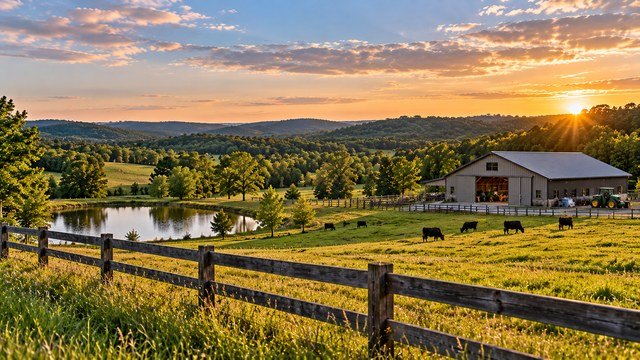
Existing ponds and creeks need due diligence too
Water features can add substantial value to rural property, but investigate their condition and how they affect the site plan. Look at spillways, dams, drainage, access, erosion and whether a creek crossing is required to reach the intended homesite. Do not assume an existing pond or crossing was engineered or permitted for your future use.
Check title issues, restrictions and mineral interests
Review the title commitment and recorded documents rather than relying on the seller's summary. Look for covenants, road agreements, access rights, utility easements and other encumbrances. Ask the title professional or attorney how mineral or other severed interests shown in the record could affect the property and your intended use.
HOA and subdivision restrictions can exist in rural areas
A rural address does not guarantee freedom from private restrictions. Recorded covenants can regulate home size, exterior materials, manufactured housing, livestock, commercial activity, RV use, additional dwellings and outbuildings. Obtain the actual documents and amendments before the inspection or due-diligence period expires.
Taxes and agricultural classifications should be verified
Ask the county assessor how the parcel is currently classified and how your intended use or improvements could affect future taxes. Do not assume the seller's current tax bill will continue after a sale, subdivision, new residence or change in use. Budget using the likely post-purchase situation rather than the most favorable historical bill.
Financing raw acreage can differ from financing a house
Land loans may have different down-payment, term and underwriting requirements than conventional home mortgages. If the plan is to build soon, compare a land loan plus later construction financing with lenders that offer construction or land-to-permanent options. Confirm financing before making the contract dependent on assumptions about how raw land will be valued.
Insurance questions can affect the project before construction
Talk with an insurance professional about the planned residence, outbuildings, acreage uses and construction timeline. Rural fire protection, access, distance from responding services, wood heat, livestock, vacant structures and certain business uses can affect availability or pricing.
Estimate the complete build-ready cost
Create a parcel development budget that includes purchase closing costs, survey work, driveway and culvert, clearing, grading, erosion control, well, wastewater, electric extension, temporary power, communications, site preparation and contingencies. The best land deal is often the parcel with the lowest reasonable total cost for the finished use, not the lowest price per acre.
Use a feasibility period to answer expensive questions
When the transaction structure allows it, negotiate enough due-diligence time to investigate access, title, survey needs, wastewater, water, electric service, local land-use rules and major site constraints. Coordinate deadlines so you receive the important answers before earnest money or other commitments become difficult to recover.
Walk the parcel with the future site plan in mind
Visit more than the listing's prettiest viewpoint. Walk the proposed driveway, house site, septic area, well location and utility route. Look at slope, drainage, rock, wet areas, neighboring uses and the distance construction equipment must travel. If possible, see the property after rain as well as in dry conditions.
A strong Missouri land offer is based on verified feasibility
The goal of due diligence is not to eliminate every unknown. It is to identify the unknowns capable of changing the purchase decision or budget and resolve as many of them as practical before closing. A parcel becomes much easier to evaluate when access, wastewater, water, utilities, title and the intended homesite have all been investigated together.
Sources & methodology
Where this information comes from
Cost figures are planning references rather than contractor quotes. Permitting, system-selection, and location-specific guidance should be verified with the appropriate local authority or qualified professional. AcreageReady uses source-backed, AI-assisted editorial workflows and remains responsible for the material it publishes. Read how we research, edit, and correct guides.
- Missouri Department of Health and Senior Services - Onsite Wastewater Treatment
- Missouri DHSS - Onsite Wastewater Resources and Missouri Laws
- Missouri DHSS - Onsite Wastewater Treatment Systems
- Missouri Department of Natural Resources - Wells and Drilling
- Missouri DNR - Water Wells PUB2945
- Missouri DNR - Well Protection and Maintenance
Common questions
Frequently asked questions
What should I check before buying rural land in Missouri?
Start with legal access, local land-use requirements, title and easements, survey needs, onsite wastewater feasibility, water source, electric service, driveway conditions, flood and drainage issues, and the total cost to make the parcel usable for your intended project.
Does rural Missouri land need a septic permit?
Missouri DHSS says permits are generally required before onsite wastewater construction or major repair, although exemptions and local rules can affect the process. Local authorities can also impose requirements more restrictive than the state minimum, so verify the rules for the exact parcel.
Who regulates private water wells in Missouri?
The Missouri Department of Natural Resources administers well construction rules and the permitting program for well and pump installation contractors. Requirements depend on well type and site conditions.
Can I use nearby well depths to estimate my Missouri well?
Nearby well records are useful for understanding local drilling history, but they do not guarantee the depth, yield, casing or cost of a new well on a particular parcel. Use them alongside advice from qualified local drillers.
Does road frontage guarantee legal access in Missouri?
No. Road frontage and visible use should still be checked against deeds, surveys, recorded easements and the public road record. Confirm both legal access and whether the physical entrance works for the intended development.
Is unrestricted Missouri land really unrestricted?
Not necessarily. The term may refer only to private covenants. Public-health requirements, local ordinances, road standards, floodplain rules, utility requirements, easements and recorded restrictions can still apply.
What makes Missouri acreage expensive to develop?
Common cost drivers include long driveways, clearing and grading, difficult terrain, well construction, wastewater requirements, long electric extensions, rock excavation, drainage work and remote construction access.
Should I buy Missouri acreage before getting house plans?
You can, but first confirm that the parcel can support the general size and type of project you want. It is usually better to establish a feasible homesite, wastewater area, water source, driveway and utility strategy before committing to detailed plans.
Ready to talk with a local professional?
Share your location and project details so AcreageReady can identify relevant providers as the network grows.
Get a free quote