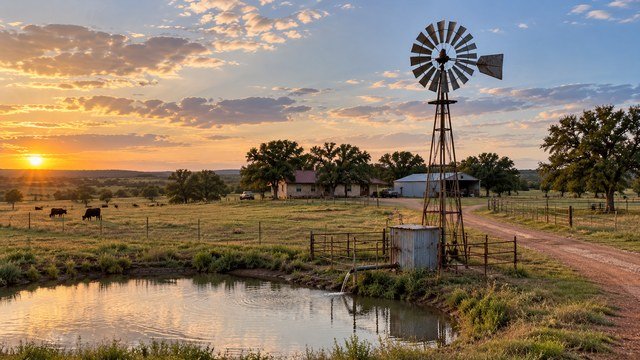
A private well can make rural land practical or expensive
On Oklahoma acreage without public water, the well can be one of the most important development decisions on the property.
The final cost depends on much more than drilling depth. Geology, casing, pump size, electrical work, pressure storage, trenching, water treatment, site access, and failed or low-yield attempts can all affect the budget.
The best time to investigate likely well conditions is before closing, not after the house pad is finished.
Domestic groundwater use has a different permitting path
The Oklahoma Water Resources Board states that domestic groundwater use does not require a water-use permit.
That distinction matters for typical rural homes, but larger or non-domestic uses can fall under different rules.
If the property will support irrigation, commercial activity, poultry, livestock operations beyond ordinary domestic use, or other higher-volume demand, confirm the applicable water-right requirements before drilling.
Use a licensed Oklahoma water-well driller
OWRB licenses groundwater well drillers and pump installers and maintains standards for well construction.
These requirements are intended to protect groundwater quality and ensure wells are properly located, sealed, cased, and completed.
Before hiring, verify the driller's license and ask how much work the company has completed in the same county or geologic area.
Well depth varies dramatically across Oklahoma
Oklahoma contains multiple aquifers and geologic regions, so there is no dependable statewide well-depth number.
One property may reach usable water at a relatively shallow depth while another may require substantially deeper drilling.
Local well-completion records are much more useful than statewide averages when evaluating a specific parcel.
Nearby well logs are useful planning evidence
OWRB maintains water-well records that can help buyers see nearby drilling depths, construction details, and reported yields.
These records are not a guarantee for your parcel, but they can reveal patterns in the surrounding area.
Ask the driller to review nearby logs before providing a preliminary estimate.
Drilling cost is usually driven by depth and geology
Most residential well quotes are built around a per-foot drilling component plus casing, pump, equipment, and setup costs.
Hard rock, lost circulation, unstable formations, large-diameter casing, difficult access, and very deep wells can increase cost quickly.
Ask whether the quote includes a depth allowance and how additional footage will be priced.
A low drilling price may exclude the usable-water system
Some quotes cover only the drilled hole and casing.
The finished water system may still need a submersible pump, drop pipe, wire, pressure tank, controls, trenching, pitless adapter, electrical connection, well house or protection, and testing.
Compare complete installed scopes rather than per-foot drilling rates alone.
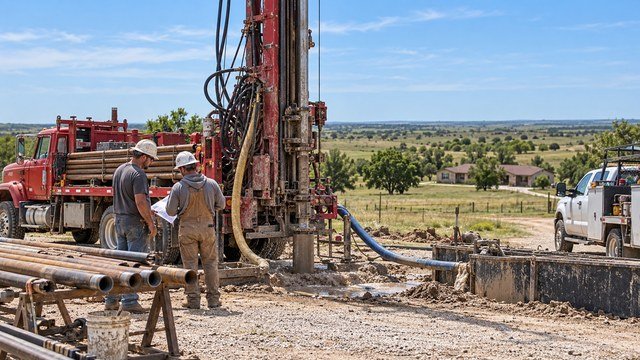
Pump sizing should match the well and household demand
A pump that is too small can struggle to meet household demand, while an oversized pump can cycle poorly or exceed what the well can sustainably produce.
The correct pump depends on static water level, pumping level, total dynamic head, expected flow, pressure needs, and household use.
The driller or pump installer should size the system from actual well data rather than a generic horsepower assumption.
Well yield matters as much as depth
A deep well is not automatically a strong well.
The important question is how much water the well can reliably produce over time.
Low-yield wells may require larger pressure or storage capacity, careful pump controls, or a different household water-use strategy.
Storage can make a low-yield well more usable
A property with modest well yield may still work well if demand is managed through storage.
Aboveground or buried cisterns can buffer periods of higher household use while the well refills more slowly.
If local drillers report low yields, ask whether storage is a common solution in the area.
Pressure tanks are part of the system, not an optional accessory
A pressure tank reduces pump cycling and helps maintain stable household water pressure.
Tank size should be matched to pump capacity, pressure settings, and household demand.
Undersized pressure storage can shorten pump life and create noticeable pressure swings.
Water quality should be tested before relying on the well
A well can produce plenty of water and still require treatment.
Common rural-water concerns can include hardness, iron, manganese, sulfur odors, sediment, bacteria, nitrates, or other constituents depending on local geology and land use.
Include laboratory testing in both the new-well commissioning process and due diligence on an existing well.
Taste and appearance are not enough to judge safety
Clear water can still contain bacteria, nitrates, or dissolved minerals that are not obvious from taste or smell.
Likewise, water that stains fixtures or smells unpleasant may be treatable with the right equipment.
Use laboratory results instead of visual inspection to decide whether treatment is needed.
Treatment can materially increase the real water-system cost
A rural well may need sediment filtration, softening, iron removal, activated carbon, ultraviolet disinfection, reverse osmosis, or another treatment system.
Treatment equipment adds purchase cost, maintenance, replacement media or filters, and sometimes electrical or drain requirements.
If neighboring homes use extensive treatment, include that risk in the budget before closing.
Existing wells deserve a professional inspection
A property with an existing well may save money, but only if the system is in good condition.
Ask about well depth, age, casing, pump age, pressure tank, repairs, yield, water testing, treatment equipment, and whether the well has ever gone dry.
A pump contractor or well professional can inspect the system and provide useful information before purchase.
Well records should be part of the property file
Keep the completion record, pump information, water test results, treatment manuals, service history, and any repair documentation.
These records help future contractors diagnose problems and help future buyers understand the system.
Missing records are not always a deal-breaker, but they increase uncertainty.
The well location must work with septic
Private wells and on-site wastewater systems need adequate separation to protect groundwater.
The well should be located with the house, septic field, reserve area, driveway, utility trenches, livestock areas, and future structures in mind.
The earlier Oklahoma septic guide is especially important because a good well site can conflict with a good septic site on constrained acreage.
Do not place the well where future development will block service access
A well may need pump replacement, service equipment, testing, or future drilling work.
Avoid placing it where a future garage, driveway expansion, retaining wall, pool, shop, or landscaping feature would make service difficult.
Leave practical access around the wellhead.
Flood-prone and low-lying areas are poor well locations
Surface water can carry contaminants toward a poorly located or damaged well.
A wellhead should be protected from ponding, flooding, livestock concentration areas, septic components, fuel storage, and other contamination sources.
If the parcel contains flood-prone ground, coordinate well placement with the full drainage plan.
Livestock operations can influence siting
Rural acreage may include barns, corrals, loafing areas, manure storage, feed areas, or livestock watering points.
These uses can create contamination risks if placed too close to the well.
Plan the entire farm layout rather than treating the domestic well as an isolated utility.
Long trench runs can add meaningful cost
The well may be drilled far from the home because geology, access, or site constraints dictate the best location.
A long run increases trenching, water line, wire, conduit, pressure-loss considerations, and restoration cost.
Before drilling, compare the best water location with the total installed route back to the house.
Electrical service has to support the pump
The well pump needs properly sized power, controls, disconnects, and protection.
If the well is distant from existing electrical service, conductor length and voltage drop can add cost.
Coordinate the well and power plan before utility trenches are closed.
Generators can keep the well usable during outages
A private well stops delivering water when the pump loses power.
If outage resilience matters, include the well pump in the generator or backup-power plan.
Pump starting loads can be significant, so the electrician and generator installer should account for the actual motor.
Well houses and freeze protection may still matter
Most modern submersible systems can be designed without a traditional aboveground well house, but exposed plumbing and treatment equipment still need protection.
Pressure tanks, filters, and controls may be located in a garage, utility room, insulated enclosure, or other protected area.
Plan the equipment location early so freeze protection and service access are built in.
Drilling access should be protected before site work blocks it
A well rig needs enough space and ground stability to reach the drilling point.
Fences, finished landscaping, narrow gates, steep drives, overhead lines, and completed structures can complicate access.
If possible, drill before the property becomes harder to reach with heavy equipment.
Dry-hole risk should be discussed before drilling
No driller can guarantee a specific yield before the well is drilled.
Ask how the contractor handles an unsuccessful hole, whether any mobilization or footage charges still apply, and what the next step would be.
A realistic contingency protects the project budget from the possibility of additional drilling.
Multiple wells may be needed for different uses
A domestic household well may not be the right system for irrigation, commercial use, or large agricultural demand.
If the property plan includes livestock, irrigation, multiple homes, a shop, or commercial activity, separate water sources or a larger water-right analysis may be appropriate.
Tell the well professional the full intended use rather than only the first house.
Domestic use should not be confused with unlimited groundwater use
Oklahoma's domestic-use exemption from water-use permitting does not mean every volume or purpose qualifies as domestic.
Higher-volume or non-domestic uses can require OWRB authorization.
If the use is anything beyond ordinary household and domestic purposes, confirm the regulatory path before investing in a large-capacity system.
Neighbor experience can be valuable local intelligence
Nearby owners often know whether wells are deep, whether water quality needs treatment, and whether yields vary seasonally.
Use those conversations as context, then verify with well records and licensed drillers.
Anecdotes are useful, but they should not replace technical data.
Questions to ask an Oklahoma well driller before buying land
A local driller can often provide some of the best early feasibility information.
- What depths are common in this immediate area?
- What formations do you usually encounter?
- What yield is typical nearby?
- How often do you encounter dry or low-yield wells?
- What casing type and diameter do you normally use?
- What is your per-foot drilling price?
- What is included in mobilization?
- What does the pump package include?
- How is additional depth priced?
- How is hard rock or difficult formation work priced?
- Do you handle water testing?
- Do you install pressure tanks and controls?
- How long does the completed system usually take?
- What records will I receive after completion?
Questions to ask about an existing well
Existing systems should be evaluated with documentation and actual performance.
- How deep is the well?
- When was it drilled?
- What is the reported yield?
- How old is the pump?
- What size is the pressure tank?
- Has the well ever gone dry?
- When was the last water-quality test?
- What treatment equipment is installed?
- Has the system had major repairs?
- Are completion records available?
- Does the well serve any other property or structure?
Build the well budget as separate line items
Breaking the system into components makes quotes easier to compare.
- Drilling mobilization
- Per-foot drilling
- Casing
- Grout and sealing
- Submersible pump
- Drop pipe and wire
- Controls and disconnects
- Pressure tank
- Pitless adapter or wellhead components
- Trenching
- Water line to the house
- Electrical connection
- Water-quality testing
- Treatment equipment
- Storage tank if needed
- Site restoration
- Contingency for additional depth or a failed attempt
The bottom line
A private well can be a dependable long-term water source for Oklahoma acreage, but the true cost depends on geology, depth, yield, pump design, treatment, and site layout.
Use nearby well records, licensed drillers, water testing, and a complete installed quote to understand the risk before buying.
Coordinate the well with septic, power, drainage, access, and future structures so the water system supports the whole property rather than becoming another constraint.
Sources & methodology
Where this information comes from
Cost figures are planning references rather than contractor quotes. Permitting, system-selection, and location-specific guidance should be verified with the appropriate local authority or qualified professional. AcreageReady uses source-backed, AI-assisted editorial workflows and remains responsible for the material it publishes. Read how we research, edit, and correct guides.
Common questions
Frequently asked questions
Do I need a permit for a domestic water well in Oklahoma?
OWRB states that domestic groundwater use does not require a water-use permit. Non-domestic groundwater uses generally follow a different permitting path.
Who can drill a water well in Oklahoma?
Oklahoma licenses groundwater well drillers and pump installers through the Oklahoma Water Resources Board. Buyers should verify the contractor's current license before hiring.
How deep are water wells in Oklahoma?
There is no single statewide depth. Well depth varies widely by aquifer, geology, elevation, and location. Nearby OWRB well records and local drillers are the best planning sources for a specific parcel.
How much does it cost to drill a water well in Oklahoma?
Cost depends on depth, geology, casing, pump, electrical work, trenching, water treatment, and site access. The most useful estimate is a local quote that separates per-foot drilling from the completed pump and water-system costs.
Can a well have plenty of depth but poor yield?
Yes. Depth and yield are different. A deep well can still produce limited gallons per minute, while a shallower well may have strong yield depending on the aquifer.
Should I test the water from an existing well before buying?
Yes. A laboratory test can identify bacteria, nitrates, minerals, hardness, iron, and other issues that are not always obvious from taste, smell, or appearance.
Can a low-yield well still work for a house?
Sometimes. Storage tanks, careful pump controls, and demand management can make a lower-yield well practical, but the system should be designed around the actual production rate.
How close can a water well be to septic?
Required separation depends on Oklahoma well and wastewater rules and the specific site. The well driller and septic professional should coordinate locations before either system is installed.
Ready to talk with a local professional?
Share your location and project details so AcreageReady can identify relevant providers as the network grows.
Get a free quote