Rural Tennessee land can be affordable, but buildability is parcel-specific
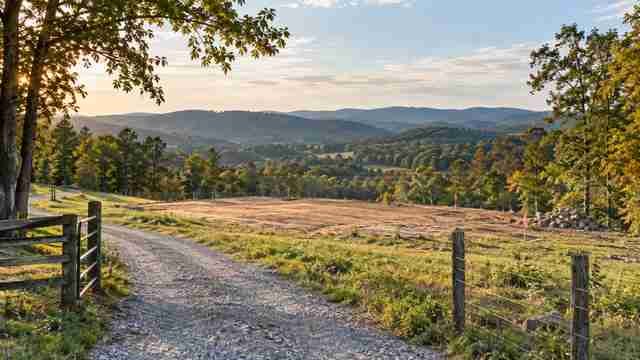
Tennessee has a wide range of rural property, from rolling Middle Tennessee acreage to wooded Cumberland Plateau tracts and steep Appalachian parcels in the east.
Two properties with similar acreage and asking prices can have very different development costs once septic, access, slopes, utilities, flood risk, and local permitting are considered.
The goal of due diligence is not simply to confirm that a parcel exists and can be purchased. It is to determine whether your specific home, shop, barndominium, driveway, septic system, and utility plan can realistically fit on it.
Start by confirming who actually has jurisdiction over the property
Before relying on a listing description, identify whether the parcel is inside city limits or in an unincorporated part of the county.
That distinction can change who handles zoning, subdivision review, building permits, floodplain requirements, road access, and inspections.
Tennessee planning departments operate at the city and county level, and local land-use policies determine what can be built and where.
Check zoning before assuming rural or agricultural land is unrestricted
A property described as rural, agricultural, unrestricted, or suitable for a homestead may still be subject to local zoning, subdivision rules, setbacks, floodplain regulations, deed restrictions, or recorded covenants.
Ask the city or county planning office for the parcel's zoning classification and the rules that apply to your intended use.
Do not rely only on the tax classification shown by the assessor because property-tax land use and zoning are not the same thing.
Ask whether your intended structures are allowed
Confirm whether the parcel can support the specific improvements you want, not simply whether a single-family home is allowed.
Ask separately about a barndominium, detached shop, RV or boat storage, guest house, accessory dwelling unit, second residence, manufactured home, modular home, agricultural building, livestock shelter, and home-based business if any are part of your plan.
Also ask about minimum lot size, road frontage, building setbacks, height limits, accessory-structure placement, and density.
Tennessee building-permit responsibility varies by jurisdiction
Tennessee does not use one identical residential permitting process for every parcel.
The State Fire Marshal's Office identifies jurisdictions that participate in the State Residential Building Program, jurisdictions that are exempt because they enforce qualifying local codes, and jurisdictions that have opted out of statewide one- and two-family dwelling standards.
Check the current jurisdiction list before buying so you know whether the state, city, county, or another authority will handle the residential building permit and inspections.
An opt-out area is not the same as 'nothing applies'
Some Tennessee jurisdictions have opted out of statewide residential building-code enforcement for one- and two-family dwellings.
That does not automatically remove zoning, septic, electrical, floodplain, subdivision, driveway, environmental, or private covenant requirements.
Treat an opt-out designation as one part of the permit picture, not as permission to build anything anywhere on the parcel.
Septic feasibility should be checked before dirt work
For rural Tennessee parcels without public sewer, septic can determine where and whether a home can be built.
TDEC states that a septic construction permit is required for installation of a subsurface sewage disposal system and advises obtaining the permit before beginning dirt work or construction, including the building pad.
A site evaluation may lead to requests for a detailed site plan or a soil map from a licensed soil consultant.
Bedroom count affects septic planning
Septic sizing is tied to design flow, and residential design commonly depends on bedroom count rather than the number of current occupants.
If you plan a larger home, guest space, shop apartment, or future addition, discuss those plans before the system is designed.
Changing the house or adding a structure that affects the septic area can require a modification to an existing permit.
Know whether your county is a TDEC contract county
Most Tennessee septic services are administered through TDEC, but certain counties operate as contract counties and may have additional local procedures.
TDEC currently identifies Blount, Davidson, Hamilton, Jefferson, Knox, Madison, Sevier, Shelby, and Williamson as contract counties for subsurface sewage disposal work.
Verify the current process for the exact county before ordering soil work or submitting a permit application.
Private wells are regulated differently from private water quality
Tennessee requires water-well drillers, pump installers, and water-treatment installers to be licensed by TDEC.
TDEC regulates well construction standards, but Tennessee does not establish drinking-water quality requirements for individual private water supplies.
The Tennessee Department of Health recommends regular testing of private drinking water, and lenders may require their own sampling parameters.
Research nearby wells before assuming groundwater will be easy
Well depth, yield, geology, and treatment needs can vary substantially across Tennessee.
TDEC maintains public well records and a mapping application that can help buyers research nearby private wells and obtain driller reports when available.
Use nearby well data as a planning reference, not a guarantee of the exact depth or yield on your parcel.
Public water availability can change the economics of the property
A water line visible on a nearby road does not guarantee that a new tap is available or affordable.
Contact the utility or rural water provider directly and ask whether service is available at the parcel, what meter or tap fees apply, whether line extension is required, and whether capacity is currently available.
Compare that cost with a private-well option before setting the site-development budget.
Verify power at the property, not just near the property
A utility pole near the road does not necessarily mean the planned homesite can be connected without significant cost.
Ask the serving electric cooperative or utility for a new-service estimate based on the actual house location.
Long driveways and deep homesites can add trenching, poles, transformers, easements, and clearing costs.
Internet and cell service deserve their own due-diligence check
Rural broadband availability can differ from one road to the next, and provider maps may not reflect the experience at a specific homesite.
Check wired providers, fixed wireless, cellular service, and satellite options before closing if remote work, streaming, security cameras, or connected equipment matter to you.
Ask nearby residents what they actually use rather than relying only on a listing's statement that high-speed internet is available.
A legal parcel still needs legal and practical access
Confirm that the parcel has enforceable access from a public road or through a properly recorded easement.
A driveway crossing a neighbor's property, a shared private road, or an old farm lane should not be treated as permanent legal access without reviewing the recorded documents.
Ask who maintains the road, whether maintenance costs are shared, and whether the easement is wide enough for construction traffic, utilities, emergency access, and your planned driveway.

Driveway approval can be a separate requirement
New driveway entrances may require approval from the county, municipality, or Tennessee Department of Transportation depending on which road serves the property.
Sight distance, culverts, drainage, ditch crossings, road classification, and entrance location can affect approval and construction cost.
Confirm the entrance location before committing to a homesite that depends on a difficult or unsafe connection to the road.
Order a survey when boundaries, acreage, access, or improvements matter
Do not assume fences, tree lines, old roads, or online parcel maps show the legal boundary.
A current boundary survey can help verify corners, acreage, encroachments, easements, access, and the relationship between the proposed building site and recorded property lines.
This becomes especially important when a rural tract was recently divided from a larger farm or when the planned driveway, septic area, or house sits close to a boundary.
Review the deed, title exceptions, and private restrictions
A parcel can meet county zoning requirements and still be limited by recorded covenants or easements.
Review title commitments and recorded documents for utility easements, access easements, pipeline corridors, transmission lines, shared-road agreements, conservation restrictions, subdivision covenants, and other limitations.
If a title exception could affect your intended use, have it reviewed before the due-diligence period expires.
Flood risk is important even away from major rivers
TEMA states that flooding can occur anywhere in Tennessee and recommends reviewing flood maps and contacting the local floodplain administrator for property-specific requirements.
FEMA flood maps help identify mapped risk, but drainage channels, creek crossings, low areas, and local runoff can create problems outside mapped high-risk zones.
Check both the proposed homesite and the driveway because losing access during a storm can be a major issue even when the house itself is above the floodplain.
Floodplain development rules are administered locally
Tennessee communities participating in the National Flood Insurance Program adopt and enforce local floodplain regulations.
Work such as construction, fill, grading, excavation, manufactured-home placement, or accessory structures in a regulated floodplain may require local review or permits.
TEMA maintains a statewide directory of local floodplain administrators who can answer parcel-specific questions.
Steep Tennessee land can require much more site work than expected
Beautiful ridge and mountain properties can add cost through steep driveways, cut-and-fill grading, retaining walls, erosion control, drainage, rock excavation, and specialized foundations.
Walk the planned homesite and driveway with a contractor or engineer before closing when slope is significant.
A parcel with ten acres does not necessarily have ten acres of economical building area.
Look for sinkholes and karst features in limestone areas
Large parts of Tennessee have limestone and karst terrain where sinkholes, caves, disappearing streams, and subsurface drainage can occur.
Visible depressions, drainage disappearing into the ground, unusual rock exposures, or known sinkholes nearby justify additional investigation.
Do not place a home, septic field, pond, or major fill area near a suspected karst feature without appropriate professional review.
Streams, wetlands, and drainage channels can reduce usable acreage
Creeks and wet areas can affect crossings, septic placement, building location, grading, and environmental permitting.
Do not assume a seasonal drainage is irrelevant simply because it is dry when you visit.
If planned work would disturb a stream, wetland, or other regulated water feature, confirm state and federal requirements before construction.
Tennessee county growth plans can matter to long-term rural ownership
Tennessee's Growth Policy Act requires most counties and their municipalities to maintain countywide growth plans.
Those plans establish municipal Urban Growth Boundaries and may identify Planned Growth Areas and Rural Areas.
Reviewing the county growth plan can help you understand whether nearby land is expected to remain rural or may face future municipal expansion and development pressure.
Think about future subdivision before you buy
If part of the long-term plan is to create lots for children, sell acreage, or add additional homes, ask about subdivision requirements before closing.
Road frontage, lot size, septic approval, access, utility availability, and local subdivision regulations can limit how a tract can be divided.
TDEC also requires subdivision evaluation when a tract is divided into two or more lots for development using septic systems.
Livestock and agricultural use still require local verification
Rural property owners often assume livestock, barns, fencing, farm stands, or agricultural businesses are automatically permitted.
Agricultural exemptions and protections can be meaningful, but the details depend on the activity, structure, parcel, and local rules.
Ask specifically about the animals, structures, commercial activity, and events you intend to have on the property.
Manufactured and modular homes are not the same
Manufactured homes and modular homes follow different construction and installation frameworks.
A local zoning district or private covenant may also treat them differently.
If either is part of your plan, confirm zoning, foundation, installation, age, appearance, and permit requirements before buying the land.
Build a complete site-development budget before comparing properties
Land price is only the first number in a rural build.
Budget separately for survey work, septic evaluation, septic installation, water, electric service, driveway, culverts, clearing, grading, excavation, drainage, retaining walls, foundation changes, permits, and professional design.
A parcel that costs more but has easy access, favorable soils, public water, nearby power, and a level homesite may be less expensive to develop than a cheaper tract with major site challenges.
Use a feasibility period to answer the expensive questions
When possible, structure the purchase so you have enough time to investigate the conditions that could make the project impractical.
Prioritize the items that can kill the deal first: legal access, zoning, septic feasibility, usable building area, flood or slope constraints, and utility cost.
Do not spend the entire due-diligence window collecting cosmetic estimates while major buildability questions remain unanswered.
Questions to ask the Tennessee planning or building office
Use these questions to confirm the parcel-specific rules before the due-diligence period expires.
- Is the parcel inside city limits or unincorporated county?
- What is the zoning classification?
- Is a single-family home allowed by right?
- Are barndominiums, manufactured homes, modular homes, ADUs, guest houses, and detached shops allowed?
- What are the setbacks and minimum lot-size requirements?
- Is the parcel subject to a local subdivision ordinance?
- Is the location in the State Residential Building Program, locally exempt, or opted out?
- Who issues the residential building permit?
- Are separate grading, driveway, stormwater, or floodplain permits required?
- Are there known overlay districts or special development constraints?
- Can staff provide written zoning or permitting confirmation?
Tennessee rural-land due-diligence checklist
Work through this list before treating a Tennessee parcel as build-ready.
- Confirm legal parcel and ownership information
- Determine city or county jurisdiction
- Verify zoning and intended uses
- Confirm building-permit authority
- Review septic feasibility before dirt work
- Research public water and nearby well records
- Get an electric-service estimate
- Verify internet and cellular service
- Confirm legal road access and driveway approval
- Order a boundary survey when appropriate
- Review title exceptions and recorded covenants
- Check FEMA and Tennessee flood information
- Review slopes, drainage, and possible karst features
- Investigate streams and wetlands
- Estimate clearing, grading, excavation, and foundation costs
- Review the county growth plan
- Ask about future subdivision if it is part of your plan
- Price the complete site-development package before closing
The best Tennessee acreage is land that works as a complete system
A successful rural build requires the house, driveway, septic system, water source, power, drainage, access, and future improvements to fit together on the same parcel.
The most valuable due diligence is the work that turns a listing into a realistic site plan and a realistic site-development budget.
Once the Tennessee cluster grows, AcreageReady will connect these broad buying questions to deeper state-specific guides for septic, wells, power, driveways, zoning, surveys, grading, land clearing, barndominiums, and contractor hiring.
Keep researching
Acreage Planning resources
Due diligence, development sequencing, utilities, access, and the decisions that shape a rural property project.
Sources & methodology
Where this information comes from
Cost figures are planning references rather than contractor quotes. Permitting, system-selection, and location-specific guidance should be verified with the appropriate local authority or qualified professional. AcreageReady uses source-backed, AI-assisted editorial workflows and remains responsible for the material it publishes. Read how we research, edit, and correct guides.
- Tennessee Department of Health: Land Use and Planning
- Tennessee State Fire Marshal: Residential Jurisdictions & Inspectors
- Tennessee State Fire Marshal: Opt-Out or Non-Code Jurisdictions
- TDEC: Septic System Construction Permit
- TDEC: Septic Service Request Application
- TDEC: Well Water
- Tennessee Department of Health: Private Water Supply Guidance
- TEMA: Floodplain Management
- TEMA: Flood Mapping
- Tennessee TACIR: County Growth Plans
Common questions
Frequently asked questions
Can you build a house anywhere on rural land in Tennessee?
No. Buildability depends on local zoning, setbacks, legal access, septic or sewer availability, floodplain rules, terrain, utilities, recorded restrictions, and the permit authority for the parcel.
Does rural Tennessee require a building permit?
It depends on the jurisdiction. Tennessee has state-program, exempt, and opt-out jurisdictions for one- and two-family residential construction. Check the State Fire Marshal's current jurisdiction list and the local government before building.
Do you need a septic permit in Tennessee?
Yes, a construction permit is required for a new subsurface sewage disposal system. TDEC advises obtaining septic approval before dirt work or construction begins.
Can I drill my own water well in Tennessee?
Tennessee requires people who drill water wells or install or repair well pumps and treatment equipment to hold the appropriate TDEC license. Confirm current rules before any well work.
Does Tennessee regulate private well water quality?
Tennessee regulates well construction, but the state does not establish drinking-water quality requirements for individual private supplies. Regular testing is recommended, and lenders may impose their own testing requirements.
Should I get a survey before buying Tennessee acreage?
A survey is especially useful when boundaries, acreage, access, easements, fences, encroachments, or the location of the planned homesite are important to the purchase.
How do I know whether Tennessee land is in a floodplain?
Review FEMA flood maps and Tennessee flood resources, then contact the local floodplain administrator for parcel-specific requirements and local development rules.
Is unrestricted land in Tennessee really unrestricted?
Not necessarily. A listing may use the word unrestricted while zoning, septic rules, floodplain regulations, road-access requirements, utility easements, or recorded deed restrictions still apply.
Ready to talk with a local professional?
Share your location and project details so AcreageReady can identify relevant providers as the network grows.
Get a free quote