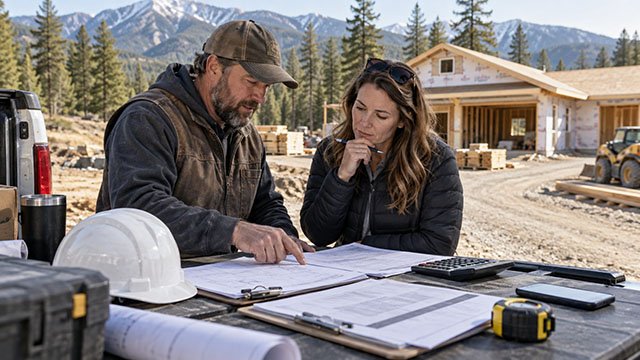
The cheapest rural contractor is not always the least expensive choice
Rural construction has more variables than a typical in-town remodel. Access, excavation, rock, septic, wells, utility extensions, long driveways, drainage, weather, material delivery, and permit coordination can all create surprises.
That makes contractor selection especially important on acreage. A low bid can turn into the highest total cost if the scope is vague, exclusions are hidden, change orders are poorly controlled, or the contractor does not understand rural site conditions.
The goal is not to find the lowest number. It is to find a contractor whose registration, insurance, experience, scope, schedule, and pricing can be verified before work begins.
Idaho generally requires contractor registration, not a general contractor license
One of the most important Idaho-specific distinctions is that ordinary contractors are generally registered with the Idaho Contractors Board rather than licensed as general contractors.
Idaho DOPL states that the Idaho Contractor Registration Act requires registration rather than licensure. A person performing a construction job over $2,000 in combined labor and materials generally must be registered unless an exemption applies.
That means a contractor saying 'Idaho does not license general contractors' is only part of the story. Registration is still a real state requirement for many construction businesses.
Verify the contractor through Idaho DOPL before signing
Idaho DOPL provides a public search for contractor registrations and formal disciplinary actions.
Use the exact business name shown on the proposal and compare it with the public record. Confirm that the registration is active, that the business information matches, and that the contractor is not relying on another company's registration.
Save a screenshot or PDF of the verification with your project records so you have a dated record of what you reviewed before the contract was signed.
A registration is not the same as proof of skill
Registration helps establish that the contractor has met Idaho's registration requirements, but it does not mean the state has certified that contractor as the best choice for your specific project.
For acreage work, experience with the exact type of job still matters. A strong residential remodeler may not be the right excavation contractor, and a skilled excavation contractor may not be the right person to design drainage or engineer a retaining wall.
Use registration as a minimum screening step, then evaluate experience, references, equipment, subcontractors, and the written scope.
Idaho contractor registration includes insurance requirements
DOPL's contractor registration guidance requires applicants to provide proof of general liability insurance and, when applicable, workers' compensation coverage.
The contractor registration application requires general liability coverage of at least $300,000 single limit, including products and completed operations coverage.
That state minimum should not be treated as the ideal amount for every project. A major home, barndominium, retaining wall, excavation package, or utility project may justify discussing higher limits with your insurance professional and contractor.
Ask for a current certificate of insurance
Do not rely on a sentence in a proposal that says 'licensed and insured.' Ask for a current certificate of insurance directly tied to the business you are hiring.
Review the policy dates, business name, general liability limits, and listed coverage. If workers will be on the property, ask about workers' compensation as well.
For a large project, consider asking your insurance agent or attorney whether you should be listed as an additional insured or require specific contract language.
Workers' compensation coverage can be checked online
The Idaho Industrial Commission provides an online system for verifying whether an employer has workers' compensation coverage.
The Commission explains that the system can identify the insurance company that wrote a workers' compensation policy for a specific employer on a specific date.
This is useful when a contractor says employees are covered but you want independent confirmation before a crew arrives on your property.
Specialty trades can require actual state licenses
Idaho's general contractor registration system does not replace the separate licensing requirements for regulated specialty trades.
Electrical, plumbing, and HVAC contractors operate under specific licensing requirements administered through Idaho DOPL. DOPL's contractor FAQ also lists licensed trades as examples of professionals who may be exempt from general contractor registration when working within the scope of their specialty license.
If the project includes electrical, plumbing, or HVAC work, verify the appropriate specialty license rather than assuming the general contractor's registration covers those trades.
Public works licensing is a different system
Idaho also has a Public Works Contractors License Board, but that licensing system is aimed at public works contracting and should not be confused with ordinary private residential contractor registration.
For most rural homeowners building on private property, the relevant first check is the Contractors Board registration plus any specialty licenses required for the actual trade work.
If the project involves a government entity, public infrastructure, or other public works context, verify whether public works licensing requirements apply.
Start with a written scope before asking for bids
It is difficult to compare contractors when each bidder is pricing a different version of the job.
Before requesting bids, create a written scope describing the work you expect, the approximate quantities, known site conditions, owner-furnished items, permit responsibilities, cleanup expectations, and desired schedule.
For technical work, include the survey, engineered plans, septic design, utility requirements, or other documents that define the project.
Make bidders price the same scope
A useful bid comparison requires consistency.
For a driveway, for example, each bidder should know the expected length, width, excavation depth, geotextile requirements, aggregate type, lift thickness, compaction expectations, culverts, drainage features, and finish surface.
For excavation, specify whether the price includes clearing, stripping topsoil, export or import material, rock excavation, hauling, compaction testing, erosion controls, and final grading.
Ask for exclusions in writing
A bid can look complete while leaving out expensive parts of the project.
Ask every contractor to provide a written exclusions list showing what is not included in the price.
Common rural exclusions can include permits, engineering, survey staking, blasting, dewatering, trench bedding, imported fill, unsuitable-soil removal, disposal fees, utility locates, traffic control, erosion control, testing, landscaping restoration, and final cleanup.
Unit pricing helps control unknown conditions
Some rural work cannot be priced perfectly before excavation begins.
If rock, unsuitable soil, extra hauling, imported gravel, trench depth, or other quantities are uncertain, ask for unit prices before work starts.
A pre-agreed rate per cubic yard, ton, truckload, hour, or linear foot is much easier to manage than negotiating a price after the surprise is already exposed.
A contractor should be able to explain the bid
A detailed bid is useful, but the contractor should also be able to walk you through the logic behind it.
Ask what assumptions were made, which quantities are estimated, what could trigger a change order, which subcontractors are included, and what the owner must provide before mobilization.
If the contractor cannot explain where the number came from, the final price may be difficult to control.
Compare value, not just the bottom line
Two bids can differ because one contractor included work the other omitted.
A higher bid may include mobilization, drainage, compaction, erosion control, permits, cleanup, and better materials, while the lower number covers only the visible construction.
Normalize the bids before choosing. Add back missing scope, allowances, and owner-paid work so you are comparing the likely total cost.
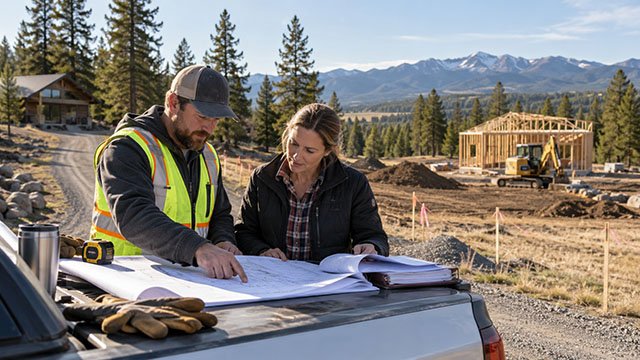
Check rural-project experience, not just years in business
Years in business matter, but experience with your type of rural project matters more.
Ask how many similar wells, septic systems, rural driveways, grading jobs, barndominiums, utility extensions, retaining walls, or land-clearing projects the contractor has completed recently.
A contractor who routinely works on acreage is more likely to anticipate access constraints, weather, delivery logistics, equipment mobilization, drainage, and coordination between multiple trades.
Ask for recent, relevant references
References are more useful when they are recent and comparable to your project.
Ask for customers whose projects were completed within the last year or two and involved similar scope, budget, terrain, and location.
When you call, ask whether the final price stayed close to the contract, how change orders were handled, whether the contractor communicated delays, whether the site was protected, and whether the owner would hire the same contractor again.
Drive by finished work when practical
For visible exterior work such as grading, driveways, retaining walls, shops, barndominiums, fencing, and land clearing, completed projects can reveal a great deal.
Look for drainage problems, settlement, unfinished edges, erosion, poor cleanup, damaged vegetation, or other signs that may not appear in portfolio photos.
Always respect the property owner's privacy and obtain permission if the contractor arranges an on-site visit.
Ask who will actually be on your property
The person who sells the job may not be the person supervising it.
Ask who the project manager or foreman will be, how often that person will be on site, how subcontractors are selected, and who has authority to approve changes.
For a long rural project, the quality of day-to-day supervision can matter as much as the contractor's overall reputation.
Clarify subcontractor responsibility
Many general contractors rely on specialty subcontractors for excavation, concrete, electrical, plumbing, HVAC, roofing, septic, and other work.
The contract should make clear whether subcontractors are hired and paid by the general contractor or directly by the owner.
If a specialty license is required, verify the actual subcontractor who will perform that work rather than assuming the general contractor has already done so.
The contract should match the proposal
Do not allow the detailed bid to disappear when the final contract is signed.
The contract should incorporate the proposal, plans, specifications, allowances, exclusions, payment schedule, schedule assumptions, and any negotiated changes.
The Idaho Attorney General's Consumer Protection Manual advises consumers to make sure all terms and verbal promises are included in the written contract and to keep a signed readable copy.
Avoid large upfront payments
The Idaho Attorney General's Consumer Protection Manual advises consumers not to agree to a large down payment and recommends tying payments to progress.
That does not mean every deposit is unreasonable. Contractors may need money for custom materials, mobilization, engineering, permits, or equipment reservations.
The important point is that the payment schedule should be proportional to actual project progress and clearly defined before work begins.
Use milestone payments for larger rural projects
Milestone payments can make a large project easier to manage.
For example, a site-work contract might include payments after mobilization, clearing, rough grading, utility trenching, aggregate placement, and final grading.
The milestone should describe measurable completed work rather than simply using calendar dates, because weather and permitting can move the schedule.
Keep retainage or a final payment until closeout
The Idaho Attorney General's Consumer Protection Manual specifically suggests that consumers consider withholding a portion of the contract amount, such as ten percent, until the work is completed satisfactorily.
For a large rural project, the final payment can also be tied to cleanup, punch-list completion, inspection approval, delivery of warranties, final invoices, and required closeout documents.
The exact structure should be written into the contract so there is no disagreement at the end.
Change orders should be written before extra work begins
Unexpected conditions are common on acreage, but undocumented extra work is one of the fastest ways for a project to lose budget control.
Require written change orders that identify the scope change, added or reduced price, schedule impact, and any revised assumptions.
Emergency safety work may require faster decisions, but routine changes should not be handled through vague texts or verbal conversations.
Set a rule for who can authorize extra work
If multiple family members, designers, or project representatives are involved, the contractor should know who has authority to approve additional cost.
A clear authorization rule prevents a subcontractor or crew member from interpreting casual comments as permission to expand the scope.
For larger projects, designate one owner representative for pricing and change-order approval.
Permits should be assigned in the contract
Do not assume the contractor is obtaining every permit.
The contract should identify who is responsible for building, trade, septic, driveway, stormwater, utility, and other approvals that apply to the project.
If the contractor is responsible, require copies of issued permits and inspection results for your records.
Never accept 'we do not need permits' without verifying
Some rural work may not require a permit, but the contractor should not be the only source of that determination.
Confirm permit requirements with the city, county, public health district, Idaho DOPL, utility, road authority, or other agency that actually has jurisdiction.
A low bid based on skipping required approvals can create expensive corrections, delays, or disclosure issues later.
Understand who is responsible for utility locates
Excavation, trenching, grading, fence posts, culverts, and driveway work can conflict with buried utilities.
The contract should state who requests utility locates and who is responsible for privately owned lines that may not be marked through the public locate system.
On rural property, private well power, propane lines, irrigation pipes, septic components, gate wiring, and old utility runs can be easy to miss.
Weather should be addressed before the schedule is promised
Idaho weather can affect excavation, concrete, grading, road work, roofing, septic installation, and material delivery.
A realistic contract should explain how weather delays are handled and whether winter conditions can increase costs for snow removal, heating, ground thaw, temporary stabilization, or remobilization.
Be cautious when one contractor promises a dramatically faster schedule than every other experienced bidder.
Material escalation and allowances need clear rules
Long rural projects can span months, and some materials are purchased well after the contract is signed.
If the bid uses allowances or permits price escalation, define how actual costs will be documented and whether markup applies.
Avoid open-ended language that allows any supplier increase to be passed through without documentation or a stated formula.
Red flag: pressure to sign immediately
A contractor who insists that the price is valid only if you sign immediately may be creating artificial urgency.
Legitimate material quotes and scheduling windows can expire, but you should still have enough time to read the contract, verify registration and insurance, compare scope, and ask questions.
The Idaho Attorney General's consumer guidance emphasizes understanding the contract before signing and ensuring that all important terms are included.
Red flag: cash-only pricing with no paper trail
Cash itself is not automatically a problem, but a contractor who refuses written invoices, receipts, or a formal contract creates unnecessary risk.
For significant rural work, keep a clear record of bids, contracts, payments, change orders, permits, inspections, and communications.
Documentation protects both parties by showing what was agreed to and what has been paid.
Red flag: refusing to provide registration or insurance information
A contractor who is required to be registered should not be reluctant to provide the business name and registration number needed for verification.
Likewise, a legitimate insured contractor should be able to provide current insurance documentation.
If the business name on the insurance certificate, contract, invoice, and state registration do not match, stop and clarify the relationship before paying a deposit.
Red flag: a vague one-line estimate
A one-line price such as 'site work $38,000' is difficult to enforce and almost impossible to compare.
For substantial acreage development, ask for enough detail to understand quantities, materials, equipment, labor, exclusions, allowances, and responsibilities.
The more unknowns the project contains, the more important the written scope becomes.
Red flag: the contractor wants to use someone else's registration
The business you hire should be the business represented in the contract and state records.
If a person says the registration belongs to a friend, former employer, related company, or subcontractor, verify who is actually contracting with you and who is legally responsible for the work.
Do not assume that a valid number automatically covers an unrelated individual or business.
Red flag: specialty work without specialty credentials
Electrical, plumbing, and HVAC work should be performed under the appropriate Idaho specialty licensing structure.
A general contractor registration does not substitute for those licenses.
If a contractor plans to self-perform regulated trade work, verify the required license before work starts.
Create a simple contractor scorecard
A written scorecard helps keep the decision from becoming purely emotional or price-driven.
Rate each bidder on verified registration, insurance, relevant experience, references, completeness of scope, exclusions, communication, schedule realism, change-order process, and total normalized price.
The scorecard does not need to be complicated. Its purpose is to force a consistent comparison between bidders.
A practical Idaho contractor-hiring checklist
Use this checklist before signing a contract for significant rural construction work.
- Verify the contractor or business through Idaho DOPL
- Confirm the registration is active when registration is required
- Check DOPL public records for disciplinary information
- Verify specialty licenses for electrical, plumbing, HVAC, or other regulated work
- Request a current general liability insurance certificate
- Verify workers' compensation coverage when applicable
- Collect at least two or three comparable bids for larger work
- Give every bidder the same written scope
- Require written exclusions and allowances
- Establish unit pricing for uncertain quantities
- Check recent references for similar rural projects
- Confirm who will supervise the job
- Identify all major subcontractors
- Assign permit responsibilities in writing
- Use a written payment schedule tied to progress
- Define retainage or final-payment conditions
- Require written change orders
- Set rules for who can approve extra work
- Document schedule assumptions and weather delays
- Keep contracts, invoices, permits, inspections, and payment records
Questions to ask every rural contractor
These questions make it much easier to compare bidders on more than price.
- What exact business name and Idaho registration number will appear on the contract?
- Are you carrying current general liability and workers' compensation coverage?
- How many similar rural projects have you completed in the last two years?
- Can I speak with three recent customers?
- Who will supervise my project day to day?
- Which parts of the work will be subcontracted?
- Who obtains the permits and schedules inspections?
- What is specifically excluded from this bid?
- Which quantities are estimated rather than fixed?
- What unit prices apply if quantities change?
- How are change orders approved?
- What deposit is required and why?
- What milestones trigger progress payments?
- What happens if weather delays the job?
- What is the process for punch-list and final closeout?
- What warranty applies to the work?
Use AcreageReady's cost guides before you solicit bids
Contractor bids are easier to evaluate when you already understand the major cost drivers.
AcreageReady's Idaho guides cover wells, septic, power, land clearing, grading, excavation, gravel driveways, retaining walls, barndominiums, and overall build-ready land costs.
Use those articles to build a preliminary scope and budget, then use actual contractor proposals to replace broad planning ranges with project-specific numbers.
Good contractor selection is part of rural due diligence
The right contractor does more than complete the physical work. A strong contractor helps identify conflicts, coordinates inspections, explains unknowns, documents changes, and leaves the property in a condition that supports the next phase of development.
In Idaho, start with state registration and specialty-license verification, then evaluate insurance, comparable experience, references, scope detail, payment structure, and communication.
A few extra hours of screening before signing can prevent months of expensive problems after equipment is already on the property.
Sources & methodology
Where this information comes from
Cost figures are planning references rather than contractor quotes. Permitting, system-selection, and location-specific guidance should be verified with the appropriate local authority or qualified professional. AcreageReady uses source-backed, AI-assisted editorial workflows and remains responsible for the material it publishes. Read how we research, edit, and correct guides.
- Idaho DOPL: Contractors Board
- Idaho DOPL: Contractor FAQs
- Idaho DOPL: Contractor Statutes, Rules and Guidance
- Idaho DOPL: Contractors Search Category
- Idaho Industrial Commission: Verify an Employer's Coverage
- Idaho Industrial Commission: Employer FAQs
- Idaho Office of Attorney General: Consumer Protection Manual
- Idaho DOPL: Public Works Contractors License Board
- AcreageReady: Buying Rural Land in Idaho
- AcreageReady: How Much Does It Cost to Make Rural Land Build-Ready in Idaho?
Common questions
Frequently asked questions
Do general contractors need a license in Idaho?
Idaho generally uses contractor registration rather than a general contractor license. DOPL states that contractors performing construction jobs over $2,000 in combined labor and materials generally must register unless an exemption applies.
How do I verify an Idaho contractor?
Use Idaho DOPL's public search to verify the contractor or business registration and review available disciplinary information. Match the exact business name to the proposal and contract.
How much liability insurance does Idaho require for contractor registration?
DOPL's contractor registration materials require proof of general liability insurance with at least a $300,000 single limit, including products and completed operations coverage.
How can I check workers' compensation coverage in Idaho?
The Idaho Industrial Commission provides an online Workers' Compensation Coverage Verification System that can identify coverage for an employer on a specific date.
Do electricians, plumbers, and HVAC contractors need separate licenses in Idaho?
Yes. Those regulated specialty trades operate under separate Idaho licensing requirements. A general contractor registration does not replace the appropriate specialty license.
Should I pay a large deposit to an Idaho contractor?
The Idaho Attorney General's Consumer Protection Manual advises consumers not to agree to a large down payment and recommends tying payments to progress. The appropriate deposit depends on the project and legitimate upfront costs.
Should change orders be written?
Yes. Written change orders should identify the scope change, price change, schedule effect, and approval before additional work begins whenever practical.
How many bids should I get for rural work?
For substantial projects, two or three comparable bids are a useful starting point. More important than the number of bids is making sure each contractor is pricing the same written scope.
Ready to talk with a local professional?
Share your location and project details so AcreageReady can identify relevant providers as the network grows.
Get a free quote