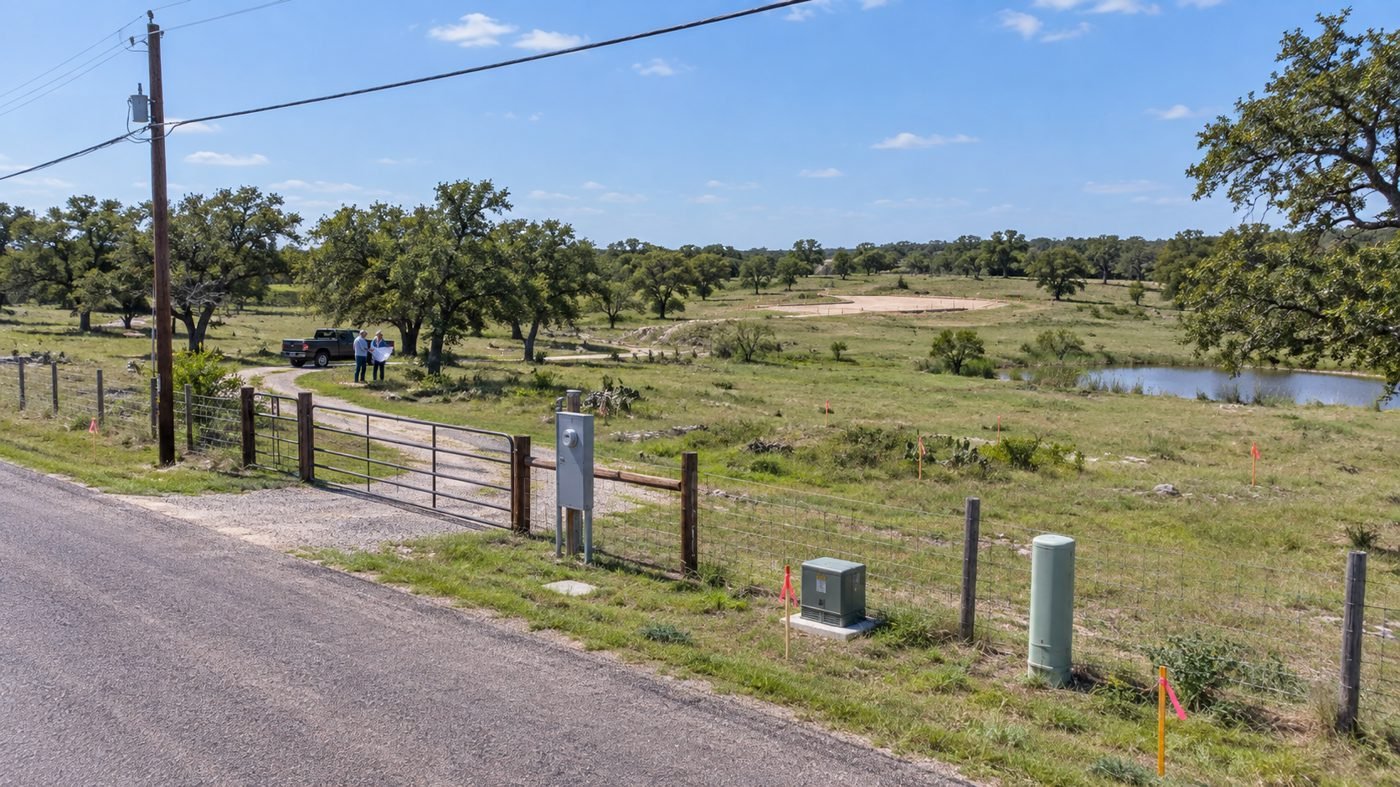
Utility availability can change whether a rural property is actually buildable within your budget
A rural listing may say electricity is nearby, water is available, or utilities are at the road. Those phrases are useful clues, but they are not the same as verified service to the homesite you want to build.
Before buying acreage, confirm who serves the property, where each service actually ends, what capacity is available, what the connection or extension will cost, and whether easements or permits are required. A parcel that looks inexpensive can become expensive quickly if power must be extended hundreds of feet, a well must be drilled, septic requires an engineered system, or broadband is unavailable.
Start with electricity because distance and line-extension policy can change the project budget
Identify the electric utility or cooperative that owns the local distribution system and ask whether the parcel can be served. Do not stop at seeing a pole near the road. The nearest visible line may not be the correct voltage, may not have capacity for your planned load, or may not be the facility the utility will use to serve the property.
Ask for the likely point of delivery, meter location, overhead or underground options, transformer requirements, line-extension policy, required easements, and whether the utility can provide a preliminary estimate before your purchase deadline.
Utilities such as Oncor provide a new-construction process for locations without existing service, while rural cooperatives such as CoServ specifically treat homes, wells, barns, and other structures that are too far from existing lines as line-extension projects.
- Who is the serving electric utility?
- Where is the nearest usable distribution line?
- Is there enough capacity for the planned home, well, shop, HVAC, and future loads?
- Where will the meter and point of delivery be located?
- Will service be overhead, underground, or either?
- Who pays for poles, transformer work, trenching, conduit, and line extension?
- What easements or access rights will the utility require?
Public water boundaries do not guarantee that a meter is available
If the property is within a public water system or water-supply corporation area, confirm service directly with the provider. TCEQ specifically warns that being inside a water-system boundary does not necessarily mean a meter is available at that parcel.
Ask whether a tap or meter can be installed, where the main is located, what size service is available, what connection fees apply, whether road boring or line extension is required, and whether there are capacity or development restrictions.
Texas buyers can use water-service boundary tools and Public Utility Commission Certificate of Convenience and Necessity information to help identify the provider, but the provider still needs to confirm the actual service conditions.
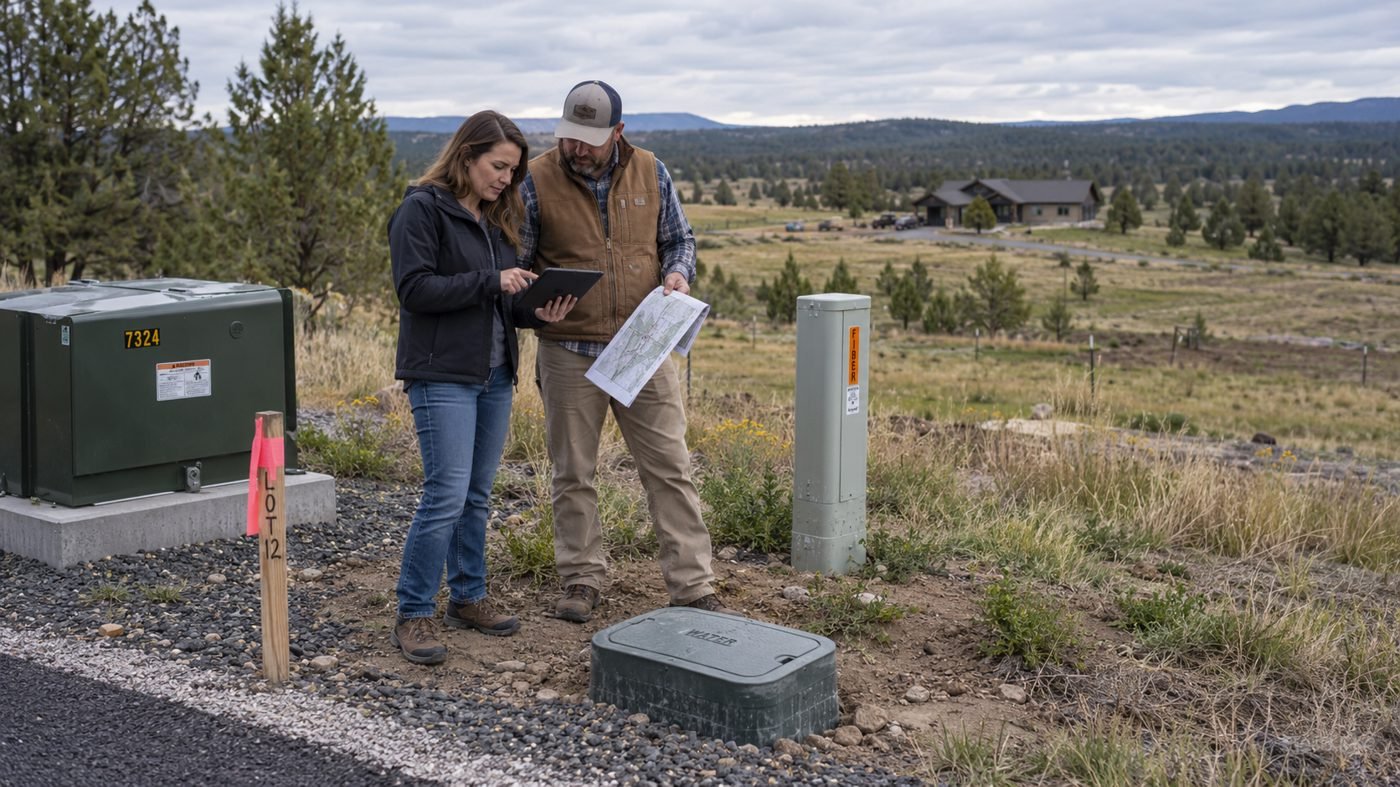
If public water is not practical, investigate the well option before closing
A private well can solve the water-supply problem on many Texas properties, but the feasibility and cost vary widely by location. Review nearby well records, expected drilling depth, groundwater conditions, local groundwater-district rules, access for a drilling rig, and separation from septic facilities.
Texas Water Development Board guidance notes that groundwater conservation districts can regulate well permitting, production, and spacing. The state also recommends obtaining existing well records when buying property with a private well.
Do not assume that because neighboring tracts have wells your parcel will produce the same depth, yield, or water quality.
- Search nearby well reports
- Identify the groundwater conservation district, if any
- Ask about local spacing or permitting rules
- Estimate drilling, casing, pump, pressure-system, trenching, and electrical costs
- Plan well location with septic, buildings, roads, and future improvements
Check sewer service before assuming septic is your only option
Some rural or semi-rural properties are inside a wastewater utility or district service area even when they are outside a city. Ask whether sewer is actually available to the parcel, whether connection is mandatory, where the line is located, and what tap, impact, or extension costs apply.
If there is no practical sewer connection, the property will usually need an on-site sewage facility such as a septic system. That moves septic feasibility into the due-diligence process rather than something to solve after closing.
Septic feasibility should be checked before you commit to the homesite
Texas septic systems are regulated as on-site sewage facilities, and almost all installations require permitting through TCEQ or a local authorized authority. System selection depends on the site evaluation, soil, slope, drainage, available area, setbacks, and the planned home.
The septic area can also conflict with the house, shop, driveway, pool, well, pond, and future structures. A tract can have plenty of acreage overall while still having a poor layout for the disposal area and required reserve or separation distances.
Before closing, identify the local permitting authority and understand whether the likely homesite has enough suitable area for an approvable system.
Natural gas is much less common on rural acreage than electricity
If natural gas matters to your plan, verify service directly with the local gas utility. Do not assume a nearby subdivision or roadside marker means a residential tap is available to the property.
Ask where the gas main is located, whether the parcel is inside the utility's service area, what meter and extension costs apply, and whether the existing main has enough capacity for the planned home and generator.
Propane is often the practical fuel alternative
Where natural gas is unavailable, propane can provide fuel for heating, water heating, cooking, fireplaces, shop equipment, and standby generation. The advantage is that the fuel is stored on the property rather than requiring a natural-gas main.
But propane still affects site planning. A tank needs an approved location, delivery access, regulators, piping, required clearances, and protection from vehicles or grading work. If you expect to use propane heavily, confirm that the property layout provides a practical tank location and year-round delivery route.
Internet availability should be verified at the exact property
Rural broadband can vary from one driveway to the next. A nearby road may have fiber while a particular homesite has only fixed wireless, satellite, DSL, or no wired option.
The FCC National Broadband Map allows buyers to search an address or location and see providers, technologies, and maximum advertised speeds reported for that location. The FCC also notes that the map shows reported availability, not actual network performance or affordability.
Use the map as a starting point, then contact the providers directly and ask whether they can install service at the exact proposed house location, whether construction charges apply, and how long installation usually takes.
Cell coverage matters more when the property depends on wireless internet or remote monitoring
Test mobile service from the property itself, not only from the highway. Walk the homesite, proposed shop area, driveway, and low spots on the land with the carriers you expect to use.
Weak cellular service can affect phone calls, hotspot backup, gates, cameras, security systems, remote equipment monitoring, and some fixed-wireless internet products. If the property is remote, consider how communications will work during a power or broadband outage.
Utility easements can control where you build
Existing utility easements may cross the property even when no obvious infrastructure is visible. New service may also require you to grant an easement so a utility can install, inspect, maintain, and replace facilities.
Review the survey, title commitment, plats, and recorded easements before finalizing a homesite. An easement can affect building placement, fences, gates, driveways, tree planting, ponds, and future shops.
A utility at the road may still require expensive work to reach the house
For rural land, the distance from the public road to the actual building site matters. A meter at the road does not mean the owner's portion of the electrical or water run is free.
Long private runs may require trenching, larger conductors or pipe, voltage-drop calculations, booster equipment, road or creek crossings, rock excavation, and future-access planning. Measure the likely utility route before deciding where the home will sit.
Check whether utility districts or service areas create additional costs
Some properties fall inside municipal utility districts, special utility districts, water-supply corporations, or other service entities that can have their own fees, rules, taxes, or connection requirements.
The existence of a district is not automatically a problem, but buyers should understand the entity, the services it provides, the current fees, and any taxes or assessments tied to the property before comparing land prices.
Do not rely on the phrase 'utilities available'
Treat utility language in a listing as a lead to investigate, not as final verification. Ask the seller or agent for the names of the serving utilities, copies of recent bills for existing service, meter numbers, well records, septic permits, surveys, easements, and any utility estimates already obtained.
Then verify the information independently with the provider or regulatory authority. A written email or preliminary service estimate is much more useful than a verbal statement that power or water is nearby.
Utility due-diligence checklist before buying rural land
The goal is to know what exists, what must be built, who controls each service, and what the likely cost and timeline will be before the purchase becomes unconditional.
- Identify the electric utility and request preliminary service information
- Confirm the nearest usable electric line and likely point of delivery
- Verify public-water provider, meter availability, tap fees, and line-extension requirements
- If needed, research well depth, local groundwater rules, and drilling access
- Verify public sewer availability and connection requirements
- If septic is needed, identify the permitting authority and likely site constraints
- Confirm natural-gas availability or plan for propane
- Check broadband providers at the exact property
- Test cellular coverage on site
- Review utility easements, rights-of-way, and the survey
- Estimate private trenching and utility runs from the road to the homesite
- Ask about district fees, utility taxes, or assessments
- Get critical utility information in writing before the option or due-diligence period ends
The best time to solve utility questions is before you own the land
Utilities shape the homesite, driveway, septic area, well location, shop placement, construction sequence, and total development budget. Resolving them after closing limits your options.
A parcel with confirmed electric capacity, a workable water source, an approvable wastewater plan, reliable communications, and clear utility access is much easier to budget than one where every major service is still an assumption.
Keep researching
Acreage Planning resources
Due diligence, development sequencing, utilities, access, and the decisions that shape a rural property project.
Sources & methodology
Where this information comes from
Cost figures are planning references rather than contractor quotes. Permitting, system-selection, and location-specific guidance should be verified with the appropriate local authority or qualified professional. AcreageReady uses source-backed, AI-assisted editorial workflows and remains responsible for the material it publishes. Read how we research, edit, and correct guides.
Common questions
Frequently asked questions
What utilities should I check before buying rural land?
At minimum, verify electricity, water, sewer or septic, natural gas or propane options, internet, cellular coverage, and utility easements. Confirm who serves the parcel, where the service is located, capacity, connection or extension costs, and what private work is required to reach the homesite.
Does electricity at the road mean the property is ready for electric service?
No. A nearby line may not be the correct facility for the property, may lack capacity, or may require a paid extension, transformer, easement, or private electrical run. Ask the serving utility to confirm the service plan.
If a Texas property is inside a water service area, does that guarantee a water meter?
No. TCEQ specifically notes that a property can fall inside a water-system boundary without a meter being available. Contact the water provider to verify service, capacity, meter availability, and fees.
Should I test septic feasibility before buying land?
Yes when public sewer is unavailable. Septic design depends on site conditions, local permitting, setbacks, and the proposed layout. A site that works for a home may not work once the well, driveway, shop, pool, or other improvements are considered.
How can I check internet service on rural land?
Use the FCC National Broadband Map to see providers and technologies reported for the exact address or location, then contact those providers directly to verify installation availability, construction charges, and expected service.
What documents should I ask the seller for?
Useful records include surveys, title documents, utility bills, meter information, well reports, water tests, septic permits and maintenance records, utility easements, subdivision plats, and any prior service or construction estimates.
Ready to talk with a local professional?
Share your location and project details so AcreageReady can identify relevant providers as the network grows.
Get a free quote