Arkansas well cost depends on what is below the property
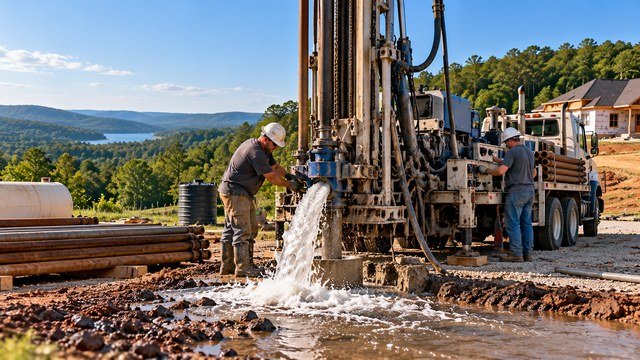
A private well is one of the hardest rural-land costs to estimate from a listing. The finished price depends on drilling depth, subsurface formations, casing and grout requirements, well yield, pump sizing, electrical work, trenching to the house, pressure equipment and any water treatment the completed well needs.
Two nearby Arkansas parcels can produce very different drilling bills. Treat statewide averages as rough planning tools and build the real budget from local drilling history and written contractor proposals.
Use a complete water-system budget, not a price per foot
A drilling quote may focus on footage, but a usable household water system includes more than the borehole. Ask whether the proposal includes casing, grout, well development, pump, drop pipe, wire, pressure tank, controls, trenching, sanitary completion and water testing.
For raw acreage, also account for electrical service to the pump and the distance from the well to the house. A low drilling rate can become a much larger completed-system cost when major components are separate.
Arkansas regulates water-well construction
Arkansas water-well rules establish minimum standards for the construction, repair and location of wells used to obtain groundwater in the state. The rules remain important even when a rural property owner is planning a single domestic well.
The current Code of Arkansas Rules notes that the former Commission on Water Well Construction was abolished by Act 691 of 2023 and its authority and functions were transferred to the Arkansas Natural Resources Commission. Existing rules and standards continue until amended or repealed.
Use a properly licensed Arkansas well contractor
Arkansas rules state that covered water wells must be constructed by a person holding the required valid license unless an exemption applies. Current rules also require appropriate certified supervision during well construction, alteration, repair, or pump-equipment work.
When comparing bids, verify the contractor's current Arkansas credentials rather than relying only on an online review or equipment list.
Depth is a major cost driver
Deeper drilling usually means more rig time, more borehole footage and potentially more casing, pipe, wire and pump requirements. But depth alone does not determine whether a well will be productive.
Ask local drillers what they commonly encounter around the specific parcel. Nearby completed wells can provide context, but they do not guarantee the same depth or yield on your property.
Arkansas geology changes from region to region
Arkansas includes very different groundwater settings, from the Ozark and Ouachita uplands to the Gulf Coastal Plain and Mississippi Alluvial Plain. Rock type, sediment thickness and aquifer conditions can change the drilling method and finished-well design.
That regional variation is one reason a generic statewide cost-per-foot number can be misleading. Local drilling experience is especially valuable when comparing rural parcels.
Rock can affect both progress and equipment needs
Hard consolidated formations may drill differently from unconsolidated sands and gravels. Formation changes can influence drilling speed, casing decisions and how the well is completed.
Do not assume a rocky property is automatically bad for groundwater or automatically expensive. The useful question is what licensed contractors regularly encounter in that immediate area.
Casing and grout protect the well
Proper casing and sealing help keep undesirable surface or shallow water from entering the well. The amount and type of casing required can materially affect the final bill.
Ask the driller to identify the casing assumptions in the proposal and explain how unexpected formations would change the scope or price.
A productive well is more important than a deep well
The goal is a reliable water supply, not simply reaching a particular depth. Well yield, static water level and recovery characteristics influence how the finished system should be configured.
A lower-yield well can sometimes support a residence with appropriate storage and system design, while a deeper well does not automatically guarantee stronger production. Discuss expected household demand with the contractor.
Pump sizing follows the actual well
The pump should be selected after the well's depth, water level and performance are understood. Pump capacity, horsepower, setting depth, drop pipe and wire all contribute to system cost.
Avoid treating the pump as a generic accessory. Oversizing or undersizing equipment can create performance and longevity problems.
Pressure tanks and controls belong in the budget
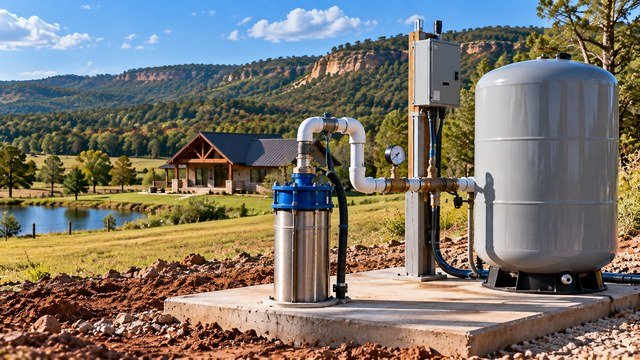
A household well system normally needs pressure-control equipment in addition to the downhole pump. Tank size, switches, controls, protection devices and installation labor should be identified in the quote.
If a proposal says 'well complete,' ask exactly what that means so you can compare bids on the same basis.
Electric service can be a separate rural-land expense
A submersible pump needs power. On undeveloped acreage, the cost of getting electricity to the well location may be separate from both the drilling contract and the utility's service-extension work.
Coordinate the well, house and electrical layout so trenching and conductor runs are not unnecessarily long.
Distance from the well to the house matters
Long water-line runs require more pipe, trenching and labor. Terrain, creek crossings, rock and driveway crossings can add complexity.
The cheapest drilling location is not always the cheapest finished water-system location. Evaluate the complete route from the wellhead to the pressure system and house.
Plan the well and septic system together
A rural homesite using both a private well and onsite wastewater needs a coordinated site plan. The well cannot be treated as an isolated dot on the property because sanitation, drainage and future development affect location decisions.
Reserve the septic primary and secondary areas before finalizing the well and driveway layout.
Related: Arkansas septic system cost guide
Water quality is a separate question from water quantity
A well can produce enough water and still require treatment for taste, odor, hardness, iron, manganese or other constituents. The appropriate testing and treatment depend on the actual water.
Budget for laboratory testing after completion and choose treatment based on measured results rather than a generic equipment package.
Do not assume clear water means safe water
Appearance is not a substitute for testing. A new household well should be evaluated using appropriate water-quality testing and sanitary practices recommended for the intended use.
Keep test results and well records with the property's permanent documents so future owners and service contractors have a baseline.
Nearby well records can improve due diligence
Information about nearby wells can help buyers understand the range of depths and groundwater conditions encountered locally. It is context, not a guarantee.
Ask drillers what records or local data they use when estimating the parcel and whether they have completed wells in the same area.
Ask what happens if the first bore is unsuccessful
A critical contract question is how a dry or inadequate hole is billed. Ask what charges apply to drilling, casing, mobilization and abandonment if the first location does not produce an acceptable result.
Understanding that risk before the rig arrives makes the contingency budget much more realistic.
Abandoned wells must be handled properly
Arkansas guidance requires abandoned wells to be properly plugged, and state guidance says abandonment work is to be performed by a licensed water-well contractor. Old unused wells on acreage should therefore be treated as a due-diligence item, not simply covered or ignored.
If a parcel has an old well, determine its condition and status before assuming it can be reused.
Domestic household wells have a groundwater-reporting exemption
Arkansas Natural Resources Commission groundwater-use rules provide an exemption from withdrawal reporting for individual household wells used exclusively for domestic use. The rules also exempt wells with a maximum potential flow rate below the stated reporting threshold.
That reporting exemption should not be confused with an exemption from water-well construction standards. Construction and contractor requirements are governed separately.
Get multiple written drilling proposals
A useful proposal should explain the drilling rate or base scope, casing assumptions, pump-system components, mobilization, testing, trenching and how unexpected depth or formation conditions are charged.
Compare scope, not just the first number on the page. One contractor may include components that another lists as allowances or exclusions.
Keep a well contingency
Unlike many building materials, the final depth and subsurface conditions cannot be fully observed before drilling. A contingency is therefore especially important for private-well projects.
Keep that reserve separate from the house budget so deeper-than-expected drilling or added casing does not immediately disrupt construction financing.
Well timing can affect the construction schedule
Drilling early enough can confirm the water source before the project is too far committed, but the wellhead and access route also need protection from heavy construction traffic.
Coordinate the driller, septic designer, electrician and site contractor so each system is placed intentionally rather than wherever equipment happens to fit.
Compare acreage by build-ready cost
A cheaper tract requiring a long driveway, difficult septic system, deep well and major electric extension can cost more to develop than a higher-priced parcel with straightforward infrastructure.
Add water to the same all-in feasibility model as access, wastewater, power, grading and drainage before comparing Arkansas properties.
Related: Buying Rural Land in Arkansas: The Complete 2026 Acreage Guide
Arkansas private-well planning checklist
Before treating the water budget as complete, confirm the drilling scope, finished-system components and site coordination.
- Verify the contractor's current Arkansas license and qualifications.
- Ask about typical nearby well depths and formations without treating them as guarantees.
- Compare complete-system proposals, not only drilling price per foot.
- Clarify casing, grout, pump, pipe, wire, pressure tank and control costs.
- Ask how dry or inadequate holes are billed and abandoned.
- Coordinate the well location with septic, drainage, driveway and buildings.
- Budget trenching and electrical service to the well.
- Test the completed water supply and keep the results.
- Identify and properly address any old abandoned wells.
- Carry a contingency for depth, formation and equipment changes.
Sources & methodology
Where this information comes from
Cost figures are planning references rather than contractor quotes. Permitting, system-selection, and location-specific guidance should be verified with the appropriate local authority or qualified professional. AcreageReady uses source-backed, AI-assisted editorial workflows and remains responsible for the material it publishes. Read how we research, edit, and correct guides.
- Code of Arkansas Rules - Part 11, Arkansas Water Well Construction Rules
- Code of Arkansas Rules - Authorized Water Well Constructor
- Code of Arkansas Rules - Water Well Construction Supervision
- Arkansas Department of Agriculture - Water Well Construction Rules
- Arkansas Natural Resources Commission - Groundwater Use Registration Rules
- Arkansas Department of Agriculture - Proper Well Abandonment
Common questions
Frequently asked questions
How much does it cost to drill a water well in Arkansas in 2026?
There is no reliable single statewide installed price. Final cost depends on depth, geology, casing, drilling conditions, pump equipment, electrical work, trenching, water testing and the distance to the home. Obtain parcel-specific written proposals from licensed Arkansas contractors.
Does Arkansas require a licensed water well contractor?
Arkansas water-well rules state that wells subject to the rules must be constructed by a person with the required valid license unless an exemption applies. Current rules also address certified supervision of construction and pump work.
Who regulates Arkansas water-well construction now?
The Code of Arkansas Rules notes that Act 691 of 2023 abolished the former Commission on Water Well Construction and transferred its authority, duties and functions to the Arkansas Natural Resources Commission. Existing rules remain in effect until amended or repealed.
How deep are private wells in Arkansas?
Depth varies substantially with location and geology. Nearby wells can provide useful context, but they cannot guarantee the depth or yield of a new well on a particular parcel.
Is the pump included in an Arkansas well-drilling quote?
Sometimes, but not always. Ask whether the quote includes the pump, drop pipe, wire, pressure tank, controls, trenching, electrical work, testing and other components needed for a functioning household system.
Should I drill a well before buying Arkansas land?
A buyer should at least investigate groundwater feasibility and local drilling history during due diligence. Whether actual drilling can or should occur before closing depends on the purchase agreement, property access and the buyer's risk tolerance.
Do Arkansas household wells have to report groundwater use?
Arkansas groundwater-use rules exempt individual household wells used exclusively for domestic use from the groundwater-withdrawal reporting requirement. That does not remove separate water-well construction requirements.
Can I use an old well already on Arkansas acreage?
Do not assume an old well is usable. Have its construction, condition, water quality and legal status evaluated. Arkansas guidance also requires abandoned wells to be properly plugged.
How should I budget for a dry well?
Ask the contractor in writing how unsuccessful drilling is charged, including footage, mobilization, casing and abandonment. Keep a separate contingency because the first bore may not deliver the expected result.
What should I test in a new private well?
Testing should be based on the intended use and local conditions. Use appropriate laboratory testing and select any treatment system based on actual results rather than appearance or a generic treatment package.
Ready to talk with a local professional?
Share your location and project details so AcreageReady can identify relevant providers as the network grows.
Get a free quote