How much does it cost to drill a water well in Texas in 2026?
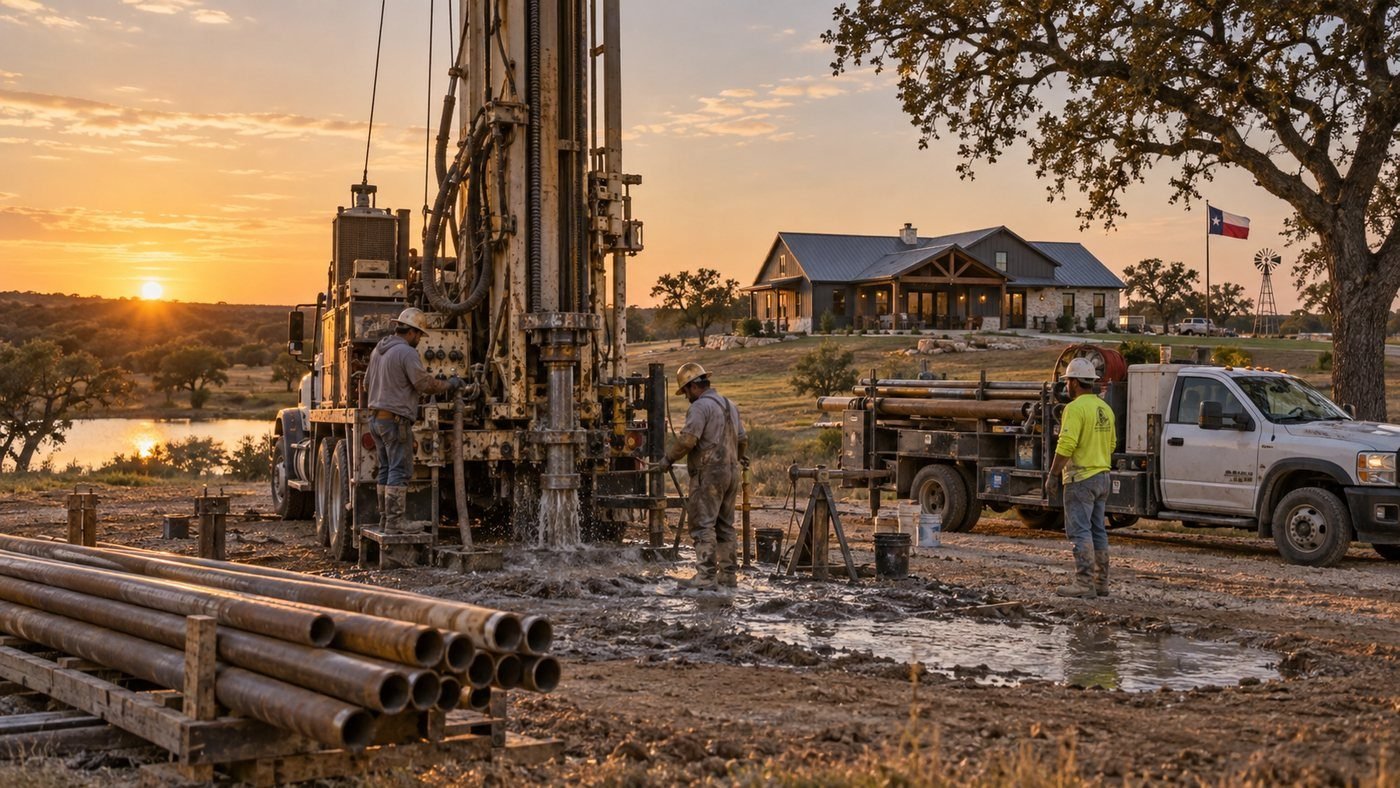
For early planning, a useful 2026 Texas reference is roughly $28 to $62 per drilled foot for the drilling portion of a residential water well project. That range comes from current consumer cost data and should be treated as a planning benchmark rather than a contractor quote.
The final project cost is rarely just depth multiplied by a per-foot rate. Casing, grout, development, pump equipment, controls, pressure tanks, trenching, electrical work, water testing, storage, site access, and local requirements can all add to the total. A deeper well or a site with difficult drilling conditions can move the budget substantially.
As an example, 300 feet of drilling at $28 to $62 per foot works out to roughly $8,400 to $18,600 for drilling before the rest of the water system is added. Actual Texas wells can be shallower or much deeper depending on the aquifer, location, geology, and required yield.
- 2026 Texas drilling reference: roughly $28 to $62 per drilled foot
- Depth is one of the largest cost drivers, but it is not the only one
- Pump, pressure tank, electrical work, trenching, and testing may be separate
- Nearby well records can help frame expectations but cannot guarantee your depth or yield
Why water well costs vary so much across Texas
Texas is too large and geologically diverse for one statewide well price to be meaningful. A driller may encounter different aquifers, rock formations, water-bearing zones, casing requirements, and access conditions even within the same region.
The Texas Water Development Board maintains well records that can help landowners research nearby completed wells, including reported depths and other drilling information. Those records are useful for planning conversations, but a nearby well does not guarantee that your property will produce water at the same depth or rate.
- Expected drilling depth and aquifer
- Rock, clay, sand, gravel, and other formations
- Diameter and amount of casing required
- Well location and rig access
- Desired household, irrigation, livestock, or shop demand
- Pump depth, horsepower, controls, and pressure system
- Distance from the well to the house or storage system
- Local groundwater conservation district requirements
Drilling cost is only one part of the complete well system
A quote that says $40 per foot does not necessarily mean a 300-foot well will be a $12,000 turnkey project. Ask what the per-foot rate includes and what is billed separately.
The complete system may include the borehole, casing, screen where applicable, grout or annular seal, well development, pump, drop pipe, wire, controls, pressure tank, trenching, electrical connection, storage, filtration, disinfection, and water-quality testing.
- Mobilization or minimum drilling charge
- Drilling by the foot
- Casing and sealing
- Well development and yield testing
- Submersible pump and drop pipe
- Electrical controls and wiring
- Pressure tank or storage tank
- Trenching to the home or utility building
- Water-quality testing and treatment equipment
- Site restoration and cleanup
How well depth affects your budget
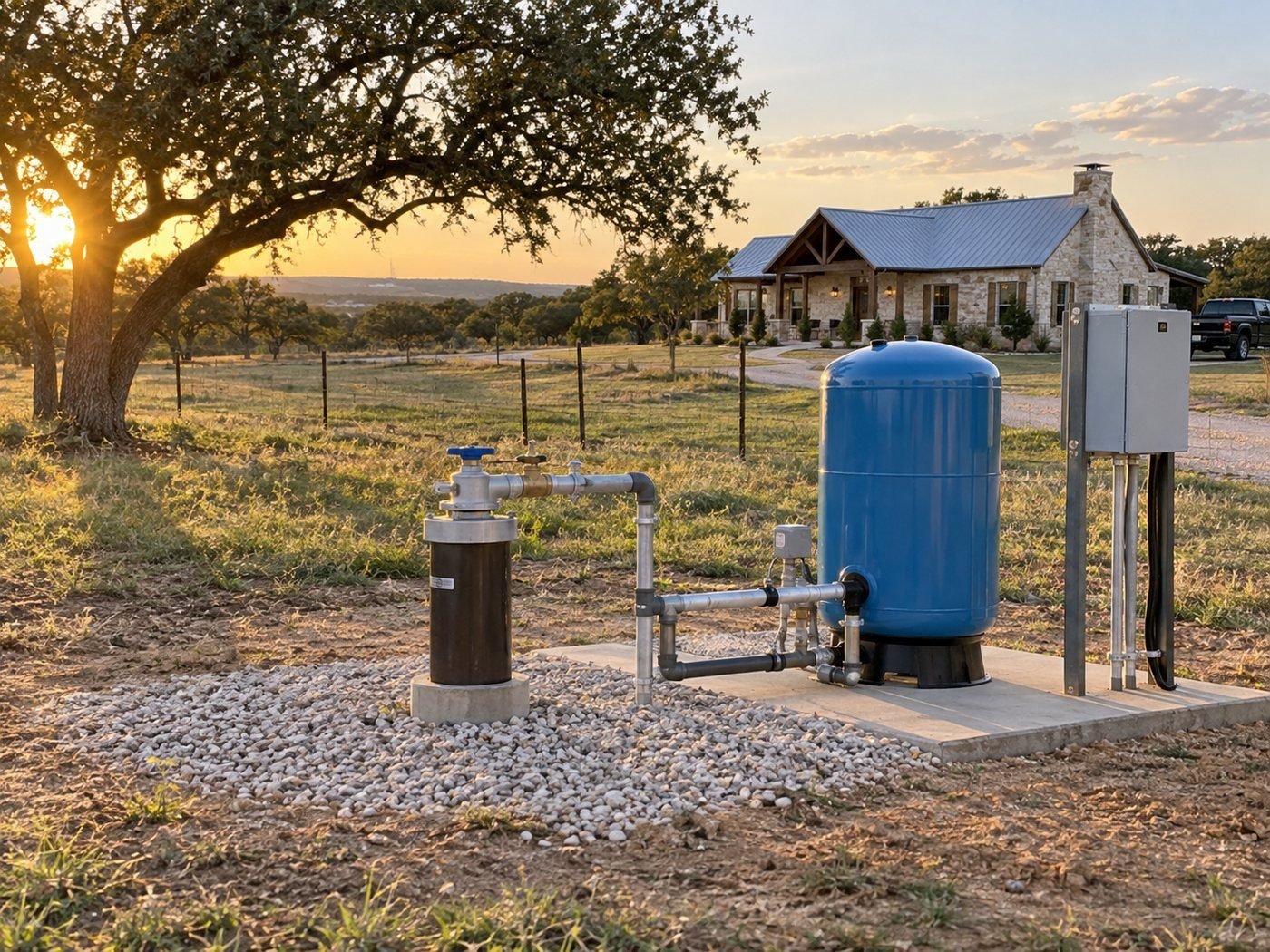
Depth matters because much of the drilling cost is commonly priced by the foot, but a deeper well can also affect casing, pump size, wire, drop pipe, and labor. This is why a deeper-than-expected water-bearing zone can increase more than just the drilling line item.
TWDB's Groundwater Data Viewer and submitted driller reports can be useful before you request bids. Look at nearby wells for general depth patterns, drill dates, and reported information, then ask local drillers how those records compare with their own recent experience in your area.
Texas licensing, well reports, and local groundwater rules
Texas requires a license to drill a water-related well and to install a pump for a water-related well. The Texas Department of Licensing and Regulation regulates private water well drilling and pump installation.
There is no single statewide site permit required for every private water well, but local rules still matter. TWDB explains that groundwater conservation districts can regulate well spacing and production, and some districts require registration or permits. A landowner should determine whether the property falls inside a groundwater conservation district before drilling begins.
Texas well drillers are also required to submit well reports. For wells drilled from 2003 forward, TWDB provides submitted driller report databases and map tools that can help owners research existing or nearby wells.
Plan the well and septic system together
The water well should not be planned in isolation from the rest of the acreage. TDLR technical guidance lists minimum separation distances between water wells and septic components. Under standard construction conditions, the guidance identifies 50 feet from a septic tank and 100 feet from drain fields or spray areas.
That makes the conceptual site plan important. Before either system is permanently located, consider the house, driveway, future shop, pool, guest house, septic area, well access, utility routes, drainage, and potential expansion.
What to ask a Texas water well driller before signing
Good well bids should make the pricing method and uncertainty understandable. Ask the driller what happens if the target depth changes, how casing is billed, what yield testing is included, and what happens if the first water-bearing zone does not meet the project's needs.
Also confirm whether the same company installs the pump system or whether pump installation, electrical work, trenching, storage, and treatment will be handled by other contractors.
- What is the drilling price per foot, and what does it include?
- Is there a minimum drilling or mobilization charge?
- How is casing priced?
- What nearby drilling experience do you have in this county?
- What happens if the well must go deeper than expected?
- What yield test is included?
- Is the pump included, and what pump size is assumed?
- Are pressure tank, controls, wire, and drop pipe included?
- Who handles trenching and electrical work?
- Is water-quality testing included?
- Who submits the State of Texas well report?
- What warranty applies to the well and pump equipment?
Use nearby well records carefully
Nearby well reports are one of the most useful planning tools available to Texas landowners, but they should not be treated as a depth guarantee. Coordinates can be imperfect, geology changes, older records may contain limited information, and wells can serve different uses.
Use the records to ask better questions: Are nearby domestic wells generally 200 feet deep or 700 feet deep? Are there large differences over short distances? Are neighboring wells completed in the same aquifer? A local licensed driller can help interpret what those patterns may mean for your property.
A practical budgeting approach for Texas acreage
Until you have local drilling information and a contractor proposal, budget the complete water system rather than only the borehole. Start with an estimated depth range, apply a reasonable per-foot drilling allowance, and then reserve separate amounts for casing, pumping equipment, pressure or storage systems, electrical work, trenching, testing, and treatment.
If a dependable private well is essential to whether a property works for your home, livestock, irrigation, guest house, or shop, investigate water feasibility early in the land-development process. A low land price can become much less attractive if the property requires a very deep well, extensive treatment, or a more complicated water-storage system.
Keep researching
Wells & Water resources
Water well drilling, pumps, pressure systems, testing, storage, and rural water planning.
Sources & methodology
Where this information comes from
Cost figures are planning references rather than contractor quotes. Permitting, system-selection, and location-specific guidance should be verified with the appropriate local authority or qualified professional. AcreageReady uses source-backed, AI-assisted editorial workflows and remains responsible for the material it publishes. Read how we research, edit, and correct guides.
- Texas Department of Licensing and Regulation: Water Well Drillers and Pump Installers
- Texas Department of Licensing and Regulation: Well Drilling and Pump Installing Technical Guidance
- Texas Water Development Board: General Groundwater and Private Water Well FAQ
- Texas Water Development Board: Submitted Drillers Reports Database
- Texas Water Development Board: Locating a Water Well Report
- Angi: How Much Does Well Drilling Cost? 2026 Data
Common questions
Frequently asked questions
What does it cost per foot to drill a water well in Texas?
Current 2026 consumer pricing places Texas well drilling at roughly $28 to $62 per foot. That is a planning range for drilling and may not include casing, pumps, pressure tanks, electrical work, trenching, testing, treatment, or other project costs.
How much would a 300-foot well cost in Texas?
At a planning range of $28 to $62 per drilled foot, 300 feet of drilling is roughly $8,400 to $18,600 before additional well-system costs. A contractor quote should identify what is included beyond drilling.
Do water well drillers need a license in Texas?
Yes. TDLR states that a license is required to drill a water-related well in Texas and to install a pump for a water-related well.
Do I need a permit to drill a private well in Texas?
There is no universal state-level site permit for every private water well, but groundwater conservation districts and local ordinances may require registration, permits, spacing, or other approvals. Check the rules for the property location before drilling.
How can I find nearby water well depths in Texas?
The Texas Water Development Board provides a Groundwater Data Viewer and Submitted Drillers Reports database that can be used to research well reports by map, county, owner, driller, and other criteria.
How far should a Texas water well be from a septic system?
TDLR technical guidance identifies 50 feet from a septic tank and 100 feet from drain fields or spray areas under standard minimum well construction requirements. Site-specific rules or alternative construction requirements can differ, so confirm the final location with the appropriate professionals and local authority.
Ready to talk with a local professional?
Share your location and project details so AcreageReady can identify relevant providers as the network grows.
Get a free quote