The septic system should be part of your property due diligence, not an afterthought
When you buy rural property with an existing septic system, you are inheriting more than a buried tank. You are also inheriting the disposal area, permits, maintenance history, repairs, electrical components, pumps, alarms, and any design limitations tied to the property.
A system can appear to work during a short showing and still have serious problems. Slow drains, an undersized system, damaged field lines, missing permits, neglected aerobic equipment, or an overloaded disposal area may not become obvious until after closing.
Treat the septic system like any other major piece of property infrastructure and verify its condition before the purchase becomes unconditional.
Start by identifying what type of septic system is installed
The first step is to determine whether the property has a conventional gravity system, an aerobic treatment unit, a pump-assisted system, drip dispersal, low-pressure dosing, or another approved design.
System type affects what should be inspected, what records should exist, what components may require electricity, and what ongoing maintenance the owner is responsible for.
Do not rely only on what the seller calls it. Ask for the approved plan or permit records and compare those documents with what is actually installed.
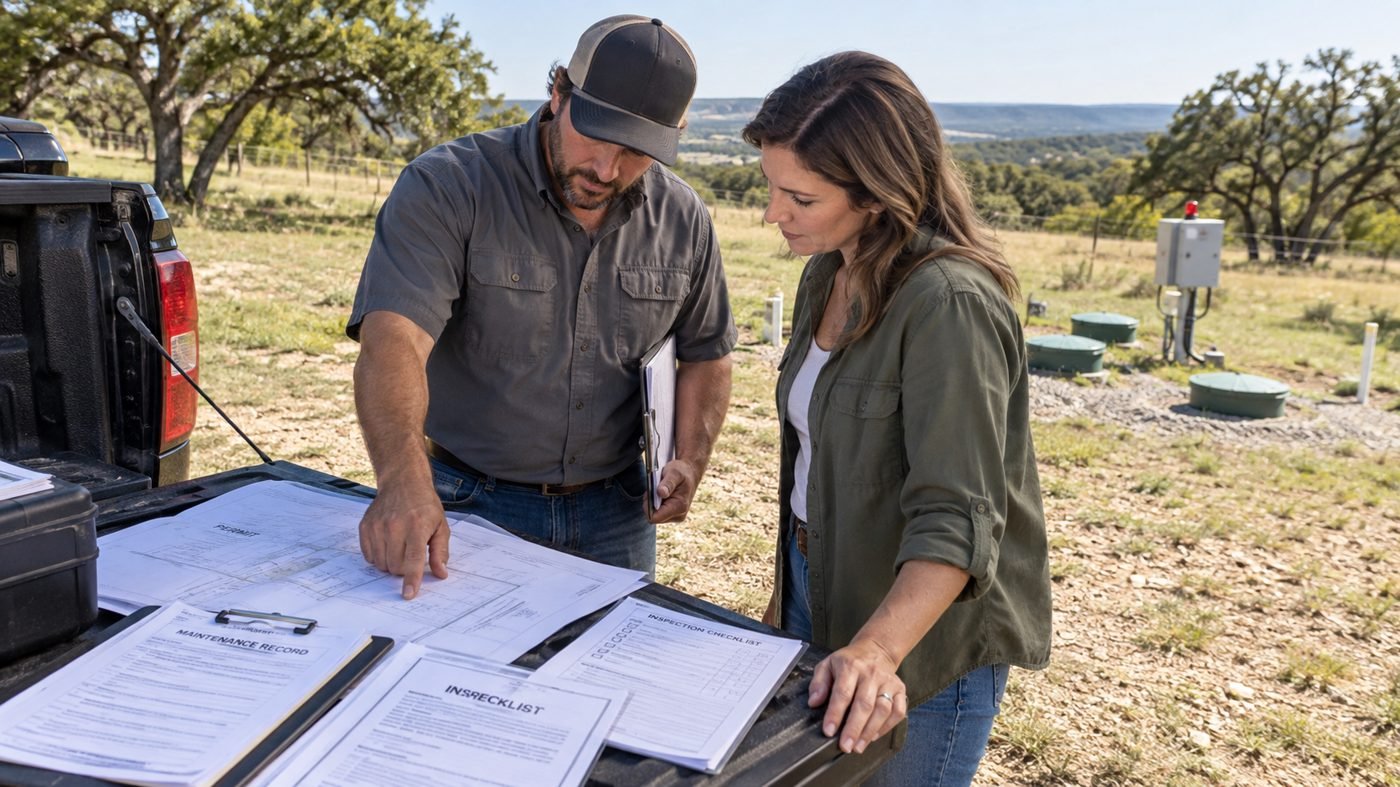
Ask for the permit and approved septic plan
Texas on-site sewage facilities are generally permitted through a local authorized agent or other applicable authority. The permit and approved plan can show the system type, design flow, tank locations, disposal area, installer, and other important details.
If the seller cannot produce the records, contact the local OSSF permitting authority and ask whether the property has a permit or historical file.
Missing records do not automatically mean the system is illegal, especially on older rural properties, but they are a reason to investigate further before closing.
- Permit number
- Approved site plan
- Site evaluation
- System design
- Installer information
- Final inspection or approval record
- Maintenance or service requirements
Confirm whether the system is permitted, exempt, or grandfathered
Older Texas septic systems may not have the same paperwork as newer installations. TCEQ recognizes that some older systems may qualify as grandfathered if they were installed before the applicable local program or before September 1, 1989, whichever is earlier, and if they meet the required conditions.
A grandfathered system is not the same as a newly permitted system. Ask the local authority to confirm whether the system's status is acceptable and whether any additions, repairs, or increased use have affected that status.
If the property relies on a claimed exemption such as the 10-acre rule, verify that the exemption actually applies to the current configuration and use of the property.
Find out how old the system is
Age alone does not tell you whether a septic system is failing, but it helps you estimate replacement risk. Tanks, baffles, distribution components, pumps, aerators, controls, and disposal areas all age differently.
Ask when the system was installed, whether major components have been replaced, and whether the disposal area has ever been repaired, expanded, or relocated.
If no one knows the age, permit records, installer records, seller disclosures, or county files may provide clues.
Review pumping history for conventional systems
TCEQ recommends pumping conventional septic tanks every three to five years as a general maintenance guideline. The actual interval depends on tank size, household use, solids accumulation, and system condition.
Ask for receipts showing when the tank was last pumped and whether the pumper noted damaged baffles, cracked lids, excessive solids, roots, or other problems.
A recently pumped tank does not prove the disposal field is healthy, but a long history of skipped maintenance can increase risk.
Review maintenance records for aerobic systems
Aerobic treatment units have more mechanical components than conventional systems and usually require more active maintenance. Ask for service reports, inspection records, alarm history, aerator and pump repairs, control-panel work, and disinfection records where applicable.
TCEQ notes that local authorities can impose maintenance requirements beyond the state minimum, so the exact obligations depend on the permitting area.
If the aerobic system has no recent service history, arrange for a qualified septic professional to evaluate the equipment and treatment process.
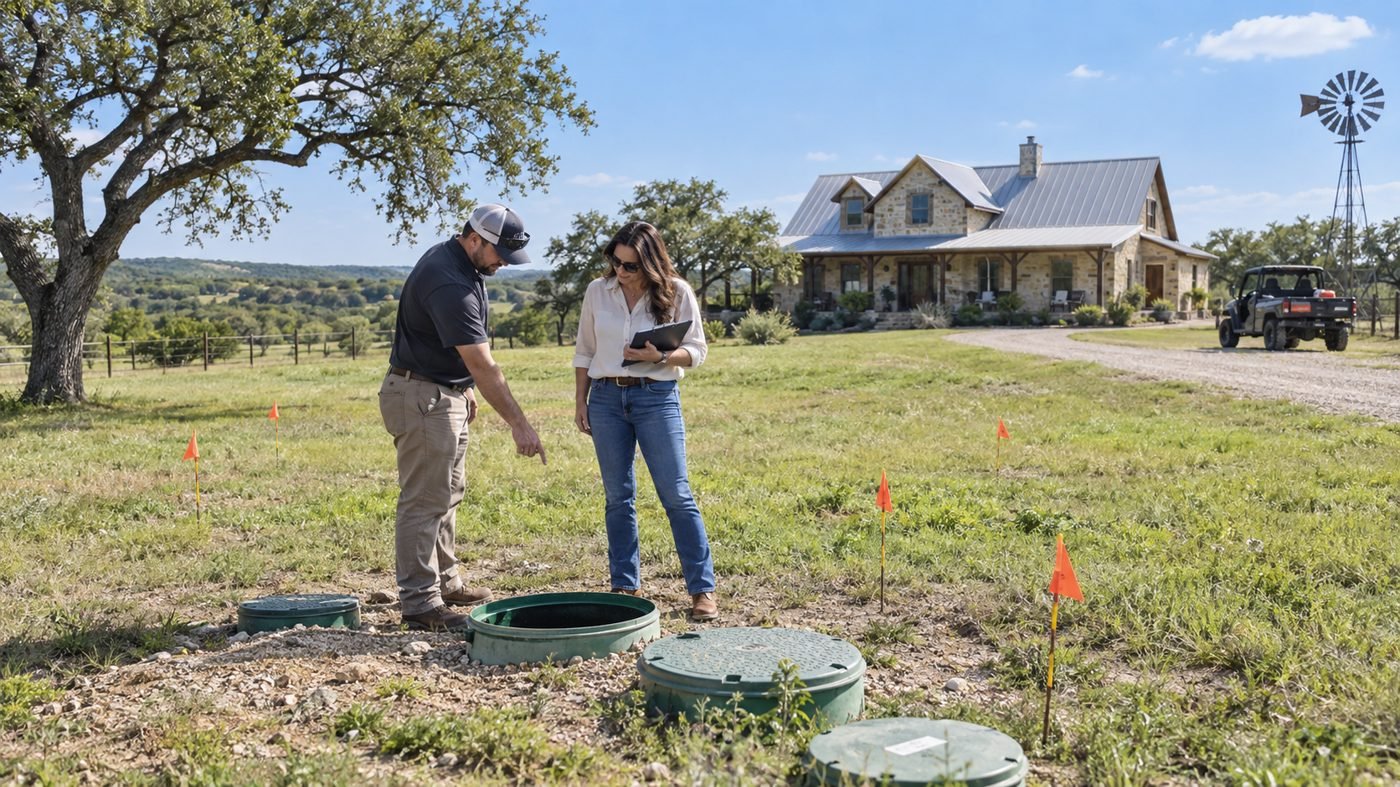
Walk the property and look for obvious warning signs
The disposal area and tank locations can reveal problems that are not visible inside the house. Walk the site slowly and look for wastewater surfacing, sewage odors, unusually wet ground, lush strips of grass, depressions, erosion, damaged lids, exposed pipe, or areas that appear to have been recently covered.
Pay attention to structures, parked vehicles, livestock traffic, driveways, sheds, patios, or landscaping over the septic area. Heavy loads and compaction can damage components and interfere with treatment.
A clean-looking yard does not prove the system is healthy, but visible warning signs should be taken seriously.
Check the house for symptoms of drainage problems
Inside the home, run water at multiple fixtures and look for slow drains, gurgling, sewage odors, backed-up fixtures, or unusual pump or alarm behavior.
One slow sink may be a plumbing problem rather than a septic problem, so do not diagnose the system from a single fixture. The goal is to identify patterns that deserve further inspection.
A proper septic evaluation should not rely only on whether the toilets flush during a short visit.
Inspect the tank and accessible components
A septic professional may inspect tank condition, liquid levels, inlet and outlet components, baffles or tees, risers, lids, pumps, floats, alarms, control panels, filters, and other accessible equipment depending on the system type.
Concrete, fiberglass, and plastic tanks fail in different ways. Cracks, corrosion, collapsed lids, damaged risers, leaking joints, missing access covers, or deteriorated internal components can create safety and performance issues.
Never enter a septic tank. Confined-space gases can be deadly.
The drain field or disposal area is often the most important part of the inspection
Replacing a tank may be straightforward compared with replacing a failed disposal field. Ask the inspector to evaluate whether the disposal area shows signs of hydraulic overload, surfacing wastewater, poor drainage, compaction, root intrusion, erosion, or physical disturbance.
For conventional systems, the condition of the soil absorption area is central to long-term performance. For aerobic or alternative systems, the inspection should focus on the approved disposal method, pumps, controls, spray or drip components, and any treatment requirements tied to that design.
Confirm the system is large enough for the home as it exists today
A septic system may have been permitted for a smaller house than the property now contains. Finished basements, converted garages, bedroom additions, guest suites, or other changes can increase wastewater use.
Compare the current number of bedrooms and dwelling configuration with the original permit or design assumptions.
If the property has been expanded without septic review, ask the local permitting authority whether the existing system is still considered adequate.
Guest houses, RV hookups, shops, and second dwellings deserve special attention
Rural properties often include more than one structure. A shop apartment, guest house, RV connection, second residence, or detached living area may discharge into the main septic system or may have its own system.
Ask exactly where each plumbing fixture drains and whether the current configuration matches the approved plan.
Unpermitted connections can overload the system and create problems with future resale, expansion, or enforcement.
Check for driveway, building, and pool conflicts
Compare the approved septic plan with the current property. A later owner may have added a driveway, barn, storage building, patio, pool, garage, or landscaping over or too close to part of the system.
TCEQ advises owners not to build or drive over OSSF components because compaction and loading can damage the system.
If a major improvement overlaps the original disposal area, have the system reviewed before closing.
Find the well and understand the septic relationship
If the property uses a private well, locate both the well and the septic system on the same site plan. Water-supply protection depends on proper separation and on the septic system functioning as designed.
Ask whether the well location matches the records and whether later septic repairs or property improvements changed the original layout.
If the well is part of the purchase, review the well records and water-quality considerations separately from the septic inspection.
Ask about backups, repairs, and recurring alarms
Seller disclosures and direct questions can reveal patterns that a one-time inspection might miss. Ask whether the property has ever experienced sewage backups, wet areas, repeated pump failures, high-water alarms, aerator failures, odor complaints, or frequent emergency pumping.
A single repair may be routine. Repeated problems can indicate an underlying design, loading, electrical, or disposal issue.
Request invoices and service notes whenever possible.
Understand what a septic inspection does and does not guarantee
A septic inspection is a snapshot of the system's observable condition at the time of evaluation. It cannot guarantee how long every component will last or predict exactly when a disposal field will fail.
Inspection scope also varies. Some inspections are visual and functional, while others may include pumping, opening tanks, testing components, or additional diagnostics.
Before hiring an inspector, ask exactly what will be evaluated and what will be excluded.
When should the tank be pumped during the inspection?
Pumping can allow certain tank components and conditions to be observed more clearly, but whether it should be part of a pre-purchase inspection depends on the system type, recent maintenance history, local practice, and the inspector's recommended scope.
If the tank has not been pumped in years or the seller cannot document maintenance, discuss pumping with the septic professional before closing.
Do not assume that a freshly pumped tank means the whole system passed inspection.
Estimate replacement risk before negotiating the purchase
If the inspector identifies aging tanks, failing pumps, damaged controls, disposal-field problems, or an outdated system that may not support the current use, get repair or replacement estimates before the purchase deadline.
The cost difference between a minor pump repair and a complete engineered replacement can be substantial.
Use real contractor quotes where possible instead of negotiating from a generic online estimate.
Buyer checklist before closing
A complete septic due-diligence file makes the property easier to evaluate now and easier to maintain after purchase.
- Identify the system type
- Obtain the permit and approved plan
- Confirm permit, exemption, or grandfathered status
- Verify installation age
- Review pumping and maintenance history
- Review aerobic service records and alarms if applicable
- Locate the tank and disposal area
- Inspect visible site conditions
- Check for structures or vehicle traffic over the system
- Compare current bedroom count and property use with the approved design
- Identify all dwellings, RV hookups, shops, and plumbing connections
- Locate the private well if present
- Ask about backups, odors, alarms, and prior repairs
- Hire a qualified septic professional for a pre-purchase evaluation
- Get repair or replacement estimates for significant findings
The best septic record is a complete one
After closing, keep the permit, approved plan, site evaluation, inspection report, pumping receipts, maintenance records, equipment manuals, and repair invoices together with the property documents.
Knowing exactly where the system is and how it was designed makes future pumping, repairs, additions, landscaping, and resale much easier.
For a rural buyer, good septic records are part of understanding what you are actually purchasing.
Keep researching
Septic Systems resources
Planning, evaluating, installing, and maintaining septic systems for rural properties.
Sources & methodology
Where this information comes from
Cost figures are planning references rather than contractor quotes. Permitting, system-selection, and location-specific guidance should be verified with the appropriate local authority or qualified professional. AcreageReady uses source-backed, AI-assisted editorial workflows and remains responsible for the material it publishes. Read how we research, edit, and correct guides.
- Texas Commission on Environmental Quality: Advice for an OSSF Owner
- Texas Commission on Environmental Quality: OSSF Maintenance
- Texas Commission on Environmental Quality: Getting a Permit for an OSSF
- Texas Commission on Environmental Quality: On-Site Sewage Facilities
- AcreageReady: Septic System Planning Checklist for Texas Acreage
Common questions
Frequently asked questions
Should you inspect a septic system before buying a house in Texas?
Yes. A pre-purchase septic evaluation can help identify visible defects, maintenance issues, damaged components, disposal-area problems, missing records, and whether the current property use appears consistent with the approved system.
What septic records should I ask the seller for?
Ask for the permit, approved site plan, site evaluation, final approval, installer information, pumping receipts, maintenance reports, repair records, aerobic service records, and any alarm or equipment history.
How can I tell if a septic system is failing?
Warning signs can include sewage odors, surfacing wastewater, wet or unusually lush areas over the disposal field, slow drains, backups, repeated alarms, recurring pump failures, or frequent emergency pumping. A qualified professional should evaluate suspected problems.
How often should a conventional septic tank be pumped in Texas?
TCEQ recommends pumping conventional septic tanks every three to five years as a general guideline. Actual frequency depends on tank size, household use, solids accumulation, and system condition.
What should I check on an aerobic septic system before buying?
Review the permit, approved design, maintenance contract, inspection reports, aerator and pump history, alarms, control panel, disinfection records where applicable, and the current local maintenance requirements.
Can an old septic system without a permit still be legal in Texas?
Possibly. Some older systems may qualify as grandfathered depending on when they were installed, whether they are creating a nuisance, whether they need repair, and whether use or configuration has changed. Confirm the status with the local OSSF authority.
Ready to talk with a local professional?
Share your location and project details so AcreageReady can identify relevant providers as the network grows.
Get a free quote