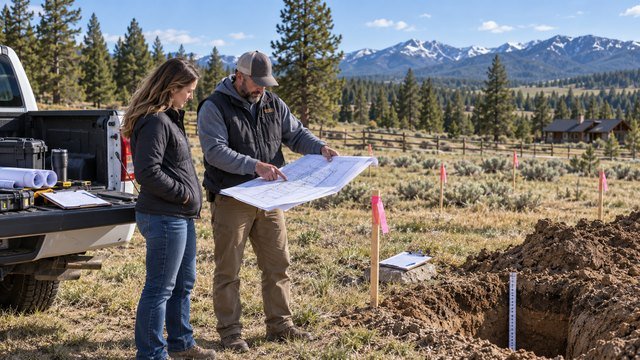
Septic can determine whether a Tennessee parcel is truly buildable
For rural Tennessee land without public sewer, septic feasibility is one of the first questions to answer before finalizing a homesite or construction budget.
A parcel can have enough acreage for a house and still have limited areas suitable for wastewater disposal because of soil, slope, rock, groundwater, drainage, or other site conditions.
The safest approach is to treat septic approval as a core part of land due diligence rather than something to solve after closing.
A septic construction permit is required before installation
Tennessee requires a construction permit for a new subsurface sewage disposal system and for certain repairs or modifications to an existing system.
TDEC advises applicants to obtain the septic permit before beginning dirt work or construction, including work on the building pad.
That order matters because grading, clearing, driveways, and house placement can disturb or eliminate the best area for the disposal field.
Start with the county that serves the parcel
Most Tennessee septic permitting is handled through the Tennessee Department of Environment and Conservation Division of Water Resources.
Some counties operate their own septic assistance programs as contract counties, so the application path is different in those locations.
Before ordering soil work, confirm which office handles the parcel and what documents that office requires.
Tennessee currently has nine contract counties
TDEC identifies Blount, Davidson, Hamilton, Jefferson, Knox, Madison, Sevier, Shelby, and Williamson as contract counties for subsurface sewage disposal services.
Permit and completion packages for sites in those counties are submitted directly to the applicable county program rather than through the standard statewide online application.
Because local procedures can change, verify the current county instructions before submitting plans or paying for testing.
A site evaluation comes before the final system design
After an application is submitted, a TDEC environmental scientist or the applicable local program evaluates the property to determine what type of septic system may be appropriate.
The reviewer may request additional information such as a detailed site plan or a soil map prepared by an approved private soil consultant.
The objective is to identify a suitable disposal area and system approach before construction proceeds.
Soil suitability is more important than parcel acreage alone
Large acreage does not guarantee an easy septic site.
The usable area depends on soil characteristics, depth to restrictive layers, rock, slope, drainage, groundwater, and the location of other improvements.
On difficult parcels, the best septic area may be far from the best-looking homesite, which can force changes to the overall property layout.
Use an approved soil consultant when detailed mapping is needed
TDEC maintains an approved soil consultant program for professionals who prepare soil maps used in support of septic permitting and subdivision review.
These consultants evaluate soil and landscape conditions specifically for subsurface sewage disposal suitability.
If a private soil map is requested, use a consultant who appears on TDEC's current approved list rather than assuming any general soil or engineering professional can provide the required map.
Tennessee changed its soil-consultant licensing structure in 2025
Beginning July 1, 2025, the Tennessee Department of Commerce and Insurance stopped regulating soil scientist licensure for this program.
TDEC continues to regulate the soil consultants approved to submit maps for the subsurface sewage disposal program.
For land buyers, the practical takeaway is simple: check TDEC's current approved soil consultant list when hiring someone for a septic soil map.
A septic soil evaluation is not the same as a geotechnical report
Septic soil work evaluates whether the site can support wastewater disposal.
A geotechnical investigation evaluates soil and rock behavior for foundations, grading, retaining walls, fills, and other structural or earthwork concerns.
A parcel may perform well for one purpose and poorly for the other, so do not treat one report as a substitute for the other.
House size and bedroom count should be settled early
Residential septic design is tied to expected wastewater flow, and bedroom count is a major planning input.
If you expect a four-bedroom home, future addition, guest suite, or another use that could increase design flow, disclose that before the system is finalized.
Designing for a smaller house and then expanding later can create avoidable permitting and site-layout problems.
Protect the primary disposal field and reserve area
A septic layout is not just the tank location.
The disposal field and any required replacement or reserve area need to remain usable and protected from buildings, driveways, heavy traffic, grading, fill, pools, and other conflicts.
Ask the reviewer or designer to show these areas clearly on the site plan before positioning the house, shop, driveway, or future accessory structures.
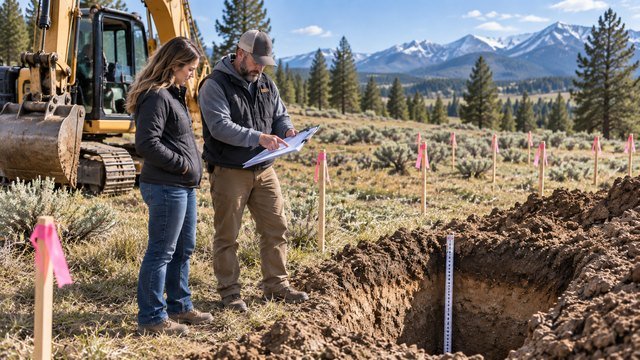
Do not grade the septic area before approval
Moving soil can change the natural soil profile that the permitting decision depends on.
Cutting, filling, compacting, or repeatedly driving heavy equipment across a potential disposal area can make a previously suitable location harder or impossible to approve.
Flag likely septic areas and keep excavation equipment out until the system location is established.
Conventional systems are not the only option
Some Tennessee sites can use a conventional subsurface system, while other parcels may need an alternative system because of site limitations.
TDEC separately permits installers for certain alternative systems, including technologies such as low-pressure pipe, mound, advanced treatment, and subsurface drip disposal.
An alternative system can make some difficult sites workable, but it may involve additional design, installation, maintenance, and operating requirements.
Alternative systems can affect the long-term ownership budget
The cheapest system to install is not always the only cost that matters.
If a site needs pumps, controls, treatment equipment, or ongoing maintenance, include those items in the long-term property budget.
Ask who must maintain the system, whether a maintenance provider is required, and what inspections or service obligations apply.
Use a permitted Tennessee septic installer
Tennessee requires people who construct, install, alter, extend, or repair subsurface sewage disposal systems to hold a valid installer permit.
TDEC publishes an active installer list and DataViewer that can be searched by county and permit type.
Contract counties may impose additional local requirements even when the installer holds a statewide permit.
Existing septic records can be valuable before you buy
If a parcel already has a house, mobile home, cabin, or abandoned structure, search for existing septic records before assuming the system is legal, functional, or sized for your plans.
Old permits can show the approved bedroom count, field location, system type, and other useful details.
A record search does not replace a condition inspection, but it can reveal important limits before closing.
A failing or undocumented system changes the purchase calculation
An older tank or field may still function, but a rural buyer should understand whether the system was permitted, where it is located, and whether it can support the intended use.
Repairs or replacement can be constrained by limited suitable soil, nearby wells, property boundaries, slopes, streams, or prior development.
If the existing system is a major part of the property's value, investigate it during due diligence instead of assuming replacement will be straightforward.
Well and septic locations must be planned together
On properties using both a private well and septic system, the two systems compete for space and must meet applicable separation requirements.
The best well location may also be influenced by access for drilling equipment, topography, utility routes, and future buildings.
Lay out the water source, septic field, reserve area, house, driveway, and major accessory structures on one plan before finalizing the homesite.
Steep, rocky, wet, and karst sites deserve extra attention
Tennessee's terrain varies widely, and septic feasibility can become more complicated on steep slopes, shallow bedrock, seasonally wet ground, or karst terrain.
Sinkholes, depressions, exposed rock, springs, drainage channels, and steep grades should be identified during the property walk.
If those features are present, expect the septic evaluation to play a larger role in determining the usable building envelope.
Subdividing rural land creates additional septic questions
If you plan to divide acreage for family members or future sale, septic feasibility should be considered for every proposed lot rather than only the parent tract.
TDEC rules include subdivision review requirements for developments that will rely on subsurface sewage disposal.
Road frontage, access, utility layout, and suitable soil all need to work at the individual-lot level.
Questions to ask before buying Tennessee land on septic
Use these questions during the due-diligence period before treating the parcel as septic-ready.
- Which agency or county office handles septic permits for this parcel?
- Has the property already been evaluated for septic?
- Are there existing permits, soil maps, or system records?
- What bedroom count can the proposed system support?
- Where are the primary field and reserve area?
- Will a private soil consultant be required?
- Is a conventional system likely, or could an alternative system be needed?
- Are slope, rock, groundwater, drainage, or karst features limiting the site?
- Will the driveway, house, shop, or future guest house conflict with the septic area?
- Does the parcel have enough suitable area if the first field eventually fails?
- Are there county-specific requirements beyond the statewide process?
Tennessee septic due-diligence checklist
Work through this sequence before starting grading or locking in the final house location.
- Confirm who administers septic services for the county
- Search for existing septic records
- Identify the intended bedroom count and future expansion plans
- Mark the likely homesite, driveway, well, and accessory structures
- Submit the septic service request or county application
- Complete the site evaluation
- Hire a TDEC-approved soil consultant if a soil map is requested
- Confirm the primary disposal field and reserve area
- Keep clearing, grading, and heavy equipment out of those areas
- Understand whether the system is conventional or alternative
- Verify installer qualifications
- Obtain the construction permit before dirt work or building-pad construction
- Keep the permit and final system records with the property documents
Make septic approval part of the complete Tennessee site plan
The strongest rural-land plan connects septic with zoning, survey boundaries, water, power, access, grading, drainage, and the future structures you expect to build.
A septic system should not be designed in isolation after every other decision has already been made.
Confirming the wastewater plan early gives you a much clearer picture of the parcel's real buildable area and total development cost.
Keep researching
Septic Systems resources
Planning, evaluating, installing, and maintaining septic systems for rural properties.
Sources & methodology
Where this information comes from
Cost figures are planning references rather than contractor quotes. Permitting, system-selection, and location-specific guidance should be verified with the appropriate local authority or qualified professional. AcreageReady uses source-backed, AI-assisted editorial workflows and remains responsible for the material it publishes. Read how we research, edit, and correct guides.
- TDEC: Septic System Construction Permit
- TDEC: SSDS Frequently Asked Questions
- TDEC: Online Application for Septic Related Services
- TDEC: Contract Counties and Third-Party SSDS
- TDEC: Approved Soil Consultants
- TDEC: Licensed Septic Installers and Pumpers
- TDEC: Regulations to Govern Subsurface Sewage Disposal Systems
- AcreageReady: Buying Rural Land in Tennessee
Common questions
Frequently asked questions
Do I need a septic permit to build on rural land in Tennessee?
If the property will use a new subsurface sewage disposal system, a construction permit is required. TDEC advises obtaining the permit before beginning dirt work or building-pad construction.
Who issues septic permits in Tennessee?
Most counties are served through TDEC's Division of Water Resources. Blount, Davidson, Hamilton, Jefferson, Knox, Madison, Sevier, Shelby, and Williamson are contract counties that operate their own septic assistance programs.
Do I need a soil test before buying land in Tennessee?
Not every parcel requires the same testing, but septic feasibility should be evaluated before purchase when public sewer is unavailable. The reviewing agency may request a detailed soil map from a TDEC-approved soil consultant.
Can I clear or grade the homesite before getting septic approval?
That is risky. TDEC recommends obtaining the septic construction permit before dirt work or construction because grading and soil disturbance can affect the disposal area.
Does acreage guarantee that land will pass for septic?
No. Suitability depends on the usable soil and site conditions, not acreage alone. Slope, rock, groundwater, drainage, and other constraints can limit the available disposal area.
Can Tennessee septic systems use alternative designs?
Yes. Tennessee permits several alternative subsurface sewage disposal approaches for sites where a conventional system is not appropriate. The exact option depends on the site and permitting review.
How do I find a septic installer in Tennessee?
TDEC publishes a statewide list and DataViewer for active permitted septic installers. Contract counties may also require additional local credentials or permits.
Should I search for old septic permits before buying an existing rural home?
Yes. Existing records can help confirm system type, approved bedroom count, field location, and permit history before you rely on the system as part of the purchase.
Ready to talk with a local professional?
Share your location and project details so AcreageReady can identify relevant providers as the network grows.
Get a free quote