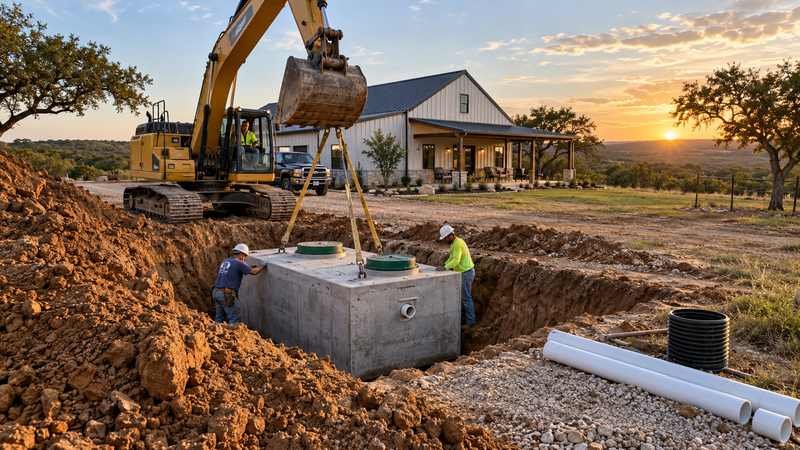
What does a septic system cost in Texas in 2026?
For planning purposes, many Texas homeowners should expect a complete septic installation to land somewhere in the mid-thousands, but the final number can move substantially once the property is evaluated. Current 2026 Dallas-area pricing reported by Angi places many installations around $5,312 to $8,675, with an average near $6,720. That is a useful local reference point, not a statewide quote.
More complex systems can cost considerably more. Current consumer cost guides commonly place conventional or anaerobic systems around $3,000 to $8,500, while aerobic systems are often reported around $10,000 to $20,000. Engineered alternatives can exceed those ranges when the lot, soil, drainage, groundwater, or disposal method requires a more specialized design.
The most important point is that Texas septic pricing starts with the site, not the tank. The Texas Commission on Environmental Quality requires the property to be evaluated before a system is selected, and local permitting authorities may have requirements that are stricter than the state minimum.
- Planning reference for many conventional systems: roughly $3,000 to $8,500
- 2026 Dallas-area installation reference: roughly $5,312 to $8,675
- Common aerobic-system planning range: roughly $10,000 to $20,000
- Engineered or difficult-site systems can exceed these ranges
Why two Texas properties can have very different septic costs
Two homes with the same bedroom count can receive very different septic proposals because the wastewater system has to fit the actual property. Soil type, slope, available disposal area, drainage, setbacks, groundwater conditions, and the planned location of buildings all affect what can be approved.
TCEQ says the preconstruction site evaluation includes a survey of the lot, soil analysis in the proposed disposal area, and identification of site features needed to determine which OSSF systems are suitable. That is why a contractor should be careful about promising an exact system or price before the site work is complete.
- Soil type and how wastewater can be dispersed
- Slope, drainage, and usable disposal area
- Location of the house, well, driveway, shop, pool, and future improvements
- Required setbacks and separation distances
- Bedroom count and projected wastewater load
- Excavation difficulty, rock, access, and hauling
- Local permit, design, inspection, and maintenance requirements
Conventional vs. aerobic septic system cost
A conventional septic system generally has fewer mechanical components and can be less expensive when the property has suitable soil and enough usable area for the disposal field. Consumer cost references commonly put conventional or anaerobic installations in the roughly $3,000 to $8,500 range.
An aerobic treatment unit adds mechanical aeration and additional treatment components. Current 2026 cost references commonly place aerobic systems around $10,000 to $20,000. The higher price reflects the equipment, controls, electrical requirements, treatment process, and ongoing maintenance obligations.
The less expensive system is not automatically the better choice. The right comparison is the least complicated system that is actually suitable for the property and approvable by the permitting authority.
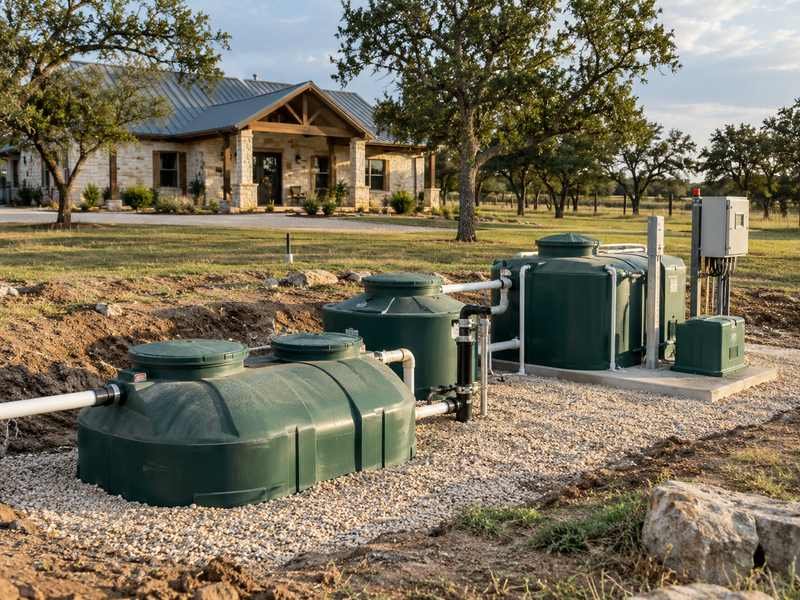
Costs that may sit outside the contractor's base installation price
A septic quote can look inexpensive until the exclusions are understood. Ask for a written scope that separates the core installation from site evaluation, design, permitting, electrical work, clearing, excavation, hauling, final grading, startup, inspection, and any required maintenance agreement.
Some proposals are close to turnkey while others cover only the tank, treatment equipment, and disposal system. Comparing total scope instead of headline price is the best way to avoid a surprise after work begins.
- Site evaluation or engineering
- Permit and inspection fees
- Survey or additional site-plan work
- Electrical circuit and controls for aerobic equipment
- Clearing, excavation, rock work, or difficult access
- Pump tanks, alarms, risers, and control panels
- Trenching between the home and system
- Final grading, restoration, or erosion control
- Aerobic maintenance agreement and ongoing service
Texas permits and site evaluation
TCEQ states that a permit and approved plan are generally required to construct, install, alter, extend, or repair an on-site sewage facility. Most property owners work through a local authorized permitting authority rather than directly through TCEQ, and those local programs may impose requirements beyond the state minimum.
Texas does have a limited permit exemption sometimes called the 10-acre rule, but it has multiple conditions. Among them, the tract must be at least 10 acres, serve a single-family dwelling, receive a qualifying site evaluation, keep all OSSF components at least 100 feet from the property line, dispose of effluent on the property, and meet the other applicable requirements. Landowners should confirm eligibility with the local permitting authority rather than assuming acreage alone creates an exemption.
How to compare septic quotes
The lowest bid is not necessarily the lowest project cost. Give each installer the same information and ask them to identify the proposed system, the assumptions behind the design, all included work, all exclusions, the expected permit process, warranty coverage, and ongoing maintenance requirements.
For an aerobic system, ask specifically who handles startup, maintenance, reporting, disinfection requirements, and repairs to mechanical components. TCEQ notes that local authorities can adopt stricter maintenance requirements, so the ongoing service obligation matters just as much as the installation price.
- Is the site evaluation included?
- Who prepares the design or planning materials?
- Are permit and inspection fees included?
- What tank, treatment, and disposal system is proposed?
- What electrical work is included?
- Who handles excavation, haul-off, and final grading?
- Is startup included?
- What warranty applies to tanks, pumps, aerators, alarms, and labor?
- What maintenance agreement is required after installation?
Budget for ownership, not just installation
Conventional and aerobic systems have different ownership costs. TCEQ recommends pumping conventional septic tanks every three to five years, while aerobic systems include mechanical equipment and more frequent inspection or maintenance requirements.
A system that costs more to install may be necessary because of the property. The better planning question is not simply how to minimize the upfront price, but how to understand the complete installation, maintenance, and replacement obligations before committing to the design.
A practical Texas septic budget
For early-stage land planning, it is reasonable to reserve more than the lowest online septic estimate until the site evaluation is complete. A conventional-friendly property may stay within the mid-thousands, while an aerobic or engineered site can move into the low five figures or higher.
If septic feasibility materially affects whether you can build the home, shop, pool, guest house, or other improvements you want, evaluate the wastewater plan early. Spending money on a permanent building layout before understanding the usable septic area can create a much more expensive redesign later.
Keep researching
Septic Systems resources
Planning, evaluating, installing, and maintaining septic systems for rural properties.
Sources & methodology
Where this information comes from
Cost figures are planning references rather than contractor quotes. Permitting, system-selection, and location-specific guidance should be verified with the appropriate local authority or qualified professional. AcreageReady uses source-backed, AI-assisted editorial workflows and remains responsible for the material it publishes. Read how we research, edit, and correct guides.
Common questions
Frequently asked questions
How much is a septic system in Texas in 2026?
There is no single statewide price. Current 2026 Dallas-area estimates place many installations around $5,312 to $8,675, while system type and site conditions can push the price lower or substantially higher. Aerobic systems are commonly estimated around $10,000 to $20,000.
Is an aerobic septic system more expensive in Texas?
Usually. Aerobic treatment adds mechanical equipment, controls, electrical requirements, and ongoing maintenance. Current consumer cost references commonly place aerobic installations around $10,000 to $20,000.
Do I need a septic permit in Texas?
Generally yes. TCEQ says a permit and approved plan are required to construct, install, alter, extend, or repair an OSSF, although limited exemptions exist. Always verify requirements with the local permitting authority.
Can a contractor quote my exact septic system before a site evaluation?
A contractor may give a planning estimate, but the final system type depends on the property. TCEQ requires a site evaluation before system selection, and local requirements may also affect the design.
How often should a septic tank be pumped in Texas?
TCEQ recommends pumping conventional septic tanks every three to five years. Aerobic systems have different maintenance needs and should follow the manufacturer's and local permitting authority's requirements.
Ready to talk with a local professional?
Share your location and project details so AcreageReady can identify relevant providers as the network grows.
Get a free quote