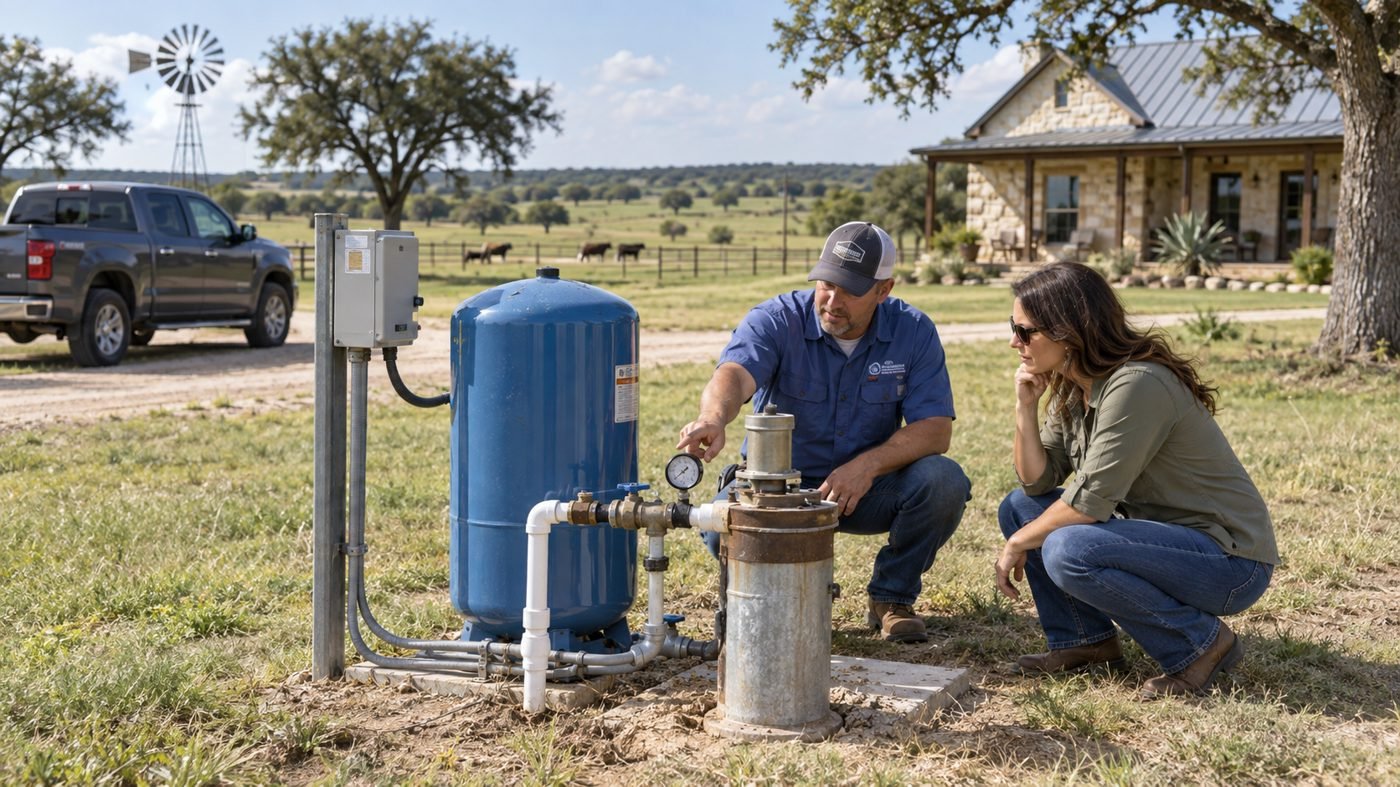
An existing well can be an asset, but only if you understand what you are buying
A rural property with an existing well can save a buyer the cost and uncertainty of drilling from scratch, but the well should be evaluated like any other major piece of infrastructure.
A faucet that produces water during a showing does not tell you the total well depth, static water level, pump condition, sustainable yield, water quality, pressure-system condition, or whether the well is properly documented.
Before closing, verify the records, inspect the equipment, test the water, and understand whether the system can support the property's current and planned use.
Start with the well record
Ask the seller for the driller's report, completion record, pump information, pressure-tank information, repair history, and any water-quality test results.
Texas Water Development Board groundwater databases may also contain submitted drillers reports and other well information that can help confirm the well's depth, completion date, casing, water level, yield, and driller.
The goal is to match the paper record to the well that is actually on the property.
- Driller's report or well log
- Completion date
- Total well depth
- Casing depth and diameter
- Static water level
- Reported yield
- Pump make, model, and installation depth
- Pressure tank size and age
- Repair and replacement history
- Water-quality test results
Confirm the well location on the property
Locate the well physically and compare it with the survey, site plan, or available well records. The well should be accessible for service and protected from vehicle traffic, drainage problems, and contamination sources.
If the property has more than one well, identify which one supplies the home, which ones are abandoned, and whether any are used for irrigation, livestock, or other purposes.
An undocumented well or one that cannot be easily located deserves additional investigation.
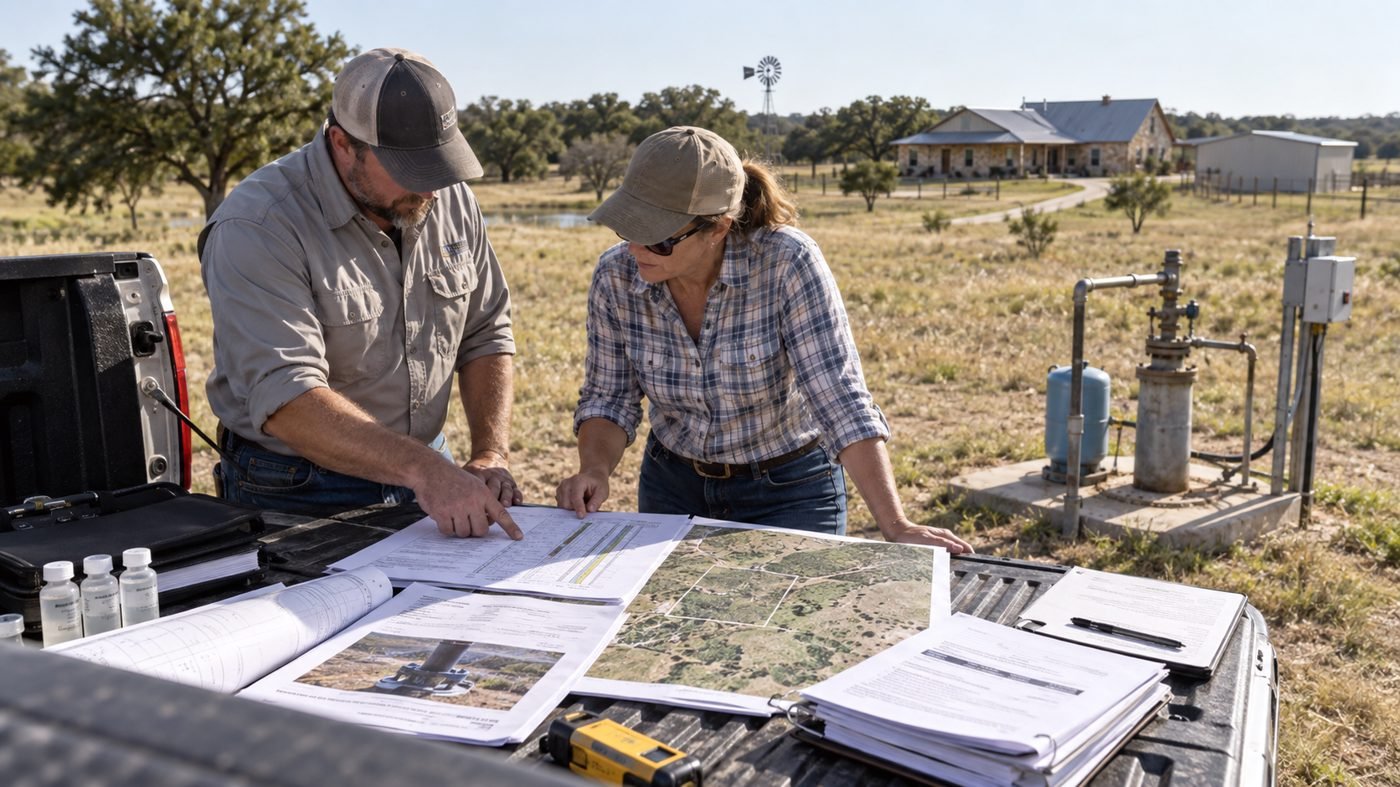
Understand total depth, static water level, and pump setting
These three numbers are different and each matters. Total depth is how deep the well was drilled. Static water level is where water stands when the well is not pumping. Pump setting is the depth where the pump is installed.
Together they help explain how much water is available in the well column, how far the pump must lift water, and whether the current pump setting is appropriate for expected drawdown.
If the seller cannot provide these details, a qualified well professional may be able to gather or estimate some of them during inspection.
Ask how much water the well actually produces
Well depth does not tell you how much water the well can supply. Yield is generally discussed in gallons per minute and should be considered alongside household demand, irrigation, livestock, guest houses, and storage systems.
Ask whether the well has ever been flow-tested or pump-tested and whether the current production rate is known.
A lower-yield well can still work for a residence when paired with enough storage and a sensible usage pattern, but the buyer should understand the limitation before closing.
Look for signs of declining well performance
Ask the seller whether water pressure has changed over time, whether the pump cycles more often than it used to, whether the well has ever run dry, or whether the system struggles during summer or drought.
Declining performance can be caused by falling water levels, pump wear, pressure-tank problems, clogged components, mineral buildup, well deterioration, or increased demand.
Repeated service calls are worth reviewing because they can reveal a pattern that is not obvious during a short inspection.
Inspect the pump and electrical controls
Most rural domestic wells use a submersible pump, although other configurations exist. The pump's age, horsepower, voltage, installation depth, control box, wiring, and service history all affect reliability and replacement cost.
Listen for abnormal sounds, check for repeated short cycling, and ask whether the pump has ever been replaced.
A well professional can evaluate whether the current pump appears appropriately sized for the well and pressure system.
Inspect the pressure tank and pressure switch
The pressure tank reduces pump cycling and helps maintain consistent pressure in the house. A failed bladder, incorrect air charge, leaking tank, or malfunctioning pressure switch can cause rapid cycling and shorten pump life.
Ask how old the tank is, whether it has ever been replaced, and whether the system maintains steady pressure under normal household demand.
Short cycling is a common warning sign that the pressure system deserves attention.
Check storage tanks, booster pumps, and treatment equipment
Some rural properties use above-ground or buried storage tanks, booster pumps, pressure pumps, filtration, softeners, iron removal, reverse osmosis, chlorination, or other treatment equipment.
Identify every component between the well and the house and ask who maintains it, how old it is, and what routine service it requires.
A low-yield well paired with a properly designed storage system may work very well, but the storage and booster equipment become part of what you are purchasing.
Test the water before relying on it for drinking
Clear, good-tasting water can still contain bacteria, nitrate, minerals, or other constituents that are not obvious by appearance.
For a private well purchase, arrange appropriate water-quality testing and compare the results with the intended use of the property.
If the property already uses treatment equipment, test both raw and treated water where practical so you understand what the treatment system is actually correcting.
Water quality problems are not always deal breakers, but they affect cost
Hardness, iron, manganese, sulfur odor, high total dissolved solids, sediment, or other water-quality issues may be manageable with treatment, but the buyer should understand the equipment and operating cost.
Some problems require relatively simple filtration while others may need more expensive treatment or may indicate that the existing well is not ideal for the intended use.
Do not negotiate only from the cost of the well itself. Include treatment, maintenance, salt, filters, electricity, and replacement equipment in the ownership budget.
Confirm whether the property is inside a groundwater conservation district
Groundwater conservation districts regulate wells in many parts of Texas. Districts can have rules for permitting, registration, spacing, production, and well construction.
Determine whether the parcel is inside a district and ask whether the existing well is properly registered or exempt under local rules.
If you plan to increase pumping, add another well, irrigate heavily, or change the property use, review those plans with the district before closing.
Check the relationship between the well and septic system
On properties with both a private well and septic, locate both systems and compare them with the approved plans and current property layout.
The water source needs appropriate protection from wastewater and other contamination risks. Later additions such as a replacement septic field, guest house, barn, or new driveway can create conflicts if the original site plan is not understood.
A buyer should know where both systems are before planning future improvements.
Look for drainage and contamination risks around the wellhead
The ground around the well should shed water away from the casing rather than funnel runoff toward it. Inspect for standing water, low areas, damaged seals, exposed wiring, cracked concrete, corroded casing, or evidence that vehicles or livestock can strike the well.
Also consider nearby fuel tanks, chemical storage, livestock areas, septic components, drainage ditches, and other potential contamination sources.
A good well is not just deep enough. It also needs to be protected at the surface.
Ask about freeze protection and weather resilience
Texas wells can still be vulnerable to freezing at exposed piping, pressure tanks, switches, treatment equipment, and above-ground components during severe winter weather.
Inspect the well house or enclosure, insulation, heat source, exposed piping, and backup-power plan.
If the property depends entirely on a well, a power outage also means a water outage unless the pump or storage system has backup power.
Include the well in the backup-power plan
A submersible well pump is usually one of the larger motor loads on a rural property. If the home uses a generator, confirm that the generator provides the correct voltage and enough starting capacity for the pump.
If no backup system exists, understand how the household will get water during extended outages.
For properties with storage tanks, stored water may provide some resilience even when the pump is unavailable.
Ask whether the well has ever gone dry
A history of the well going dry, losing prime, or failing to keep up with demand is important information. Ask when it happened, under what conditions, and what was done afterward.
Drought, seasonal water-level decline, nearby pumping, pump setting, and aquifer conditions can all affect performance.
A one-time event years ago may have a different meaning than repeated shortages every summer.
Compare the existing well with nearby well records
Nearby TWDB records can provide useful context for depth, water levels, yield, and aquifer conditions.
If the property's well is much shallower, deeper, or lower-yielding than nearby wells, ask why.
The difference may be completely reasonable, but it can also reveal that the well targets a different formation or has unusual performance.
What should trigger a specialist review before closing?
Some findings deserve more than a basic property inspection. Bring in a qualified well professional when the history is unclear or the equipment shows signs of trouble.
- No well log or completion record
- Unknown pump age or repeated pump failures
- Short cycling or unstable pressure
- Very low reported yield
- History of the well running dry
- Visible casing damage or poor wellhead protection
- Unexplained treatment equipment
- Poor or inconsistent water-quality results
- Major additions to the property since the well was installed
- Plans for irrigation, livestock, guest houses, or other new demand
Water well inspection checklist for buyers
Use this checklist during the option or due-diligence period so the well becomes a documented part of the purchase rather than an unknown.
- Obtain the driller's report or well log
- Verify total depth and static water level
- Confirm pump setting, horsepower, voltage, and age
- Review pressure-tank condition and age
- Ask for flow-test or yield information
- Review repair history
- Locate the well physically
- Inspect the wellhead and surrounding drainage
- Identify storage tanks, booster pumps, and treatment equipment
- Test water quality
- Confirm groundwater-district status
- Compare the well with nearby TWDB records
- Locate the septic system and other contamination risks
- Review backup-power options
- Get estimates for any recommended repairs or equipment replacement
Good records make an existing well much easier to value
A documented well with known depth, yield, pump history, water quality, and maintenance records is much easier for a buyer to evaluate than a system with no paperwork.
After closing, keep the well log, pump specifications, pressure-tank information, water tests, repair invoices, and treatment-system records with the property documents.
Those records will help with future repairs, pump replacement, treatment decisions, additions, and eventual resale.
Keep researching
Wells & Water resources
Water well drilling, pumps, pressure systems, testing, storage, and rural water planning.
Sources & methodology
Where this information comes from
Cost figures are planning references rather than contractor quotes. Permitting, system-selection, and location-specific guidance should be verified with the appropriate local authority or qualified professional. AcreageReady uses source-backed, AI-assisted editorial workflows and remains responsible for the material it publishes. Read how we research, edit, and correct guides.
Common questions
Frequently asked questions
Should I inspect a water well before buying rural property in Texas?
Yes. A pre-purchase well evaluation can help verify the well's records, depth, yield, pump and pressure equipment, water quality, maintenance history, and whether the system can support the property's current use.
What water well records should I ask the seller for?
Ask for the driller's report or well log, completion date, depth, static water level, reported yield, pump information, pressure-tank information, repair history, and water-quality test results.
How do I know if a well produces enough water?
Look for a documented flow or pump test and compare the yield with household and property demand. A lower-yield well may still be workable when paired with adequate storage.
Should I test the well water before closing?
Yes. Water can look and taste normal while still containing bacteria, nitrate, minerals, or other constituents. Testing helps identify treatment needs and potential concerns before purchase.
What are common warning signs of well problems?
Warning signs include unstable pressure, short cycling, repeated pump failures, low yield, the well running dry, unusual sediment, poor water quality, damaged casing, or standing water around the wellhead.
Can I find nearby Texas well records online?
Yes. Texas Water Development Board groundwater tools and Submitted Drillers Report records can help buyers compare nearby well depth, water levels, casing, yield, and completion information.
Ready to talk with a local professional?
Share your location and project details so AcreageReady can identify relevant providers as the network grows.
Get a free quote