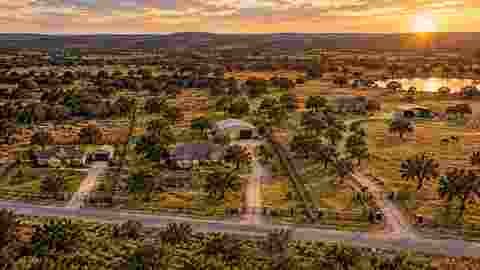
More land is not automatically better land
Acreage is one of the easiest numbers to focus on when shopping for rural property, but total acreage does not tell you how usable a parcel will be.
One well-shaped acre with public water, a short driveway, good soil, and room for a house and shop can be easier to live on than ten acres divided by floodplain, steep slopes, easements, woods, or poor access.
The right amount of land depends on what you actually want to do with it, how much maintenance you want to take on, and how much infrastructure you are willing to build.
Start with the lifestyle, not the acreage number
Before deciding that you need five, ten, or twenty acres, list the things the property must support.
A rural home with a detached shop has very different land needs from a property with horses, cattle, a pond, multiple guest homes, RV storage, a large garden, and future family compounds.
Your target acreage should come from the site plan, not from a round number that sounds good.
- Primary home and garage
- Detached shop or barn
- Pool and outdoor living
- RV, trailer, boat, or equipment storage
- Guest house or multigenerational housing
- Garden or orchard
- Chickens or small livestock
- Horses or cattle
- Pond
- Pasture
- Wooded privacy buffer
- Long driveway
- Future subdivision or additional homes

What does 1 acre actually feel like?
One acre is 43,560 square feet. On paper that sounds large compared with a typical suburban lot, and for the right layout it can support a comfortable rural-style home with meaningful outdoor space.
A one-acre parcel can work well for a house, garage, modest detached shop, garden, chickens, and recreational yard when the land is usable and local rules allow those uses.
The limitation is flexibility. Once you account for setbacks, septic, a well, driveway, drainage, utility easements, and a house pad, the remaining open area can shrink quickly.
Who is 1 acre best for?
One acre is often enough for buyers who want more elbow room without turning property maintenance into a major part of their week.
It can also be a good fit when the parcel has public water or sewer because those services reduce the land consumed by private well and septic infrastructure.
For buyers who mainly want privacy from immediate neighbors, a shop, a garden, and room for outdoor projects, one acre may accomplish more than expected.
- A rural-feeling home without a large maintenance burden
- A moderate detached shop
- Garden beds and chickens
- Pool and outdoor kitchen
- Small RV or trailer parking area
- Low-moderate mowing and fencing needs
Where 1 acre starts to feel tight
The challenge with one acre is not usually the house itself. It is everything that has to coexist around the house.
A septic disposal field, reserve area, private well setbacks, a large shop, drainage swales, a pool, parking, and a wide driveway can compete for the same usable ground.
If you want multiple detached buildings, substantial livestock space, a pond, or future family housing, one acre usually leaves very little flexibility.
What does 5 acres give you?
Five acres is a major step up in flexibility. It can create enough separation between the road, home, shop, septic area, and recreational uses to make the property feel genuinely rural.
For many households, five acres is a practical middle ground: enough room to spread out without automatically creating the maintenance, fencing, and infrastructure obligations of a much larger tract.
A good five-acre parcel can support a home, large shop, garden, chickens, small livestock areas, a pond or pool, equipment storage, and significant privacy.
Why 5 acres works so well for a house plus shop
A large detached shop needs more than its building footprint. You also need approach space, parking, trailer maneuvering, equipment storage, drainage, utilities, and enough separation that shop activity does not dominate the house.
Five acres can make it much easier to place a 40-by-60-foot or similar shop behind or beside the home while preserving a residential feel around the primary house.
It also leaves more options for positioning the septic system and utility routes without forcing everything into one congested area.
What 5 acres can realistically support
Usable five-acre properties are highly flexible, especially when they are rectangular, gently sloped, and not heavily constrained by floodplain or easements.
The exact layout still depends on local regulations and site conditions, but five acres often gives enough room for several major property features to coexist.
- Primary home with large garage
- 40x60 or larger shop
- Pool, cabana, and outdoor kitchen
- Guest house where allowed
- Garden and orchard
- Chicken coop
- Small livestock pens
- RV, boat, and trailer storage
- Pond or water feature on suitable land
- Privacy buffers and trails
What does 10 acres change?
Ten acres moves the property from a large homesite toward a small rural estate or hobby-farm scale.
At this size, you can create meaningful separation between uses. The house can sit away from the road, the shop can move farther from the main living area, livestock can occupy dedicated pasture, and guest structures can feel more private.
Ten acres also gives you more choices when part of the property is unusable because of woods, drainage, floodplain, slopes, or easements.
10 acres gives you layout freedom, not unlimited capacity
Ten acres feels large, but major rural features consume space quickly. A long driveway, pond, two guest homes, a large shop, pool area, septic field, pasture, garden, and livestock infrastructure can use most of the functional land.
That is especially true when the parcel is narrow or irregularly shaped.
The key advantage of ten acres is not that you can fit anything anywhere. It is that you usually have multiple workable locations for each major feature.
When 10 acres is the sweet spot
Ten acres is a strong fit for buyers who want a home plus several outbuildings and rural uses without committing to the operating scale of a large farm or ranch.
It can support a more complete property program while still being manageable with the right equipment and maintenance plan.
- Large home and multiple garages
- Large shop with office or apartment where allowed
- One or more guest structures
- Pool and entertainment area
- Pond
- Substantial garden or orchard
- Chickens and small livestock
- Limited horse or cattle setup depending on forage and management
- Equipment storage
- Wooded privacy zones
- Trails and recreation
- Future family expansion
When you may want more than 10 acres
More than ten acres starts to make sense when land itself is part of the goal rather than simply the setting for the house.
Examples include meaningful grazing, multiple horses or cattle, hunting, large ponds, hay production, timber, privacy from neighboring development, or a family compound with substantial separation between homes.
Larger acreage can also be useful when a parcel contains a high percentage of floodplain, woods, steep ground, drainage corridors, or other land that is valuable but not directly buildable.
Livestock acreage cannot be reduced to one universal rule
One of the biggest mistakes in acreage planning is assuming that a certain number of acres automatically supports a certain number of animals.
NRCS guidance bases grazing capacity on forage supply, vegetation, soil, precipitation, management, and the amount of time animals occupy the pasture. Stocking rates are therefore site-specific rather than a universal acres-per-animal number.
On limited acreage, pasture may provide exercise and supplemental forage while much of the animal's nutrition comes from purchased hay. That can work, but it changes the fencing, feeding, manure, mud, and pasture-management plan.
Horses can use more land than buyers expect
A horse property needs room for more than grazing. It may require dry lots, shelters, feed storage, manure handling, trailer access, riding areas, rotational paddocks, water, and safe fencing.
Small-acreage extension guidance emphasizes that limited pastures are often better treated as managed exercise and supplemental forage areas rather than as the sole year-round feed source.
If horses are part of the plan, evaluate the land's actual forage productivity and water availability instead of buying based only on acreage.
Cattle need a forage plan too
Cattle can fit on smaller acreage when feed is supplemented and the property is managed intensively, but that is different from expecting the land to provide all required forage.
The NRCS National Range and Pasture Handbook uses carrying capacity and stocking-rate concepts that link available forage to animal demand over time.
For buyers considering cattle, a local NRCS office, extension agent, or grazing specialist can provide far more useful guidance than a generic acres-per-cow rule.
Chickens and small livestock are different
Chickens, rabbits, goats, sheep, and other small livestock may require less total land than horses or cattle, but fencing, shelter, manure, predator protection, feed storage, drainage, and local restrictions still matter.
A small parcel can work very well when the goal is hobby-scale livestock rather than self-sufficient grazing.
Before buying, confirm that deed restrictions and local rules actually allow the animals you want.
Septic can consume more usable acreage than expected
On rural land without public sewer, the septic system can shape the entire site plan.
The tank, treatment components, disposal field, setbacks, and any required reserve area can remove a meaningful portion of the property from future building plans.
A parcel with five acres on paper can feel much smaller if the only suitable septic area overlaps the best shop, pool, or guest-house location.
A private well also affects the layout
Well location should be coordinated with septic, structures, livestock, driveways, and future development.
The well itself does not require acres of land, but required separation distances and access for drilling or service can influence the site plan.
On smaller acreage, it is especially important to lay out the house, well, and septic system together instead of treating them as independent decisions.
Long driveways quietly consume land and money
A larger property often encourages buyers to place the house deep into the acreage for privacy.
That can be worth it, but every additional foot of driveway can add clearing, grading, drainage, gravel, culverts, maintenance, snow or storm cleanup, utility trenching, and emergency-access considerations.
A ten-acre property with the home near the front may be far cheaper to develop than a five-acre property with difficult access or a long winding driveway.
More acres means more maintenance
Land has an operating cost even when there is no mortgage on it.
Mowing, brush control, fence repair, tree work, road maintenance, drainage, pond management, weeds, fire risk, invasive plants, and equipment all scale with the property.
Before buying more acreage, decide whether you actually want to maintain it, lease it, graze it, leave portions natural, or hire someone else to manage it.
Equipment becomes part of the acreage decision
A one-acre property may be manageable with residential lawn equipment. Five acres may justify a zero-turn mower, compact tractor, utility trailer, or other equipment depending on how the land is maintained.
Ten or twenty acres can make equipment ownership much more practical, especially if you maintain gravel roads, mow pasture, move material, manage brush, or care for livestock.
The equipment itself requires storage, fuel, maintenance, and usually a shop or covered area.
Property shape matters almost as much as total acreage
A wide rectangular parcel is usually easier to plan than a narrow strip with the same acreage.
For example, a ten-acre tract only about 200 feet wide may force the house, driveway, shop, septic, and other improvements into a long linear layout.
Before comparing acreage numbers, compare frontage, depth, shape, setbacks, easements, topography, and the percentage of truly usable ground.
Usable acreage is more important than deeded acreage
Acreage inside floodplain, steep slopes, wetlands, drainage corridors, utility easements, pipelines, heavily wooded ravines, or inaccessible corners may still have value, but it may not help you fit the structures you want.
When comparing properties, estimate how many acres are practical for buildings, septic, driveways, pasture, and recreation.
Five highly usable acres can outperform ten constrained acres.
Privacy is about layout, not just acreage
A wooded two-acre parcel with the home positioned carefully may feel more private than an open ten-acre parcel surrounded by neighboring homes.
Road frontage, neighboring house locations, topography, trees, fences, and house orientation all affect privacy.
If privacy is the primary reason you want acreage, study sightlines and neighboring development instead of buying the largest tract you can afford.
More acreage can create more future options
Extra land can provide flexibility when your plans change.
A future shop, guest house, second family home, larger garden, livestock area, pond, or equipment yard is easier to add when the first phase did not consume every buildable area.
If future expansion is important, buy enough land to preserve options rather than sizing the parcel only around today's house.
But do not buy unusable acreage just for the number
A low price per acre can make a larger property look like a bargain, but the extra land may bring higher fencing, maintenance, access, drainage, and improvement costs without adding much usable space.
Compare properties based on total project fit, not simply acreage and price.
The better purchase is the parcel that supports your actual plan with the fewest expensive compromises.
A simple 1 vs 5 vs 10+ acre comparison
These are planning profiles, not hard rules, but they can help narrow your search.
- Around 1 acre: good for a larger homesite, modest shop, garden, chickens, pool, and lower maintenance
- Around 5 acres: strong balance for a house, large shop, privacy, garden, small livestock areas, RV storage, and future flexibility
- Around 10 acres: better for multiple structures, a pond, larger livestock areas, substantial privacy, equipment, trails, and family expansion
- 10+ acres: increasingly useful when grazing, hunting, agriculture, major privacy, or a family compound is part of the goal
Questions to answer before choosing an acreage target
A good acreage target comes from answering specific use questions before you start shopping.
- How large is the house and garage?
- Do you want a detached shop? What size?
- Will you have a pool or outdoor kitchen?
- Do you need RV, boat, trailer, or equipment parking?
- Will you add a guest house or second family home?
- Do you want chickens, goats, horses, or cattle?
- Is pasture expected to provide meaningful forage?
- Do you want a pond?
- How much mowing and brush management will you do?
- How much privacy do you actually need?
- Will the property use a well and septic system?
- How long a driveway are you willing to build and maintain?
- Do you want room to expand in five or ten years?
The acreage number should come after the site plan
For many buyers, the best way to determine acreage is to sketch the property they want first.
Draw the home, garage, shop, driveway, septic area, well, pool, guest house, garden, livestock areas, pond, and privacy buffers. Then add realistic separation between them.
Once you know how much usable ground the plan needs, you can shop for parcels that fit instead of hoping an arbitrary acreage number will work.
The right answer is usually enough land, not the most land
If your goal is a house, shop, pool, garden, chickens, and some privacy, you may not need twenty acres.
If your goal includes cattle, horses, multiple homes, a pond, extensive trails, or long-term family expansion, five acres may feel restrictive surprisingly quickly.
Buy the acreage that supports the property you want to build and the maintenance you are willing to live with. That is more useful than chasing a particular number of acres.
Keep researching
Acreage Planning resources
Due diligence, development sequencing, utilities, access, and the decisions that shape a rural property project.
Sources & methodology
Where this information comes from
Cost figures are planning references rather than contractor quotes. Permitting, system-selection, and location-specific guidance should be verified with the appropriate local authority or qualified professional. AcreageReady uses source-backed, AI-assisted editorial workflows and remains responsible for the material it publishes. Read how we research, edit, and correct guides.
- USDA NRCS: Range & Pasture
- USDA NRCS: National Range and Pasture Handbook
- USDA NRCS: Soil Health on Pastureland
- Utah State University Extension: Managing Small-Acreage Horse Farms
- Utah State University Extension: Pastures
- AcreageReady: How to Evaluate Raw Land Before Building a House
- AcreageReady: What Utilities Should You Check Before Buying Rural Land?
- AcreageReady: The Right Order for Developing Rural Land
Common questions
Frequently asked questions
Is 1 acre enough for a house and shop?
It can be. A well-shaped one-acre parcel may support a home, garage, moderate detached shop, driveway, garden, and outdoor living. Septic, well setbacks, drainage, easements, and local restrictions can significantly reduce the usable area.
Is 5 acres enough for a rural property?
For many buyers, yes. Five usable acres can provide a strong balance of privacy and flexibility for a home, large shop, garden, chickens or small livestock areas, RV storage, a pool, and future improvements.
Is 10 acres enough for horses or cattle?
Possibly, but total acreage alone does not determine livestock capacity. Forage productivity, water, soil, rainfall, pasture condition, management, supplemental feed, and the number and type of animals all matter. Use local NRCS or extension guidance to evaluate carrying capacity.
How much land do I need for a house, shop, pool, and guest house?
A carefully designed parcel around five acres may accommodate those uses, while ten acres usually provides substantially more separation and flexibility. The actual requirement depends on setbacks, septic, well location, drainage, property shape, and local regulations.
Is 10 acres a lot to maintain?
It can be. Maintenance depends on whether the land is lawn, pasture, woods, brush, trails, or natural acreage. Larger properties may require mowing, brush control, fencing, road maintenance, tree work, drainage work, and equipment.
What matters more than total acreage?
Usable acreage, property shape, road frontage, topography, flood risk, easements, septic feasibility, well and utility locations, access, and the placement of neighboring properties can matter more than the deeded acreage number.
Ready to talk with a local professional?
Share your location and project details so AcreageReady can identify relevant providers as the network grows.
Get a free quote