Rural Tennessee land is not truly build-ready until you understand power access
A piece of acreage can look perfect on paper and still become far more expensive once you learn what it will take to get electricity to the homesite.
In Tennessee, rural power planning is not just about asking whether electric lines are nearby. Buyers need to identify the correct utility, confirm where existing service actually ends, understand how a new service request is engineered, and estimate what line extension, clearing, trenching, poles, transformers, meter infrastructure, and service equipment may cost.
Power also has to be coordinated with the driveway, house pad, well, septic layout, and any future shop, barn, guest home, gate, pool, or RV connection.
Start by identifying who actually serves the property
Tennessee is served through a mix of local power companies, electric cooperatives, municipal systems, and investor-owned utilities. Across the Tennessee Valley region, TVA sells wholesale power to local power companies that deliver electricity to homes and businesses.
The first step is to determine exactly which utility serves the parcel rather than assuming the nearest visible line belongs to the company you expect.
A seller, neighbor, or agent may know the likely provider, but you should still confirm the service territory directly with the utility before closing.
- Ask the seller which electric provider serves the parcel or adjacent properties
- Check neighboring meter labels, subdivision documents, or prior utility records for clues
- Contact the likely utility with the parcel address, parcel number, or map location
- Confirm that the utility can serve the exact tract rather than only the surrounding road
Do not confuse power near the road with easy service to the homesite
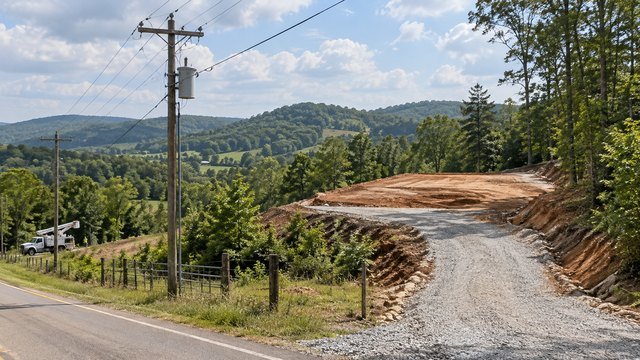
Many buyers see overhead lines along a road and assume electric service will be simple and inexpensive.
That assumption can be wrong. The visible line may be on the opposite side of the road, may require a new transformer or poles, or may still leave a long run from the road to the planned building site.
The meaningful question is not whether power is visible. The real question is what the utility will require to deliver the service capacity you need to the meter location you want.
Ask about both service availability and extension cost
When you contact the utility, ask two separate questions: can the parcel be served, and what portion of the extension or construction cost will be the owner's responsibility?
Some properties are serviceable but still expensive because the homesite is far from existing infrastructure, terrain is difficult, vegetation must be cleared, or substantial primary-line work is required.
Try to get the utility's answer in writing or request an engineering estimate when the project is far enough along.
A new rural electric service request usually starts with a site plan
Utilities commonly need the property address or location, proposed meter location, and a basic description of the project.
For a new home, they may ask about the size of the residence, temporary construction power, permanent service size, and large future loads such as a shop, well pump, HVAC system, EV charger, pool equipment, RV connection, or agricultural equipment.
A utility representative may inspect the site or prepare an engineering layout showing the route, poles, transformer, meter location, and owner responsibilities.
There is no single statewide Tennessee line-extension price
Electric-extension pricing varies substantially by utility, distance, terrain, service design, required equipment, and whether the line will be overhead or underground.
One utility may provide a construction allowance while another uses a different contribution policy. The cost structure can also change depending on the size and type of service.
For planning purposes, treat utility cost as parcel-specific and avoid relying on a generic per-foot number until the serving utility has reviewed the site.
Common rural power costs go beyond the wire itself
Even when the utility installs much of the infrastructure, the property owner can still have significant site-development costs.
Ask which items belong to the utility and which belong to you so the estimate includes the entire working system rather than only the utility's invoice.
- Service application or connection charges
- Line-extension contribution
- Additional utility poles
- Transformer or equipment upgrades
- Vegetation clearing and access preparation
- Underground trenching and conduit
- Temporary construction service
- Meter base and service equipment
- Electrical panel and feeder
- Electrician labor
- Inspections and permit-related costs
- Long private feeder runs after the meter
A simple road-front connection and a remote homesite are very different projects
A parcel with a homesite close to existing distribution infrastructure can be substantially easier to serve than a house positioned several hundred feet into the property.
Longer runs may require more conductor, additional poles, underground trenching, voltage-drop planning, transformer placement, or a different meter strategy.
Privacy and views can justify a deeper homesite, but power should be included in the financial comparison before you commit to that location.
Underground power looks cleaner but may shift more work to the owner
Many acreage owners prefer underground service because there are no overhead wires crossing the view and fewer conflicts with trees.
Underground installation can require excavation, conduit, bedding, pull points, rock removal, and a route that meets utility specifications. Depending on the utility, some or much of that site work may be the owner's responsibility.
Ask for both overhead and underground options when both are available so you can compare the complete installed cost.
Rocky Tennessee terrain can make underground service expensive
Tennessee acreage can include shallow rock, steep slopes, wooded ridges, creek crossings, and other conditions that complicate trenching.
A route that looks short on an aerial map may be expensive if excavation requires rock equipment or cannot follow a direct line.
Walk the proposed utility route before finalizing the homesite and driveway, especially on hilly East and Middle Tennessee properties.
Meter location can move thousands of dollars from one side of the project to the other
The meter does not always have to be mounted on the house. On some rural properties, the utility may prefer or require a meter location closer to the road, transformer, or other accessible service point.
A road-side meter can shorten the utility's extension but leave the property owner responsible for a long private feeder to the house.
A meter nearer the house may increase utility-side construction. Compare the total project, not just the utility's portion.
Transformer placement matters for cost and future maintenance
A new rural service may require a transformer, and the location needs to work for both the utility and the property plan.
Utilities need safe working clearance and dependable access to their equipment. Landscaping, fences, gates, retaining walls, sheds, and future structures should not block the transformer.
Ask where the transformer is likely to go before finalizing the driveway, house pad, or landscape plan.
Coordinate the power route with the driveway
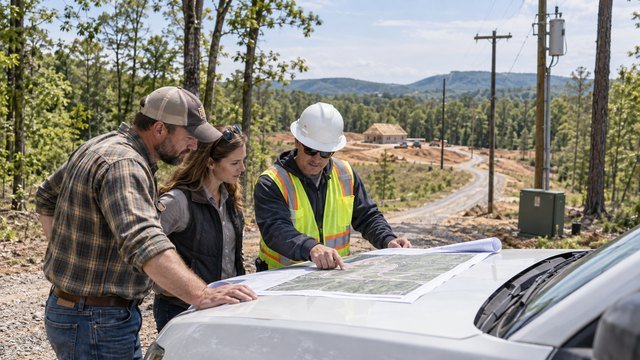
Power planning and driveway planning should happen together.
The driveway often provides the most practical equipment route into the property, while road crossings, culverts, retaining walls, drainage ditches, and gates can complicate utility construction if they are installed first.
If possible, have the utility review the route before major driveway grading begins.
Well and septic planning can affect where utilities should go
A well pump needs electric service, and septic fields and reserve areas should be protected from unnecessary disturbance.
Tennessee's septic construction application asks for a site sketch showing items that include the house, well, planned driveway, and utilities, reinforcing the value of planning these systems together.
Map the house, well, septic field, reserve area, driveway, utilities, and future structures on one preliminary site plan.
Temporary construction power may be needed before permanent service
Builders often need electricity before the permanent meter and house electrical system are ready.
Ask the utility what is required for temporary construction service, whether a temporary pole or pedestal is needed, and where it should be located.
Also ask whether any of the temporary-service equipment can be reused when permanent service is installed.
Electrical permits and inspections are separate from the utility connection
Getting the utility to the property is only one part of the electrical process.
Tennessee's residential permitting system treats electrical permits and inspections separately from the residential building permit, although the exact process depends on the jurisdiction.
Coordinate your electrician, the applicable inspection authority, and the utility so the service is ready when the utility expects to energize it.
Plan the service capacity for what the property will become
Do not describe the project as only a small house if you already expect to add a large shop, apartment, pool, electric vehicle charging, RV hookups, livestock facilities, or another dwelling.
Those future loads can affect service size, transformer capacity, feeder design, and panel planning.
It is often cheaper to make room for future demand at the beginning than to rebuild electrical infrastructure a few years later.
Shops and barndominiums can create large electrical loads
A barndominium or workshop can include welders, compressors, lifts, HVAC systems, large doors, electric water heating, EV chargers, and other high-demand equipment.
Tell both the utility and electrician what equipment you expect to use so they can plan realistic capacity.
The same advice applies when a detached shop is part of a future phase rather than the initial build.
Multiple homes can require a different utility strategy
If your long-term plan includes a main house plus a guest home, tiny home, apartment over a shop, or another family residence, discuss that plan early.
You may need separate meters, a larger service, additional transformers, or a different private distribution layout depending on the project and utility requirements.
Zoning, septic, subdivision, and addressing rules also need to support the additional dwelling before you design the electrical system around it.
Utility easements should be understood before you build around them
Existing utility easements can limit where buildings, fences, trees, and other improvements should be placed.
A new extension may also require an easement or right-of-way so the utility can install and maintain its facilities.
Review the title commitment and survey for existing easements and ask the utility whether a new easement will be required for the planned route.
Tree clearing can be a real part of the power budget
A heavily wooded tract can require clearing for an overhead line, equipment access, or an underground trench.
Ask the utility how wide the route must be, who performs the clearing, what vegetation can remain, and who is responsible for future maintenance.
Coordinate this work with land clearing for the driveway and homesite so you do not pay to mobilize equipment repeatedly.
Call 811 before trenching or excavating
Before excavation begins, follow the Tennessee 811 process so participating underground utilities can mark facilities in the proposed work area.
This applies to more than the electric trench. Driveway culverts, water lines, well lines, drainage work, gate posts, fencing, and other excavation can encounter underground infrastructure.
Utility locating should be built into the construction sequence rather than treated as an afterthought.
The cheapest homesite is sometimes the one with the easiest utilities
The most scenic building location is not always the most economical.
Moving the house closer to existing power, an approved septic area, the well, and practical driveway access can reduce several categories of site-development cost at the same time.
Before finalizing the site, compare at least two layouts if the property gives you options.
Questions to ask the Tennessee electric utility before buying
Use specific questions and provide a map showing the proposed homesite whenever possible.
- Does your utility serve this exact parcel?
- Where is the nearest point from which new service would be extended?
- Can the proposed homesite be served?
- Will you perform a site visit before I buy?
- What owner contribution or line-extension charge should I expect?
- Will new poles or a transformer be required?
- Can service be underground, overhead, or either?
- Who pays for trenching and conduit if the service is underground?
- Who is responsible for clearing the utility route?
- Where should the meter be located?
- What service size should I plan for?
- Can future shops or additional dwellings be considered in the initial design?
- What temporary construction-power options are available?
- What inspections must be completed before the service can be energized?
- Will a utility easement be required?
- What is the current lead time for engineering and construction?
Tennessee rural power due-diligence checklist
Do as much of this work as possible before the land purchase becomes nonrefundable.
- Confirm the serving electric utility
- Mark the preferred and alternate homesites
- Estimate distance from existing utility infrastructure to each homesite
- Request a utility site review or preliminary estimate
- Ask about overhead and underground options
- Identify likely pole and transformer locations
- Determine the meter location
- Estimate private feeder distance after the meter
- Include future shop, guest house, RV, pool, and EV loads
- Review utility easements on the title and survey
- Coordinate power with the driveway, well, and septic layout
- Ask about temporary construction service
- Identify owner clearing, trenching, conduit, and electrical responsibilities
- Confirm electrical permit and inspection requirements
- Build contingency into the site-development budget
Power availability belongs in the land-buying calculation
Electric service is one of the core systems that determines whether rural land is practical to develop.
A property with an attractive purchase price can become expensive if the house sits far from existing distribution, the route crosses difficult terrain, or major utility work is required.
Confirming the utility, probable route, owner responsibilities, and rough cost before closing gives you a much better picture of the real cost to turn Tennessee acreage into a functioning homesite.
Sources & methodology
Where this information comes from
Cost figures are planning references rather than contractor quotes. Permitting, system-selection, and location-specific guidance should be verified with the appropriate local authority or qualified professional. AcreageReady uses source-backed, AI-assisted editorial workflows and remains responsible for the material it publishes. Read how we research, edit, and correct guides.
- TVA: Energy
- Tennessee State Fire Marshal's Office: Residential Permits
- TDEC: Septic System Construction Permit
- Tennessee 811
- AcreageReady: Buying Rural Land in Tennessee
- AcreageReady: Tennessee Septic Permits & Soil Evaluations
- AcreageReady: Tennessee Well Drilling Cost Guide
- AcreageReady: Tennessee Zoning & Building Permits
Common questions
Frequently asked questions
How do I find out who provides electric service to rural land in Tennessee?
Contact the likely local power company, electric cooperative, municipal utility, or investor-owned utility with the parcel address, parcel number, or map location. In much of Tennessee, TVA supplies wholesale electricity through local power companies, while the local utility handles the residential service request.
If power lines are already at the road, is the property cheap to connect?
Not necessarily. The utility still needs to determine the usable service point, transformer needs, line-extension distance, road-crossing requirements, meter location, and the capacity required for your project.
How much does it cost to run power to rural land in Tennessee?
There is no single statewide cost. Extension charges vary by utility, distance, terrain, required poles or transformers, service size, clearing, and whether the route is overhead or underground. Get a parcel-specific estimate from the serving utility.
Is underground electric service more expensive than overhead service?
It can be. Underground service may require owner-paid trenching, conduit, rock excavation, and other site work. The cost depends on the serving utility's construction policy and the property.
Should I put the electric meter at the road or at the house?
The best location depends on the utility's requirements and total project cost. A road-side meter may reduce utility extension work but leave you responsible for a long private feeder. Compare both sides of the installation.
Can I get temporary construction power on Tennessee rural land?
Often yes, but the serving utility determines the requirements. Ask about temporary poles or pedestals, meter equipment, inspections, fees, and whether any equipment can be reused for permanent service.
Should I tell the utility about a future shop or second home?
Yes. Future high-demand structures can affect transformer capacity, service size, meter strategy, and feeder design. Planning for them early can prevent expensive upgrades later.
Do I need to call 811 before trenching for electric service?
Yes. Use Tennessee 811 before excavation so participating underground utility facilities can be marked before digging begins.
Ready to talk with a local professional?
Share your location and project details so AcreageReady can identify relevant providers as the network grows.
Get a free quote