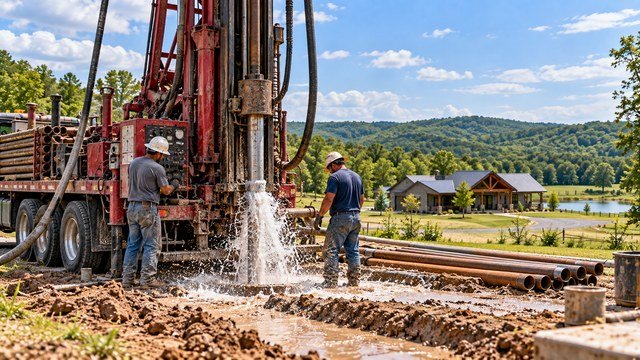
There is no reliable one-price estimate for an Alabama well
A private well is a site-specific construction project. Depth, geology, casing, drilling method, yield, pump requirements, access and water quality can all change the final cost. For rural-land budgeting, treat a generic statewide price as a screening number only. A local licensed driller who understands the property's geology is a much better source for a project allowance.
Separate the drilling quote from the complete water-system budget
One of the easiest ways to underestimate a well is to compare a drilling-only price with another contractor's complete-system proposal. A finished residential system may involve mobilization, drilling, casing, grout or sealing, well development, pump, drop pipe, wiring, controls, pressure tank, trenching, electrical service, testing, treatment and restoration. Ask every bidder to define exactly what is included.
Related: Alabama raw land development costs
Depth is important, but it is not the only cost driver
A deeper well generally requires more drilling and may require more casing, pipe, wire and pumping capacity, but two wells of the same depth can still have very different costs. Rock type, bore diameter, casing requirements, drilling difficulty, access and water production matter too. Avoid multiplying an advertised per-foot price by an assumed depth and calling that the final project budget.
Alabama geology varies significantly
Alabama crosses multiple physiographic and geologic regions, so drilling conditions can change substantially across the state. Local well records and experienced drillers can help establish expectations, but conditions on a neighboring parcel do not guarantee the depth or yield on yours. The Geological Survey of Alabama and ADEM records can provide useful context where data are available.
Use nearby well information as evidence, not a promise
Ask about wells on nearby properties: approximate depth, static water level, production, age and any known water-quality issues. A cluster of nearby wells can help a driller explain local conditions. Still, groundwater occurs within geologic systems rather than at a uniform depth under every parcel, so preserve a contingency in the budget.
Alabama licenses water well drillers
ADEM's Division 9 establishes Alabama's Water Well Standards Program, including licensing and certification of water well drillers and construction standards. Before hiring, confirm that the contractor is appropriately licensed for the work and ask for current proof rather than relying only on advertising or a referral.
Well location affects both cost and long-term use
Choose the well location as part of the overall site plan. The drilling rig needs physical access, and the completed well needs protection from contamination sources and future construction. Show the house, driveway, septic system and replacement area, shop, livestock areas, drainage features and future improvements on the same working plan.
ADEM construction standards include location requirements
Alabama's well standards address location, materials and construction. The exact placement should be reviewed with the licensed driller against current requirements and actual site conditions. Do not pick the well location solely because it is close to the house or convenient for a trench.
Access for the drilling rig can add site-preparation cost
A rural homesite may need clearing, temporary access, grading or a stable work area before drilling equipment can reach the selected location. Steep slopes, soft ground, creek crossings, tight gates and overhead obstructions can complicate mobilization. Discuss access before the rig is scheduled so site work does not become an unexpected change order.
Casing can materially change the final invoice
Casing stabilizes and protects portions of the well and is part of proper construction. Required casing length and material depend on the site and well design. When comparing proposals, ask how casing is priced, what amount is assumed, and what happens to the price if more is needed than the estimate.
The pump should be sized for the actual well and household
A pump is not simply an accessory added after drilling. Pump selection should consider well depth, water level, yield, required pressure, elevation, household demand and any planned irrigation or outbuildings. Oversizing or undersizing can create performance and reliability problems. Ask whether pump installation is included in the drilling proposal.
Pressure equipment belongs in the complete-system estimate
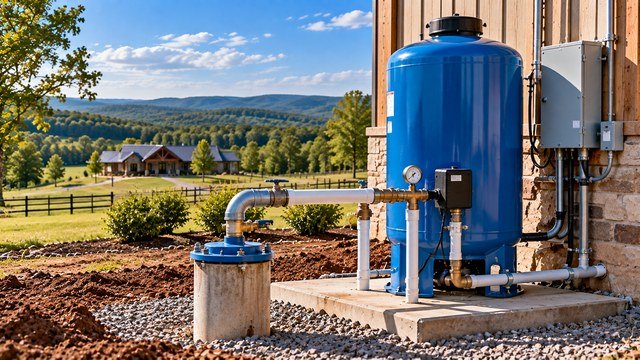
A residential well system commonly needs a pressure tank, controls and associated plumbing. Equipment location, freeze protection, serviceability and power should be planned before construction. If the pressure equipment will be in a well house, utility room or other enclosure, include that work in the project budget.
Electrical work is easy to overlook
The well pump needs electrical service. Depending on the site, that can mean trenching, conduit, wire, controls, disconnects and electrician labor in addition to the pump equipment. Coordinate the well route with the main electrical plan so the property is not excavated repeatedly.
Related: Power, water, septic and internet for rural Alabama land
Long water-line runs can make a successful well expensive
A well placed far from the home may require substantial trenching and private water line. Elevation changes can also influence pressure and system design. When evaluating the drilling location, compare groundwater and contamination considerations with the cost and practicality of getting water and power between the well and the buildings.
Water yield matters as much as depth
A deep well that produces enough water reliably can be more useful than a shallower well with marginal production. Ask the driller how yield will be evaluated and documented and what options exist if production is lower than expected. Depending on the property and use, storage may be part of the solution for a lower-yield source.
Water quality is a separate question from water quantity
Clear, good-tasting water is not proof that a private well is free of contaminants. ADEM recommends that private-well owners with water-quality concerns contact a local health department or a state-certified drinking-water laboratory. ADEM also maintains a laboratory certification program, and ADPH provides bacteriological testing information for private well water.
Plan testing after the well is completed
Ask the local health department or certified laboratory what testing is appropriate for the property and how samples should be collected. ADPH's Bureau of Clinical Laboratories publishes private-water sample collection information. Additional testing may be appropriate depending on local geology, land use, nearby contamination sources or household concerns.
Treatment should follow test results
Do not automatically buy an expensive filtration package before you know what the water contains. Treatment should address documented water-quality or aesthetic issues and the household's needs. Depending on results, a system might address sediment, hardness, iron, odor or specific contaminants, but the appropriate equipment is property-specific.
Do not assume ADEM regulates an individual private well like a public system
ADEM states that it does not have regulatory authority over individual private wells and does not fund their testing. At the same time, Alabama maintains well-driller licensing and water-well construction standards through ADEM's Water Well Standards Program. Those are different regulatory functions, and landowners should not confuse private-well water-quality oversight with contractor and construction requirements.
Get a written scope before the rig arrives
A useful proposal should identify the pricing method, mobilization, assumed depth, drilling method, casing assumptions, materials, well completion work, pump scope, testing, site restoration and how unexpected conditions are billed. Ask whether unsuccessful drilling, additional depth, extra casing or a return trip changes the price.
Ask what happens if the first location is unsuccessful
Groundwater projects carry uncertainty. Before work starts, understand the contractor's policy if the first bore does not produce an adequate supply. Ask how an abandoned or unsuccessful bore is handled, what charges still apply, and how a second location would be selected and priced.
Compare bids line by line instead of comparing the bottom number
A lower proposal may exclude the pump, tank, trenching, electrical work or significant casing. Build a comparison sheet with the same categories for each contractor. This is more useful than choosing the lowest headline figure and discovering later that the proposals described different finished products.
Create a planning budget with separate categories
For early land analysis, separate drilling and mobilization, casing and well completion, pump and controls, pressure equipment, trenching and water line, electrical work, testing, treatment, access preparation and contingency. Even before you have firm quotes, this structure makes omissions visible and helps compare a private well with available public water.
Coordinate the well with septic before either system is installed
A rural property may have limited areas suitable for onsite sewage, and the well also needs an appropriate protected location. Resolve both systems on the site plan before grading, driveway construction or building placement consumes the best options. The Alabama Department of Public Health recommends investigating onsite sewage feasibility before construction on property without sewer.
Protect the well during construction
Heavy construction can damage the wellhead, bury access, alter drainage or introduce contamination risks. Mark the well clearly, maintain required protection around it and keep construction traffic and stored materials away. Record the final location and system details for future service.
Think about backup power if the property depends entirely on the well
A private well generally stops supplying normal household water when the pump loses electricity. Rural owners who need resilience may plan generator capacity, battery-backed controls where appropriate, or stored water. Include the well pump's electrical characteristics when sizing backup-power equipment.
A pre-purchase well checklist for Alabama acreage
Before buying land that will depend on a well, identify licensed local drillers, ask about nearby drilling experience, review available well or geologic information, confirm rig access, map septic and potential well areas, consider power and trench distances, ask about known water-quality issues and reserve enough contingency for conditions that cannot be confirmed before drilling.
Related: Buying rural land in Alabama · Best places to buy acreage in Alabama
A pre-hire checklist for the driller
Confirm licensing, insurance and availability. Ask what the quote includes, how depth and casing are priced, how yield is evaluated, whether pump and pressure equipment are included, who handles electrical work, what site preparation is required, how cuttings or drilling debris are handled, what documentation you receive and how changes are approved.
The best estimate is a site-specific estimate
For Alabama rural land, the responsible way to budget a well is to combine local drilling experience with parcel-specific site planning. Use neighboring wells and published records to understand the area, then obtain written estimates from licensed professionals. Budget the entire working water system rather than only the hole in the ground.
Sources & methodology
Where this information comes from
Cost figures are planning references rather than contractor quotes. Permitting, system-selection, and location-specific guidance should be verified with the appropriate local authority or qualified professional. AcreageReady uses source-backed, AI-assisted editorial workflows and remains responsible for the material it publishes. Read how we research, edit, and correct guides.
- Alabama Department of Environmental Management: Information for Consumers and Private Wells
- Alabama Department of Environmental Management: Division 9 Water Well Standards
- Alabama Department of Environmental Management: Water Forms
- Alabama Department of Environmental Management: Drinking Water Laboratory Certification Program
- Alabama Department of Public Health: Sanitary Bacteriology
- Alabama Department of Public Health: Bureau of Clinical Laboratories
Common questions
Frequently asked questions
How much does it cost to drill a water well in Alabama?
There is no dependable statewide flat price because depth, geology, casing, access, yield, pump requirements and water treatment vary by property. Obtain site-specific written estimates from licensed Alabama well drillers and compare complete-system scope rather than drilling price alone.
Does Alabama require water well drillers to be licensed?
Yes. ADEM's Water Well Standards Program includes licensing and certification requirements for water well drillers and statewide well construction standards.
Does ADEM test private well water for homeowners?
ADEM states that it does not fund testing of individual private wells. It recommends contacting a local health department or a state-certified drinking-water laboratory for testing guidance. ADPH also provides private-well bacteriological testing information.
What should I include in a complete well budget?
Plan for drilling and mobilization, casing and completion, pump and controls, pressure tank, trenching and water line, electrical work, testing, possible treatment, site access work and contingency for unexpected drilling conditions.
Can I predict my well depth from a neighbor's well?
Nearby wells are useful evidence but not a guarantee. Groundwater and geology can vary across short distances, so use local records and nearby experience to build expectations while keeping contingency for the actual drilling result.
Should I drill the well before designing the septic system?
Plan both before committing to final construction locations. The well, septic field and replacement area, house, driveway, shop and drainage features should be coordinated on one site plan so the systems do not conflict.
Do I need to test a new private well in Alabama?
Water quality should be verified rather than assumed. ADEM recommends local health departments or certified drinking-water laboratories for private-well testing guidance, and ADPH publishes collection information for private-water bacteriological samples.
What should I ask an Alabama well driller before hiring?
Ask about licensing, local experience, pricing by depth and casing, mobilization, pump scope, yield evaluation, access requirements, unsuccessful-well policies, documentation, water testing and exactly what is excluded from the quoted price.
Ready to talk with a local professional?
Share your location and project details so AcreageReady can identify relevant providers as the network grows.
Get a free quote