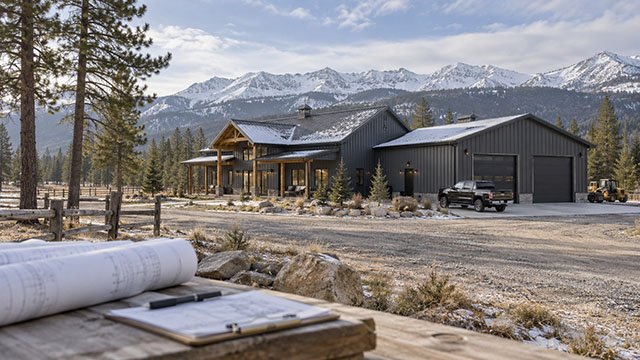
The first question is whether the parcel allows what you want to build
A rural Idaho parcel can have enough acreage, road frontage, and open ground for a home and still come with zoning, setback, subdivision, access, septic, floodplain, easement, or covenant restrictions that change the plan.
Before paying for house plans, engineering, or contractor estimates, confirm that the proposed use is allowed on the exact parcel and that the usable building envelope is large enough for the project.
Nearby homes, shops, barns, or barndominiums do not guarantee that your parcel can automatically support the same development.
Planning and zoning are primarily local in Idaho
Idaho cities and counties administer local planning and zoning rules under the state's land-use framework.
Idaho DEQ notes that planning and zoning are handled locally rather than by state or federal authorities, even though state laws and environmental rules still influence development.
The zoning district, permitted uses, setbacks, density, lot requirements, and approval process can therefore vary substantially from one county or city to another.
Start by identifying the correct planning jurisdiction
A mailing address does not always tell you which planning department controls the parcel.
A property may be inside city limits, within an area of city impact, or entirely under county jurisdiction.
Use the assessor parcel number, legal description, and parcel map to confirm which planning office should answer zoning and development questions.
Do not rely only on the zoning label in a real-estate listing
Terms such as agricultural, rural residential, recreational, or unzoned are often used casually in marketing.
The controlling information is the actual zoning designation and adopted local ordinance for the parcel.
Ask the planning department for the zoning district, permitted uses, conditional uses, minimum lot size, setbacks, height limits, accessory-building rules, and any overlay zones.
Agricultural zoning does not automatically guarantee a homesite
Agricultural zones can be designed to protect farming, ranching, timber, open space, or large-lot development.
Residential construction may be permitted outright, allowed only under certain standards, or require additional approval depending on the local ordinance.
Do not assume that an agricultural tax classification, farm use, or large acreage automatically creates residential building rights.
A legal parcel and a buildable parcel are different things
A parcel can legally exist for ownership and tax purposes while still having development constraints.
A practical homesite usually needs adequate access, zoning compliance, setbacks, wastewater approval, water availability, and enough usable area outside floodways, easements, steep slopes, or other restricted areas.
Confirm both legal parcel status and practical buildability before treating vacant acreage as a future homesite.
Ask whether the parcel was legally created
Older acreage can have complicated subdivision, deed, or parcel-split histories.
Ask the county or city whether the parcel is recognized as a legal lot of record and whether any prior land-division approvals affect development.
If the parcel was created outside current subdivision standards, additional documentation or review may be needed before a building permit is issued.
Subdivision status can add another layer of rules
A lot inside a recorded subdivision may be subject to plat notes, easements, utility corridors, private-road obligations, shared systems, or development conditions that do not apply to nearby unplatted acreage.
Public health districts also review subdivision and land-development proposals for sanitary restrictions involving sewage disposal and water supply.
Review the recorded plat and subdivision approvals instead of relying only on the deed.
Private covenants can be more restrictive than zoning
County or city zoning tells you what local government allows, but private covenants can impose additional restrictions.
A parcel may be zoned for a home and shop while recorded covenants restrict building size, exterior materials, livestock, RV storage, short-term rentals, business use, or secondary dwellings.
Read the title commitment, declarations, covenants, conditions, restrictions, and road agreements before closing.
Setbacks define the real building envelope
Front, side, rear, road, stream, utility, septic, and other setbacks can shrink the portion of the parcel where structures can be placed.
Irregular lots, narrow parcels, corner lots, and properties crossed by easements can lose more usable area than buyers expect.
Put the survey, zoning setbacks, septic areas, well location, driveway, and utility corridors on one site plan before finalizing the house location.
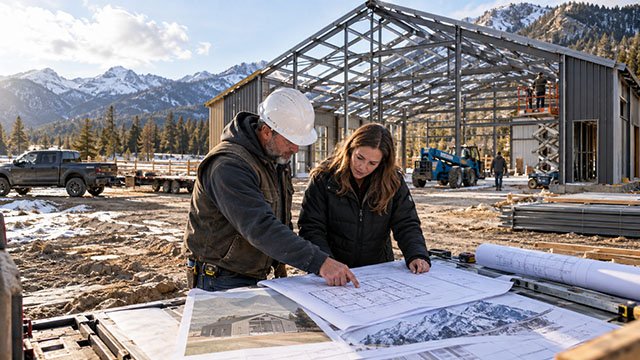
Easements can limit otherwise attractive building areas
Utility, irrigation, access, drainage, pipeline, and other recorded easements can cross land that looks open and buildable.
The easement language may restrict permanent structures or require future maintenance access.
Review every recorded easement on the title report and compare it with the survey before placing the house, shop, fence, septic system, or retaining wall.
Acreage size does not determine how many homes are allowed
A 10-acre parcel does not automatically mean ten homes, two homes, or even one home plus an accessory dwelling are allowed.
Local zoning can limit density, minimum lot size, accessory dwelling units, guest houses, duplexes, and additional residences.
If the long-term plan includes multiple family homes, rentals, a shop apartment, or future lot splits, verify those uses before buying.
Accessory dwelling units and guest homes need their own review
A small second residence may be treated differently from an ordinary accessory building.
Local rules can regulate size, occupancy, kitchens, parking, utilities, setbacks, owner occupancy, or whether an ADU is permitted at all.
Calling a structure a guest house, casita, shop apartment, or mother-in-law suite does not remove residential zoning requirements.
A shop with living space can trigger residential requirements
A detached shop is one thing; a shop containing a bedroom, kitchen, bathroom, or apartment can be another.
Once dwelling space is added, the structure may affect septic design, building code, fire separation, parking, density, and zoning.
Tell the planning and building departments how the structure will actually be used rather than describing only the shell.
Barndominiums still follow ordinary zoning and permit rules
A barndominium is not a special statewide permit category that bypasses normal land-use and building requirements.
The project still has to satisfy local zoning and the applicable residential, structural, energy, electrical, plumbing, mechanical, septic, access, and other requirements.
AcreageReady's Idaho barndominium permit guide covers the building-code side in more detail, while this article focuses on whether the parcel itself supports the proposed use.
Idaho has statewide adopted building codes
Idaho DOPL publishes the building codes adopted for use in the state.
Current adopted codes include the 2018 International Building Code, the 2018 International Residential Code with Idaho amendments, the 2018 International Energy Conservation Code with Idaho amendments, and the 2018 International Existing Building Code.
The adopted electrical code is the 2023 National Electrical Code with Idaho amendments.
Local building departments may administer the permit
Depending on the location, a city or county may operate an approved local building program and issue building permits and inspections.
In areas without an approved local program, Idaho DOPL can have a direct permitting or inspection role for certain construction and manufactured-home installations.
Ask the local building office which agency has jurisdiction before submitting plans.
Zoning approval and a building permit are different approvals
Zoning answers whether the use and location are allowed.
The building permit addresses whether the structure and construction documents comply with applicable building codes.
A project can satisfy zoning and still need plan review, engineering, trade permits, inspections, septic approval, driveway approval, and other permits before construction begins.
Electrical, plumbing, and HVAC permits are separate
Idaho regulates electrical, plumbing, and HVAC work through separate licensing and permitting programs.
Those permits are distinct from the general building permit and can be handled by state or local programs depending on jurisdiction.
Make sure the project schedule accounts for trade permits and inspections rather than treating the building permit as the only approval.
Manufactured homes and modular homes are not the same
Idaho DOPL distinguishes manufactured homes from modular buildings.
Manufactured homes are built to the federal HUD construction standard, while modular buildings are constructed off site to building codes adopted by the state.
The permitting, installation, inspection, foundation, and local zoning treatment can therefore differ, so confirm the exact structure type before buying or ordering a home.
Manufactured-home installation can require a DOPL permit
DOPL states that an installation permit is required before installation of a manufactured home in areas without an approved local building program.
The installation must also be inspected and approved before occupancy.
Local zoning and placement standards still apply even when the installation permit is handled by the state.
Modular construction still depends on the local site
A modular home may arrive with much of the structure built off site, but the foundation, site work, utilities, access, septic, and local land-use approvals remain site-specific.
DOPL regulates the factory-built portion, while site jurisdiction can involve local or state building officials depending on location.
Modular construction does not remove the need for ordinary rural-land due diligence.
Do not assume every agricultural building is permit-exempt
Some jurisdictions and code provisions treat qualifying agricultural buildings differently from ordinary residential or commercial structures.
Whether a specific barn, equipment building, livestock shelter, or agricultural structure qualifies depends on the actual use and applicable local or state rules.
Ask the building official before assuming that an 'ag building' needs no permit or inspection.
A home business can change the zoning analysis
A quiet office may be treated differently from a contractor yard, equipment repair shop, event venue, kennel, storage business, or customer-facing business.
Local zoning can regulate traffic, employees, signage, outdoor storage, noise, parking, and commercial activity on rural residential or agricultural property.
If business use is part of the plan, describe it clearly during due diligence.
Short-term rentals can have separate local rules
Local governments can regulate short-term rentals through zoning, business licensing, safety, parking, occupancy, or other local requirements.
A property that works for a primary residence may not automatically work for the intended rental model.
If rental income is important to the purchase decision, verify the current local rules before closing.
Livestock and animal uses should be checked by zoning district
Rural acreage often attracts buyers who want horses, cattle, goats, chickens, or other animals.
Local rules can regulate animal units, minimum acreage, setbacks from neighboring homes, manure management, commercial boarding, and accessory structures.
Do not assume every rural residential parcel allows the same livestock use.
Future lot splits require their own approval
Buying a large parcel with plans to divide it later should be treated as a land-development project, not a guaranteed future option.
Local subdivision ordinances, road standards, water supply, wastewater, density, access, and sanitary restrictions can all affect whether additional lots can be created.
Central District Health's land-development guidance also notes that counties can require information beyond public-health review.
Water and septic can determine how much zoning density is practical
Even when zoning allows multiple lots or dwellings, the parcel still needs a legal and practical water and wastewater solution.
Recent Idaho changes to domestic groundwater exemptions and subdivision rules can affect how water is developed in certain areas.
Septic capacity, replacement drainfields, groundwater conditions, and well rules should be reviewed before assuming the zoning density can actually be built.
Floodplain and wildfire constraints can reshape the site plan
A parcel can be zoned correctly for residential use while the preferred building area still requires floodplain review or wildfire-related access and site planning.
Mapped floodplain can limit fill and structures, while remote wildfire-prone homesites may need better driveway clearance, turnaround space, vegetation management, and fire-district coordination.
Use the Idaho flood-zone and wildfire-defensible-space guides alongside zoning due diligence.
Steep slopes can make a legally buildable parcel financially difficult
A zoning map does not tell you whether a steep building site will need engineered foundations, retaining walls, geotechnical review, or difficult access work.
Slope can also affect septic, drainage, driveway grade, wildfire behavior, and excavation cost.
A parcel can be legally buildable but financially impractical if the only compliant building area is on difficult terrain.
Irrigation easements and water-delivery facilities deserve attention
Rural Idaho property may contain canals, ditches, laterals, underground irrigation pipe, or easements serving neighboring land.
Those facilities can limit grading and building locations and may require access for maintenance.
Review the title documents and physically locate irrigation infrastructure before finalizing the building envelope.
Overlay zones can create unusual restrictions
Some properties near airports or other regulated facilities can be subject to overlay zoning, height limits, density controls, avigation easements, or land-use compatibility rules.
These restrictions may not be obvious from the base zoning label.
Ask the planning department whether any overlay district applies to the parcel.
A pre-application meeting can save time and redesign
For complicated rural projects, ask whether the city or county offers a pre-application meeting.
Bring a simple site plan showing parcel boundaries, proposed structures, driveway, well, septic area, utilities, and future improvements.
An early meeting can identify zoning, access, fire, drainage, or engineering issues before you pay for detailed plans.
Get important zoning answers in writing
A phone conversation is useful, but written confirmation is better when a purchase decision depends on a specific use.
Ask for links to the applicable zoning section, permit application, setback table, or written staff response when possible.
Keep those records with the title, survey, septic, well, and access documents used during due diligence.
A practical Idaho zoning and permit due-diligence checklist
Use this checklist before removing land-use and buildability contingencies.
- Confirm the planning jurisdiction
- Verify the assessor parcel number and legal description
- Confirm the official zoning district
- Request the allowed-use and conditional-use standards
- Confirm minimum lot size and density
- Confirm front, side, rear, road, and other setbacks
- Ask whether the parcel is a legal lot of record
- Review the recorded subdivision plat if applicable
- Review title exceptions and all recorded easements
- Review private covenants and road agreements
- Confirm whether a primary residence is permitted
- Confirm rules for shops, barns, and accessory buildings
- Confirm whether an ADU, guest house, or shop apartment is allowed
- Ask about livestock and home-business rules if relevant
- Confirm whether future lot splits are possible
- Identify the building-permit authority
- Identify electrical, plumbing, and HVAC permit authorities
- Coordinate zoning with septic, well, access, floodplain, and wildfire constraints
- Ask whether a pre-application meeting is available
- Get important answers in writing before closing
Questions to ask the planning department
These questions help turn a zoning map into a real buildability decision.
- What is the exact zoning designation for this parcel?
- Is a single-family home permitted by right?
- What are the minimum setbacks?
- What is the minimum lot size?
- Is this parcel recognized as a legal lot of record?
- Are there overlay zones or special restrictions?
- Can I build a detached shop or barn?
- Can the shop contain living space?
- Is an ADU or guest house allowed?
- Are livestock allowed, and under what limits?
- Can I operate a home business from the property?
- Are short-term rentals regulated?
- Can the parcel be divided in the future?
- Are there known pending zoning or comprehensive-plan changes?
- What approvals are required before I can apply for a building permit?
Questions to ask the building department
Once zoning is confirmed, the building official can explain the construction-permit path.
- Who has building-code jurisdiction for this parcel?
- Which code editions are currently enforced?
- What drawings are required for a residential permit?
- When is structural engineering required?
- Are snow-load, wind, seismic, or energy calculations required?
- Are separate electrical, plumbing, and HVAC permits required?
- What inspections are required?
- How are manufactured and modular homes permitted here?
- Are agricultural buildings treated differently?
- What is the current plan-review timeline?
Connect zoning due diligence to the rest of the build-ready budget
Once the parcel is legally suitable for the intended project, the next step is proving that it is physically and financially practical.
AcreageReady's Idaho guides cover rural land buying, septic, wells, power, driveway access, flood zones, wildfire defensible space, grading, excavation, surveys, and barndominium permits.
Use those guides together so zoning approval does not become the end of due diligence when it should really be the beginning.
The best parcel is the one that supports the whole plan
Acreage buyers often focus on price, views, trees, or total acres first.
Those features matter, but the property's real value depends on whether the intended home, shop, utilities, access, wastewater system, and future uses can actually fit within the legal and physical constraints.
Verify zoning and permit jurisdiction early, then build the rest of the site plan around confirmed facts rather than assumptions.
Keep researching
Acreage Planning resources
Due diligence, development sequencing, utilities, access, and the decisions that shape a rural property project.
Sources & methodology
Where this information comes from
Cost figures are planning references rather than contractor quotes. Permitting, system-selection, and location-specific guidance should be verified with the appropriate local authority or qualified professional. AcreageReady uses source-backed, AI-assisted editorial workflows and remains responsible for the material it publishes. Read how we research, edit, and correct guides.
- Idaho DOPL: Building Code Board & Factory Built Structures Board
- Idaho DOPL: Building Code Frequently Asked Questions
- Idaho DOPL: Building Code Statutes and Rules
- Idaho DOPL: Idaho Adopted Codes
- Idaho DEQ: Land-Use Planning and Zoning
- Central District Health: Septic, Subdivisions & Water
- Central District Health: Standards for Land Development
- AcreageReady: Buying Rural Land in Idaho
- AcreageReady: Idaho Barndominium Permits, Building Codes & Snow Loads
- AcreageReady: Idaho Flood Zones & Rural Land
- AcreageReady: Idaho Wildfire Defensible Space
Common questions
Frequently asked questions
Who controls zoning on rural land in Idaho?
Zoning is generally administered by the local city or county planning authority. The correct jurisdiction depends on whether the parcel is inside city limits, within another planning area, or under county jurisdiction.
Does agricultural zoning mean I can automatically build a house?
No. Residential use depends on the specific local zoning ordinance, minimum lot requirements, density, parcel status, and other development standards.
What building codes are currently adopted in Idaho?
Idaho DOPL currently lists the 2018 International Building Code, 2018 International Residential Code with Idaho amendments, 2018 International Energy Conservation Code with amendments, 2018 International Existing Building Code, and the 2023 National Electrical Code with amendments among the adopted codes.
Is zoning approval the same as a building permit?
No. Zoning approval addresses land use and location, while a building permit addresses code-compliant construction. Trade, septic, access, floodplain, and other approvals can also be separate.
Can I build a shop apartment or guest house on rural Idaho land?
Possibly, but local zoning can regulate accessory dwelling units, secondary residences, shop apartments, density, setbacks, and occupancy. Confirm the exact use with the local planning department.
Are manufactured and modular homes treated the same in Idaho?
No. Manufactured homes are built to federal HUD standards, while modular buildings are built to state-adopted building codes. Installation, inspection, and permitting requirements differ.
Can private covenants stop a project even if zoning allows it?
Yes. Recorded private covenants can impose restrictions that are more limiting than local zoning, so both the public rules and private title documents should be reviewed.
Should I verify zoning before buying vacant rural land?
Yes. Confirm zoning, legal parcel status, setbacks, access, easements, wastewater, water, and building-permit jurisdiction before closing when future construction is a major reason for the purchase.
Ready to talk with a local professional?
Share your location and project details so AcreageReady can identify relevant providers as the network grows.
Get a free quote